Plant Overview
Known as the "Noble Cane," Saccharum officinarum is the giant grass that arguably changed the course of human history. This tall, tropical perennial is the primary source of the world’s sugar and has been cultivated for thousands of years, migrating from the islands of Southeast Asia to every corner of the tropical world. While it is a powerhouse of agriculture, it is also a striking ornamental plant for those with the space to let it reach its full, towering height.
🔍 How to Identify
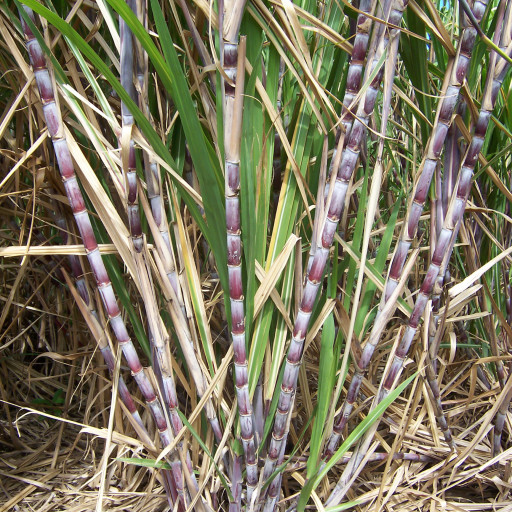
- 🎋 The Stalks: Look for thick, multi-colored (green, purple, or even striped) stems that are jointed like bamboo. Unlike bamboo, these stalks are solid and filled with a juicy, fibrous pith.
- 🍃 The Foliage: Long, arching, sword-shaped leaves sprout from the joints. The leaves have a prominent midrib and very finely serrated edges that feel rough to the touch.
- 🌾 The Tassel: In late autumn or winter, mature plants may produce a "plume"—a large, feathery silver-to-pink flower head that sways gracefully high above the ground.
🏡 In Your Garden
- ☀️ Sun & Heat Junkie: This is not a plant for the shade. It thrives in high humidity and constant full sun; without enough light, the stalks will remain thin and the plant will struggle to produce its signature sweetness.
- 🥤 Thirsty Roots: Because it produces a massive amount of biomass very quickly, it requires consistent moisture. If the soil dries out completely, the plant will prioritize survival over growth, leading to stunted, dry canes.
- 🥣 Heavy Feeding: Sugarcane is a "hungry" plant. To get those thick, juicy canes, you will need to provide rich, well-draining soil and plenty of nitrogen-rich organic fertilizer throughout the peak growing season.
⚠️ Safety & Toxicity
- 🛡️ Non-Toxic: Sugarcane is generally safe for humans and pets. In fact, many livestock and pets enjoy chewing on the sweet stalks.
- ✂️ Sharp Edges: The real danger lies in the leaves. They contain tiny silica crystals along the edges that can cause "grass cuts" (similar to paper cuts) on bare skin. It is wise to wear gloves and long sleeves when harvesting or pruning.
- 🦷 Dental Health: While the raw juice is natural, the high sugar content can contribute to tooth decay if chewed frequently, just like processed sweets.
✨ Fun Fact
Sugarcane is one of the world's most efficient converters of sunlight into energy. It uses a specialized "C4" photosynthetic pathway, which allows it to thrive in high temperatures and store massive amounts of carbon—and sugar—much faster than most other plants on Earth.

Detailed Care Instructions
| Color | White |
| Soil Ph | Acid, Neutral, Alkaline |
| Humidity | Normal |
| Invasive | Weed |
| Lighting | Full Sun |
| Toxicity | Poisonous |
| Soil Type | Loam, Sand, Clay |
| Bloom Time | Spring |
| Difficulty | Medium |
| Plant Type | Perennial |
| Hibernation | Cold Period |
| Mature Size | Up To 6M Tall, 1.5M Wide |
| Native Area | Southeast Asia |
| Temperature | 15°C - 41°C |
| Sun Exposure | Full Sun, Partial Shade |
| Hardiness Zones | 8-12 |
To grow Saccharum officinarum (Sugar cane) plants, follow these steps:
- Climate and location: Sugar cane thrives in tropical and subtropical climates, with an average temperature of 75-86°F (24-30°C). They require a frost-free environment, so choose a suitable location.
- Soil preparation: Sugar cane prefers well-drained soil with high organic matter content. Prepare the soil by loosening it and removing any weeds or rocks. Add organic compost or well-rotted manure to enrich the soil.
- Choosing planting material: Obtain healthy sugar cane stalks or pieces from a reputable nursery or garden center. Look for stalks with buds or "eyes" that will sprout new shoots.
- Propagation: Cut the sugar cane stalks into pieces, making sure each piece has at least one bud. These pieces are called "setts" or "seed cane." Allow them to dry for a day or two in a dry and shaded area.
- Planting: Dig furrows or trenches 6-8 inches (15-20 cm) deep and space them about 2-3 feet (0.6-0.9 meters) apart. Place the setts horizontally in the furrows, covering them with 2 inches (5 cm) of soil. Leave about 3-4 feet (0.9-1.2 meters) between rows.
- Watering: After planting, water the sugar cane thoroughly to ensure adequate moisture. Subsequently, water regularly but avoid overwatering, as it can lead to root rot.
- Fertilizer: Supply necessary nutrients by applying a balanced fertilizer, such as a slow-release organic fertilizer or one specifically recommended for sugar cane plants. Follow the manufacturer's instructions for application rates.
- Weed control: Keep the area around the sugar cane plants free from weeds, as they compete for resources. Regularly remove any weeds manually or by using appropriate herbicides.
- Pest and disease management: Monitor the plants for pests like aphids, mealybugs, or borers as well as diseases like rust or mosaic virus. Treat them with appropriate insecticides or fungicides, preferably organic, if necessary.
- Harvesting: Sugar cane plants take about 10-18 months to mature. Harvest by cutting the stalks near the base, leaving around 1-2 inches (2.5-5 cm) above the ground. Crushing the stalks or extracting the juice for consumption or further processing is the next step.
Following these steps should help you successfully grow Saccharum officinarum (Sugar cane) plants.

Place in a bright room that is sun drenched almost all day. Or directly in a south-facing window.

To water the plant in question, make sure to moisten the soil regularly, but avoid overwatering to prevent waterlogging. The plant prefers even moisture and well-drained soil. The frequency of watering will depend on factors such as the climate, season, and soil type. Ensure that the water reaches the roots and does not just sit on the surface of the soil. Lastly, avoid irrigating overhead, as this can cause fungal diseases and damage to the leaves.
To fertilize this plant, use a balanced fertilizer (10-10-10) during the growing season. Apply the fertilizer evenly around the base of the plant and watering well after. Avoid over-fertilizing, as this can lead to burnt leaves and reduced plant health.
The most suitable type of soil for the plant with the scientific name Saccharum Officinarum is a loamy soil with a slightly acidic to neutral pH level. The soil should be well-draining and have good moisture retention capabilities. It should also be rich in organic matter and nutrients, particularly nitrogen, potassium, and phosphorus. It is important to avoid using heavy clay soils or soil with a high salt content, as these can adversely affect the growth and development of the plant. Additionally, regular soil testing and fertilization may be necessary to maintain the optimal soil conditions for Saccharum Officinarum.
One way to propagate this plant is by taking a stem cutting from a mature plant, ideally one that is disease-free and well-established. The cutting should be taken from a healthy stem and can be around 15-20 cm long. The leaves on the lower half of the cutting should be removed, leaving only a few at the top.
Next, the cutting should be dipped in rooting hormone and planted in a mix of well-draining soil and compost. The cutting should be planted at a depth of around 3-4 cm and watered regularly to keep the soil moist but not waterlogged. In a few weeks, roots should start to form and new growth should emerge from the cutting.
Alternatively, this plant can also be propagated through division. This involves separating the plant into smaller sections, each with its own roots and shoots. To do this, the plant should be carefully dug up and the roots and stems separated with a sharp, clean cutting tool. Each of these sections can then be planted individually in soil and watered regularly.
Propagation can also be done through seed, although this may require more time and effort. The seeds should be collected from a mature plant and planted in well-draining soil. The soil should be kept moist and warm, with temperatures around 25-30°C. Seeds should germinate within a few weeks and new growth should begin to emerge.
Common pests of the sugarcane include Thrips. Make a habit of checking your sugarcane frequently for pests so that any infestations can be caught and managed early.








