Plant Overview
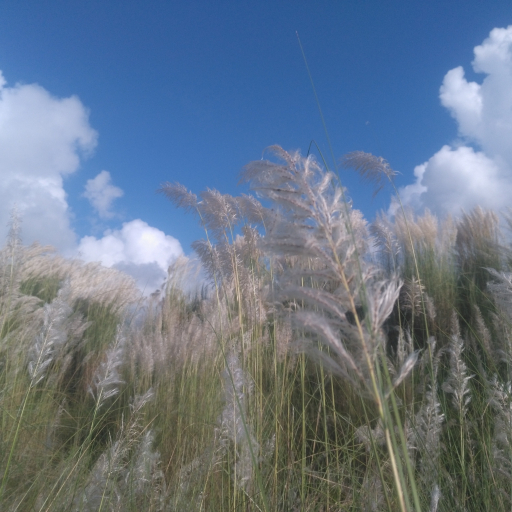
Known as the "Silver Ghost of the Riverbanks," Saccharum spontaneum, or Kans Grass, is a breathtaking perennial grass native to the Indian Subcontinent. In many cultures, its blossoming signals the end of the monsoon and the arrival of autumn festivals like Durga Puja. While it looks like a soft, feathery cloud from a distance, it is actually a rugged survivor that plays a vital role in stabilizing soil and providing genetic strength to the modern sugar industry.
🔍 How to Identify
- 🌾 Feathery Plumes: The most iconic feature is the large, silver-white inflorescence (flower head) that sits atop the stalk. These plumes catch the light and sway gracefully in the wind.
- 📏 Stately Height: This grass doesn't do "small." It can easily tower over a person, often reaching heights of 3 to 4 meters (up to 13 feet).
- 🗡️ Sharp Blades: The leaves are long, slender, and linear. Be careful when touching them, as the edges are finely serrated and can feel like tiny saws.
🏡 In Your Garden
- 🏜️ The Ultimate Stabilizer: In the wild, this plant thrives on floodplains and riverbanks. If you have a large property with erosion issues or sandy soil that won't hold together, Kans Grass is a natural "glue" for the landscape.
- 🚜 Hardy to a Fault: This isn't a plant for a small backyard. It spreads aggressively via deep underground rhizomes. It is incredibly drought-tolerant and can survive even after being burned, sprouting back from the roots with surprising speed.
- 🌱 Wild Ancestry: It is a wild relative of commercial sugarcane. Because it is naturally resistant to many pests and diseases, scientists use it to cross-breed with food crops to make them more resilient.
⚠️ Safety & Toxicity
- ✅ Status: Non-toxic and generally safe.
- 🩹 Details: While it isn't poisonous to humans or pets, the leaves are exceptionally sharp. Running through a field of Kans Grass with exposed skin often results in "grass cuts" similar to paper cuts, which can be irritating and itchy.
✨ Fun Fact
In the Indian state of West Bengal, the blooming of Kans Grass is so synonymous with the arrival of the Goddess Durga that it is often referred to as "Kash Phool"—the flower that tells the world a celebration is coming!

Detailed Care Instructions
To grow Saccharum Spontaneum, also known as wild sugarcane, you can follow these steps:
- Obtain seeds or young plants: Acquire Saccharum Spontaneum seeds or young plants from a reputable nursery or a botanical garden. You can also collect seeds from mature plants if they are available in your area.
- Choose a suitable location: Select a spot in your garden that receives full sun as Saccharum Spontaneum requires ample sunlight to thrive. The soil should be well-draining and nutrient-rich.
- Prepare the soil: Prior to planting, prepare the soil by loosening it with a garden fork or a tiller. Remove any weeds or debris from the area.
- Plant the seeds or young plants: If you have purchased seeds, sow them directly into the soil at a depth of about 1 inch. Space the seeds about 2 inches apart. If you have young plants, dig a hole slightly larger than the container, place the plant in the hole, and backfill with soil.
- Provide regular watering: For the first few weeks, keep the soil consistently moist, but not overly saturated. Once the plants are established, water them deeply but infrequently, allowing the top few inches of soil to dry out before watering again.
- Mulch the plants: Apply a layer of organic mulch, such as straw or wood chips, around the base of the plants. This will help retain moisture, suppress weed growth, and regulate soil temperature.
- Fertilize the plants: Saccharum Spontaneum benefits from regular fertilization to promote healthy growth. Use a balanced fertilizer, such as a 10-10-10 blend, following the manufacturer's instructions.
- Prune if necessary: Trim any dead or damaged foliage as needed. Additionally, if the plants become too large or unruly, you can prune them back to a desired height. However, excessive pruning may reduce the yield of sugarcane stalks.
- Protect from pests: Keep an eye out for common pests, such as aphids, mealybugs, or grasshoppers. If necessary, use organic insecticides or companion planting techniques to control infestations.
- Harvesting: Saccharum Spontaneum can be harvested when the stalks reach maturity, usually around 12-14 months after planting. Cut the stalks close to the base and remove the leaves. The stalks can be used for various purposes, including eating, juicing, or processing into sugar.
Remember to check if Saccharum Spontaneum is a suitable species for your climate and region, as its growth requirements may vary depending on the location.

Place in a bright room that is sun drenched almost all day. Or directly in a south-facing window.

To water this plant properly, it is important to consider its habitat and natural environment. This plant prefers humid conditions and needs consistent moisture to thrive. It should be watered deeply and consistently, allowing the soil to remain evenly moist but not soggy. It is also important to avoid letting the soil dry out completely between waterings. However, overwatering should be avoided as well, as this plant does not tolerate waterlogged soils. When watering, it is best to use room temperature water and avoid getting water on the leaves. Additionally, the soil should be well-draining to prevent water stagnation and promote healthy root growth.
- Begin by preparing the soil for the Saccharum Spontaneum plant by removing any weeds, rocks or debris from the area.
- Check the soil pH level using a test kit, and adjust it if necessary to a range between 5.5 and 6.5.
- Choose a suitable fertilizer with a high nitrogen content, such as a 20-10-10 fertilizer.
- Apply the fertilizer uniformly around the base of the plant at a rate of one pound per 100 square feet.
- Water the plant immediately after fertilizing to help the nutrients penetrate into the soil and promote healthy growth.
- Repeat the fertilization process once a month during the growing season (spring and summer).
- Monitor the plant for signs of over-fertilization, such as yellowing leaves or stunted growth, and reduce the amount of fertilizer accordingly.
When growing this particular plant, it is recommended to use soil that is rich in organic matter and well-draining. The pH level should be around 6.5 to 7.5, which is a neutral to slightly alkaline range. A loamy soil texture is also ideal for planting this species. It is important to avoid using soil that is compacted or too sandy, as this can inhibit proper water and nutrient absorption by the plant. Additionally, adding some compost or fertilizer to the soil can provide further nutrients for the Saccharum Spontaneum plant to grow well.
To propagate the aforementioned plant, you should first locate a healthy and mature specimen. Once you've identified the plant, gather a cutting from it that's approximately 4-6 inches in length. You should ensure that the cutting has at least 2-3 nodes (the area where the leaves attach to the stem) and that it's taken from the upper part of the plant.
Next, remove the leaves from the lower third of the cutting, leaving only the topmost leaves intact. Gently scrape away any bark from the lower end of the cutting to expose the underlying tissue. This will allow the cutting to develop roots more easily.
Once you've prepared the cutting, you can dip the cut end in rooting hormone powder to help encourage root growth. Then, you should plant it in a pot filled with a well-draining soil mixture. Be sure to water the cutting thoroughly and place it in a warm, bright location with indirect sunlight.
Over the next few weeks, you should check regularly for signs of growth and adjust the soil moisture level as needed. Once the cutting has rooted and established itself, you can move it into a larger pot or transplant it into your garden.








