Plant Overview
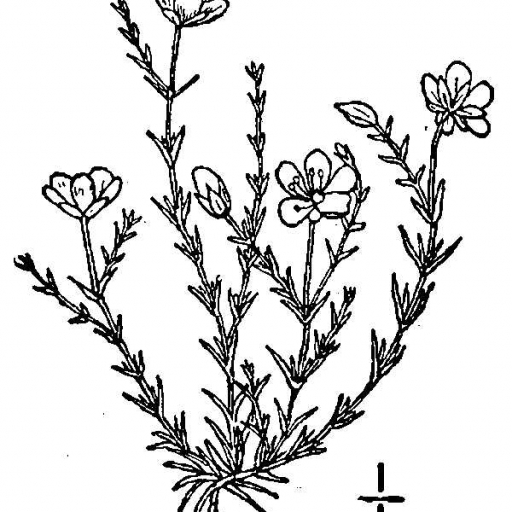
Often overlooked until it bursts into bloom, Sagina nodosa, or the Knotted Pearlwort, is a master of miniature beauty. Found hugging the ground in damp, sandy pockets, this delicate perennial looks like a scattering of tiny white stars dropped onto a cushion of moss. It is a favorite for "fairy gardens" and enthusiasts who appreciate the subtle, intricate details of the natural world.
🔍 How to Identify
- 🌿 The "Knots": Look closely at the stem joints; you’ll see tiny, succulent-like clusters of leaves that look like small knots or buds, which is how the plant earned its "nodosa" (knotted) name.
- 🌸 Starry Blooms: Unlike many other pearlworts that have tiny or absent petals, this species produces relatively large, brilliant white flowers with five distinct petals that dwarf the green sepals beneath them.
- 🍃 Needle Foliage: The leaves are extremely narrow, almost hair-like, and grow in opposite pairs, creating a fine, feathery texture that mimics moss from a distance.
🏡 In Your Garden
- 🏜️ The Sand Lover: In the wild, this plant thrives in lime-rich dunes and fens. In a garden setting, it demands "lean" soil—think sandy or gravelly mixes where more aggressive plants might struggle. It is the perfect candidate for a rock garden or a "trough" display.
- 💧 Cool Roots: While it enjoys sun, it hates drying out completely. It prefers "damp feet," meaning its roots should stay cool and slightly moist, even if the surface of the rocks around it is warm. It’s best tucked into crevices or between paving stones where the stones help regulate soil temperature.
⚠️ Safety & Toxicity
- ✅ Non-Toxic Status: Knotted Pearlwort is considered non-toxic and is generally safe to have around curious pets or children.
- 🌱 Delicate Nature: The primary safety concern is for the plant itself; it is very fragile and does not handle "human" traffic well. It shouldn't be used as a lawn substitute in high-walkway areas, as its stems break easily under pressure.
✨ Fun Fact
- ✨ The "pearl" in its common name likely refers to the tiny, rounded flower buds that look like miniature white pearls resting on the greenery before they unfurl into their starry floral shape.

Detailed Care Instructions
To grow Sagina nodosa, also known as knotted pearlwort or Irish moss, follow these steps:
- Planting: Choose a location with partial shade and moist, well-draining soil. Sagina nodosa can tolerate a wide range of soil types, but prefers slightly acidic to neutral soil pH.
- Sowing Seeds: The plant can be grown from seeds. Sow the seeds in early spring or early autumn, as it prefers cool temperatures. Lightly press the seeds into the soil, but do not cover them as they require light for germination. Keep the soil evenly moist until the seeds sprout.
- Watering: Maintain consistently moist soil, but do not overwater. The plant can tolerate occasional dry periods, but it prefers a consistently moist environment. Water deeply whenever the soil feels dry to the touch.
- Fertilization: Sagina nodosa typically does not require a lot of fertilization. However, you can apply a balanced slow-release fertilizer once or twice a year in spring or early summer to provide essential nutrients.
- Mulching: Apply a layer of organic mulch such as shredded bark or compost around the plants. Mulching helps retain soil moisture, suppresses weed growth, and provides insulation to the roots during extreme temperatures.
- Pruning: Sagina nodosa does not generally require pruning. However, you can trim back the foliage to maintain a tidy appearance if desired. Avoid cutting the plant back to the ground as this can be stressful to the plant.
- Division: If the plant becomes overcrowded or starts to decline, you can divide it in spring or early autumn. Gently dig up the clump and separate it into smaller sections, ensuring each section has some roots. Replant the divisions at the same depth and continue to care for them as usual.
By following these steps, you should be able to successfully grow Sagina nodosa in your garden or containers.

Place in a bright room that is sun drenched almost all day. Or directly in a south-facing window.

Sagina Nodosa is a type of plant that requires regular watering in order to stay healthy and vibrant. When watering this plant, it is important to do so carefully and thoroughly, taking care not to over-water or under-water it.
To properly water Sagina Nodosa, you should first assess the soil and moisture levels around the plant. If the soil is dry to the touch, it is likely time for watering. However, if the soil is still damp, it may be best to wait a day or two before watering in order to avoid over-saturating the soil.
When you are ready to water Sagina Nodosa, be sure to use a gentle, slow stream of water. This will help prevent soil erosion and ensure that the water is effectively absorbed into the soil. Be sure to water the plant thoroughly, taking care to reach all areas of the root system.
After watering, be sure to check the soil moisture levels again to ensure that the plant has received enough water. If the soil is still dry, you may need to repeat the watering process. However, if the soil is now moist, it is best to allow the plant to dry out slightly before watering again.
Overall, watering Sagina Nodosa requires a careful balance of timing and techniques. By following these tips and paying close attention to the plant's needs, you can help ensure that your Sagina Nodosa thrives and remains healthy.
The Sagina Nodosa plant should be fertilized during the spring and summer months with a balanced fertilizer once every two weeks. Use a liquid or granular fertilizer that is water-soluble. Be sure to dilute the fertilizer to half strength to avoid burning the roots. Stop fertilizing in the fall and winter months when the plant enters dormancy.
The ideal soil for this plant should be well-draining and have an acidic to neutral pH level. It should also have a good amount of organic matter to promote healthy growth. A mixture of peat moss, perlite, and sand is recommended to create a suitable soil for this plant. Additionally, it is important to avoid using heavy or compacted soil as this can prevent the plant from establishing good root growth. The plant prefers moist soil, but it is important to avoid overwatering as this can lead to root rot.
To propagate this plant, it is important to wait until the spring or early summer when the plant is actively growing. One technique is to take stem cuttings that are approximately 3-4 inches long. Remove the lower leaves and dip the cuttings into rooting hormone. Plant the cuttings into a well-draining soil mix and keep moist. It may take several weeks for the cuttings to root and show new growth.
Another method to propagate this plant is by division. This is best done in the spring when the plant is actively growing. Dig up the clump of plants and separate them into smaller sections. Replant these sections in a well-draining soil mix and keep them moist until they establish new roots and growth.
It is important to keep the soil consistently moist during propagation and to avoid exposing the plants to direct sunlight until they have fully rooted and established. With proper care, this plant can be successfully propagated and used to fill out garden beds or containers.








