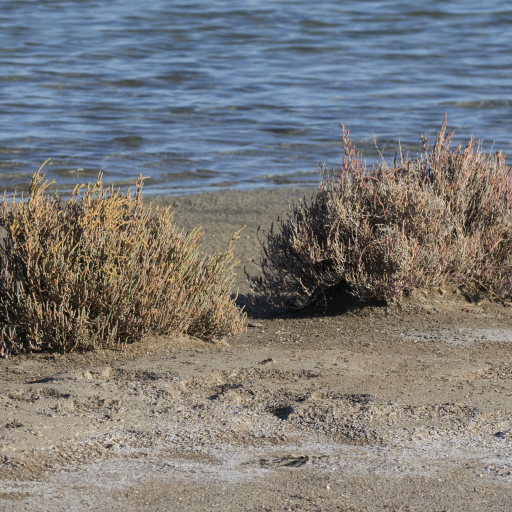
Plant Overview
Often called "Sea Beans" or "Chickenclaws," Salicornia perennis is a coastal survivor that thrives where most plants would wither. This hardy succulent looks like a collection of tiny, crunchy green fingers reaching out of the salty mud of coastal marshes. In the wild, it acts as a seasonal artist, turning vast stretches of coastline into a vibrant patchwork of emerald greens and deep ruby reds as the weather cools.
🔍 How to Identify
- 🌵 Stem Structure: It features distinctive, fleshy, jointed stems that look like miniature translucent sausages or green asparagus spears.
- 🎨 Seasonal Color: While it remains a bright, salty green during the growing season, the entire plant transitions to a striking pinkish-red or purple in the autumn.
- 🌱 Growth Habit: Unlike its annual cousins, this species is a perennial and forms dense, low-growing mats that creep along the ground, rarely rising more than a few inches high.
🏡 In Your Garden
- 🧂 The Salt Factor: This is a "halophyte," meaning it loves salt. If you're growing it at home, it thrives in sandy, poorly drained soil. It is one of the few plants that actually benefits from the occasional drink of brackish (salty) water.
- ☀️ Sun Worshiper: It requires high-intensity light. It is best suited for coastal gardens or as a unique container plant on a sunny patio where other plants might struggle with the salt spray.
⚠️ Safety & Toxicity
- 🥗 Status: Non-toxic and widely considered edible for humans.
- 🌊 Details: It is often sold as "Sea Samphire" in gourmet markets for its salty, crunchy texture. However, because it is a bio-accumulator, avoid eating plants found in the wild near industrial areas or runoff sites, as they can soak up heavy metals from the environment.
✨ Fun Fact
The name "Glasswort" comes from the 16th century when the plant was burned to create "soda ash." This ash was a vital ingredient in the glass-making process, as it helped the silica melt at a lower temperature!

Detailed Care Instructions

Place in a bright room that is sun drenched almost all day. Or directly in a south-facing window.

Some plants require more regular watering than others, which should be done every few days. It's critical to maintain the soil moist all of the time. The water requirements of the same plant placed in pots with varying sizes will differ. Because the water in the smaller pot evaporates faster than the water in the larger pot, it will require more watering. Regardless of pot size, the surface should constantly be maintained moist.








