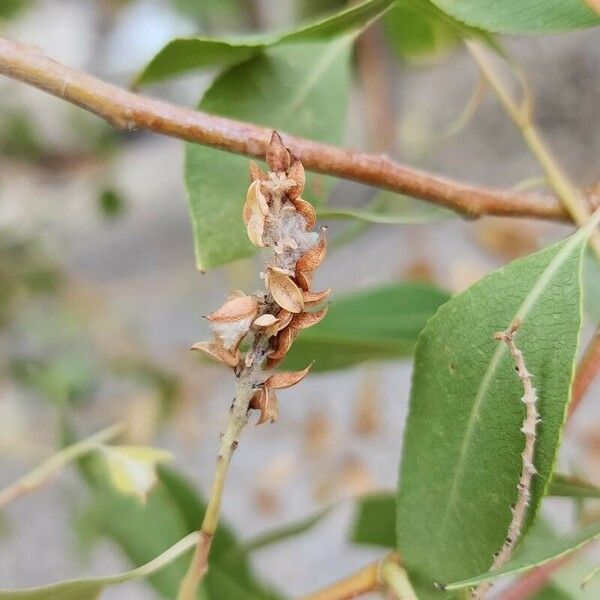
Plant Overview
Known as the Syrian Willow or Long-leaf Willow, Salix acmophylla is a poetic sight along the ancient riverbanks of the Middle East and South Asia. This elegant tree is a master of survival, rooting itself deeply into moist soil to withstand the heat of the desert sun. It is often celebrated in regional folklore as a cooling oasis for weary travelers and a symbol of life-giving water.
🔍 How to Identify
- 🍃 Slender Foliage: The leaves are exceptionally long, narrow, and lance-shaped, often tapering to a fine point. They feature a soft, silvery-green hue that shimmer when the wind catches them.
- 🌿 Pliable Branches: Its young twigs are remarkably flexible and range in color from a pale, waxy green to a warm, yellowish-brown, giving the tree a soft, weeping silhouette.
- 🌾 Spring Catkins: In early spring, the tree produces "catkins"—fuzzy, cylindrical flower clusters. These pendulous blooms appear just as the new leaves emerge, attracting early-season pollinators.
🏡 In Your Garden
- 💧 The "Wet Feet" Specialist: Because its natural home is the riparian zone (riverbanks), this willow is the perfect solution for boggy or poorly drained spots in your yard. It thrives in mud where other trees might suffer from root rot.
- 🏗️ Erosion Expert: If you have a sloping garden or a nearby creek, its aggressive and sprawling root system acts as a natural anchor. It is highly effective at stabilizing soil and preventing land from washing away during heavy rains.
- 🌳 Space Requirements: Be mindful of its "thirst." Avoid planting it near underground septic lines or water pipes, as the roots are famous for seeking out moisture and can cause structural damage if planted too close to the home.
⚠️ Safety & Toxicity
- 🐾 Pet Sensitivity: Like most members of the Salix family, this plant contains salicin (the natural precursor to aspirin). While not "deadly," chewing on the bark or leaves can cause digestive upset or lethargy in curious cats and dogs.
- 👶 Aspirin Allergies: People with a known allergy to aspirin should wear gloves when pruning or handling the inner bark, as it can occasionally cause skin irritation or a mild allergic reaction.
✨ Fun Fact
Ancient civilizations used to chew on the bark of willows like Salix acmophylla to cure headaches and fevers. This traditional practice eventually led scientists to isolate salicin, which became the primary ingredient in the very first aspirin tablets!

Detailed Care Instructions







