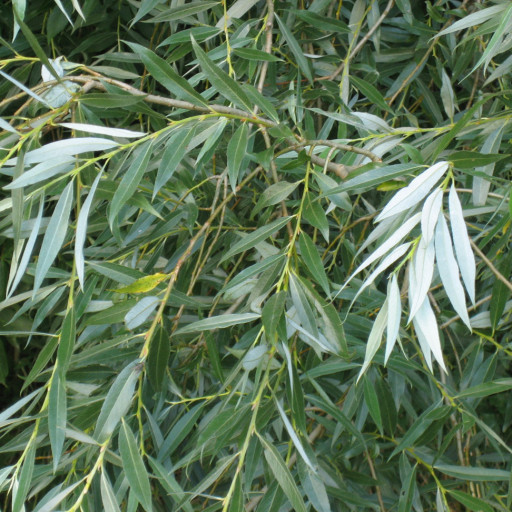
Plant Overview
The White Willow, or Salix alba, is a shimmering giant often found dancing along riverbanks and damp meadows across Europe and Asia. Known for its distinct silvery-white foliage that catches the wind like a mirror, it has been a cornerstone of traditional medicine for millennia. Historically, this tree was the "living pharmacy" of the ancient world, providing the foundation for the modern pain relief we use today.
🔍 How to Identify
- 🍃 Silvery Foliage: The narrow, lance-shaped leaves are bright green on top but covered in fine, silky white hairs underneath. This gives the entire tree a ghostly, "white" appearance when the breeze ruffles the branches.
- 🪵 Rugged Bark: As the tree matures, its bark becomes deeply fissured and grayish-brown, creating a rugged, textured trunk that supports its wide-spreading crown.
- 🌾 Spring Catkins: Before or with the new leaves, the tree produces slender catkins. Male catkins are yellow and pollen-heavy, while female catkins are smaller and green, eventually releasing fluffy seeds.
🏡 In Your Garden
- 💧 The Water Seeker: This tree is a natural "hydrophile." It is an excellent choice for stabilizing soggy riverbanks or preventing erosion in large, damp landscapes. However, its roots are incredibly aggressive and will seek out moisture with laser focus.
- 🏗️ Infrastructure Caution: Because the roots are so powerful, they can easily crack pipes or lift pavement. It is vital to plant White Willows at least 30–50 feet away from houses, septic systems, or underground utilities.
- ✂️ Fast Growth: It is one of the fastest-growing deciduous trees. While this provides quick shade, the wood can be somewhat brittle, meaning it may drop small branches during heavy wind or ice storms.
⚠️ Safety & Toxicity
- 🐾 Pet Safety: The bark and leaves contain salicin (the precursor to aspirin). While a small nibble might not hurt, if a dog or cat consumes a significant amount of bark, it can lead to salicylate poisoning, which causes gastric distress or more serious internal issues.
- 🤧 Pollen Alert: Male trees are prolific pollen producers. If you suffer from seasonal allergies, the springtime "bloom" of a White Willow might trigger sneezing and hay fever symptoms.
✨ Fun Fact
💊 The Original Aspirin: Thousands of years ago, the Greek physician Hippocrates recommended chewing willow bark to patients suffering from fever and pain. It wasn't until the 1800s that scientists isolated "salicylic acid" from the tree, which led directly to the invention of the Aspirin tablet!

Detailed Care Instructions
| Color | Yellow (Male), Green (Female) |
| Soil Ph | 5.5-8.0 |
| Soil Type | Medium To Wet, Well-Drained |
| Bloom Time | May |
| Plant Type | Deciduous Tree |
| Mature Size | 50-80 Ft. Tall, 40-70 Ft. Wide |
| Native Area | Europe, Northern Africa To Central Asia |
| Sun Exposure | Full Sun To Part Shade |
| Hardiness Zones | 2-8 |
To grow Salix alba, or white willow, follow these steps:
- Choose a suitable planting location: Salix alba prefers full sun or partial shade and moist, well-draining soil. It can tolerate a range of soil conditions, including sandy or loamy soil.
- Obtain your Salix alba plant: You can purchase a young sapling or obtain cuttings from an existing tree. Cuttings should be about 10-12 inches long, taken in late winter or early spring.
- Prepare the planting area: Clear the planting area of weeds, rocks, and debris. Loosen the soil with a garden fork or tiller to a depth of about 12-18 inches.
- Plant the Salix alba: Dig a hole that is slightly wider and deeper than the root ball or cutting. Place the plant or cutting in the hole and backfill with soil, tamping it down gently.
- Water the plant: After planting, give the Salix alba a thorough watering. Keep the soil moist, especially during the first year of growth, but be careful not to overwater.
- Mulch the area: Apply a layer of organic mulch around the base of the plant, such as wood chips or bark. This will help retain moisture, suppress weeds, and insulate the roots.
- Prune as necessary: Regularly prune your Salix alba to maintain its size and shape. Pruning can be done in late winter or early spring before new growth starts.
- Fertilize if needed: White willows usually do not require much fertilization. However, you can apply a balanced slow-release fertilizer in early spring if your soil is poor or lacking in nutrients.
- Protect from pests and diseases: Salix alba is generally resistant to pests and diseases. However, you should keep an eye out for common issues such as aphids, scale insects, or fungal diseases. Treat as necessary with organic or chemical remedies.
Remember, Salix alba is known to have an extensive root system. Avoid planting it near structures or underground utilities that could be damaged by the roots.

Place in a window with dappled sun or a spot in the middle of a room. Or directly in a window facing west or east.

Salix Alba is a plant that requires consistent watering in order to thrive. To give it the right amount of water, you should aim to keep the soil around the roots damp but not waterlogged. One way to do this is by using a slow drip irrigation system or a watering can to apply water directly to the soil around the base of the plant. It's important to monitor the soil moisture level regularly to ensure that it is not getting too dry or too wet.
You should also pay attention to the weather, as this can affect how much water the plant needs. During hot, dry periods, you may need to water the plant more frequently than during cooler and wetter weather. Additionally, if the plant is growing in a pot or container, it may require more frequent watering than if it were planted in the ground.
If you notice that the leaves of the Salix Alba plant are turning yellow or wilting, this may be a sign that it is not getting enough water. Conversely, if the leaves are becoming brown and droopy, this may be a sign that it is getting too much water. Adjust your watering accordingly to help the plant stay healthy and happy.
For optimal growth and health, it is recommended to fertilize Salix Alba regularly during the growing season. Use a balanced fertilizer with equal amounts of nitrogen, phosphorus, and potassium. Apply the fertilizer in early spring before new growth appears and in late summer after the growing season has ended. Spread the fertilizer evenly around the base of the plant and water thoroughly after application. Avoid over-fertilization, as this can lead to excessive growth and weak branches.
Salix Alba requires a soil that is rich in nutrients and well-drained. The soil should have a balanced pH, with a range between 6.0 and 8.0. This plant prefers a soil that is moist but not waterlogged. When planting, it is important to mix in organic matter such as compost or well-rotted manure to improve soil fertility and structure. The use of a slow-release fertilizer may also be beneficial for the growth and health of Salix Alba. Additionally, it is important to avoid planting in soils that are compacted or heavy in clay, which can lead to poor root development and growth.
Salix Alba is a species of plant that can be propagated through several methods, including cuttings and division. To propagate through cuttings, select a healthy stem from the plant and cut a section roughly 6 to 8 inches in length. Remove the bottom leaves from the cutting and dip the cut end in rooting hormone. Plant the cutting in a well-draining soil mix and keep it consistently moist. It may take several weeks for roots to form and new growth to appear.
To propagate through division, carefully dig up the plant and use a sharp knife to divide it into sections, ensuring each section has its own roots and stems. Replant each section in a suitable location, watering regularly until it establishes itself.
Propagation of Salix Alba may be more successful when done in the early spring, just before the plant starts to produce new growth. It is important to ensure the plant is healthy and disease-free before propagating to prevent the spread of any issues.
Common pests of the white willow include Larvae. Make a habit of checking your white willow frequently for pests so that any infestations can be caught and managed early.








