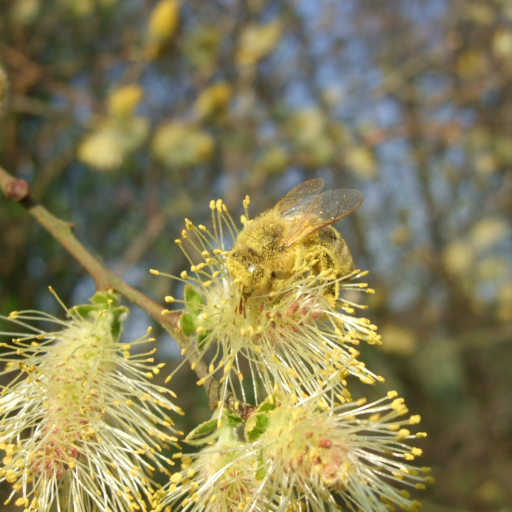
Plant Overview
Often called the Grey Willow or Rusty Sallow, this resilient shrub is a true harbinger of spring. Native to Western Europe and North Africa, it is famous for its soft, velvet-like "pussy willow" catkins that emerge while the rest of the landscape is still frozen. It is a pioneer species, often being the first to reclaim damp, disturbed ground and turning boggy corners into silver-green thickets.
🔍 How to Identify
- 🍃 The Foliage: Leaves are broadly oval or egg-shaped, dull green on top but remarkably fuzzy and greyish-white underneath.
- 🍂 Rusty Twigs: Young branches are often covered in a fine, reddish-brown or "rusty" felt, which helps distinguish it from its cousins.
- ☁️ Spring Catkins: Before the leaves appear, the plant produces upright, silver-grey catkins. Male catkins eventually explode into a bright yellow cloud of pollen.
🏡 In Your Garden
- 💧 The Water Lover: This willow is a specialist for "wet feet." If you have a low-lying spot in your garden where water collects, the Grey Willow will thrive there, acting as a natural pump to stabilize the soil.
- 🐝 Early Pollinator Support: It provides one of the very first sources of nectar and pollen in the year. If you want to support queen bees emerging from hibernation, this is the plant to have.
- ✂️ Growth Habit: It grows vigorously and can be "coppiced" (cut back to the ground) every few years to keep it as a manageable shrub rather than a sprawling small tree.
⚠️ Safety & Toxicity
- ✅ Generally Safe: The Grey Willow is not considered highly toxic to humans or common household pets.
- 💊 Medicinal Bark: Like most willows, the bark contains salicin, the natural compound used to create Aspirin. While not "poisonous," chewing on the twigs can cause a very bitter taste and potential stomach upset in curious pets or children.
- 🌾 Pollen Alert: Because it is wind-pollinated, the male catkins can be a trigger for those with early-season hay fever.
✨ Fun Fact
For centuries, the flexible "whips" of the Grey Willow were harvested for traditional basket weaving, while the bark was chewed as a primitive pain reliever long before modern medicine synthesized the aspirin tablet!

Detailed Care Instructions
To grow Salix atrocinerea, also known as Grey willow, you can follow these steps:
- Climate requirements: Salix atrocinerea thrives in moist to wet soils and prefers sunny locations but can tolerate partial shade. It is native to Europe and thus prefers temperate climates.
- Soil requirements: The plant prefers moist, well-draining, and fertile soil. If the soil in your garden is heavy clay, amend it with organic matter, such as compost, to improve drainage.
- Propagation: Salix atrocinerea can be propagated through seeds or hardwood cuttings. Collect seeds in late spring or early summer, or take hardwood cuttings in late winter or early spring.
- Seed propagation: Sow the seeds in a seed tray or a pot filled with seed raising mix. Moisten the soil and cover the seeds lightly with soil. Place the tray in a warm and well-lit area. Keep the soil evenly moist and germination should occur within 2-4 weeks. Once the seedlings have grown a few inches tall, transplant them into individual pots or directly into the garden.
- Hardwood cuttings: Take cuttings from healthy, mature gray willow branches. The cuttings should be around 12-18 inches long. Remove all lower leaves and cut the upper leaves in half to reduce water loss from transpiration. Dip the cut end in rooting hormone powder and plant it in well-draining potting soil or directly into the ground. Water the cuttings regularly to maintain moisture, and roots should develop within a few months.
- Planting: Prepare the planting site by removing any weeds or grass. Dig a hole twice the width and depth of the rootball. Place the plant in the hole and backfill with soil, firming it gently around the roots. Water thoroughly after planting.
- Care: Salix atrocinerea needs regular watering, especially during dry periods, to keep the soil moist but not waterlogged. Apply a layer of organic mulch around the base of the plant to retain moisture, suppress weeds, and provide nutrients. Prune the tree in late winter or early spring to maintain shape and remove any dead or diseased branches.
With proper care and maintenance, your Salix atrocinerea plant should grow successfully.

Place in a bright room that is sun drenched almost all day. Or directly in a south-facing window.

Salix Atrocinerea is a species of plant that requires regular watering to thrive. When it comes to watering your Salix Atrocinerea plant, it is important to get the balance right. Overwatering can cause the roots to rot, while underwatering can result in the plant drying out and dying.
To water your Salix Atrocinerea plant, you should start by checking the soil regularly. Use your finger to feel the soil and determine whether it feels dry to the touch. If the soil is dry, it is time to water your plant.
When watering your Salix Atrocinerea plant, it is important to water thoroughly. This means watering until the water begins to drain out of the bottom of the pot or container. This will ensure that the roots get enough water to grow and thrive.
It is also important to note that Salix Atrocinerea plants prefer moist soil, but not soggy soil. Therefore, you should avoid leaving your plant in standing water. If excess water accumulates in the pot after watering, remove it promptly.
In general, you should water your Salix Atrocinerea plant once a week or when the soil feels dry to the touch. However, you should always adjust your watering schedule based on the specific needs of your plant and the environment it is growing in.
To fertilize this plant, use a balanced, all-purpose fertilizer with equal amounts of nitrogen, phosphorus and potassium. Apply the fertilizer in early spring, just before new growth appears. Pour the fertilizer into a watering can and dilute it according to the instructions on the package. Water the plant with the fertilizer solution, making sure to saturate the soil without causing water to pool on the surface. Repeat the fertilization process every 6-8 weeks throughout the growing season to keep the plant healthy and promote vigorous growth.
Salix Atrocinerea plants require a specific type of soil to thrive. This soil should be well-draining and porous, allowing for good circulation of air and water. It should also be rich in organic matter, such as compost or peat moss, to provide the plant with essential nutrients. Additionally, the soil should have a pH level between 5.5 and 7.0 and be free of contaminants, such as heavy metals. This type of soil will provide the ideal growing conditions for the Salix Atrocinerea plant, promoting healthy growth and development.
One way to propagate this plant is through hardwood cuttings taken in late winter or early spring. Select a healthy branch, generally around 1 cm in diameter, and cut a section that is about 30 cm long. Remove any leaves from the bottom half of the cutting. Dip the cut end in rooting hormone and insert it into a pot or outdoor bed filled with a moist rooting medium, such as peat moss or vermiculite. Place the pot or bed in a sheltered spot with partial shade, making sure to keep the medium moist. After a few months, check for roots by gently tugging on the cutting. If it has rooted, it can be transplanted to its permanent location.








