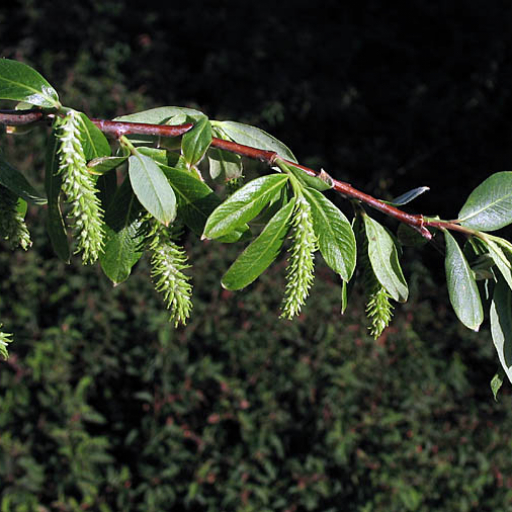
Plant Overview
Known as the Red Willow or Polished Willow, Salix laevigata is a graceful, water-loving tree native to the Western United States. It is a vital member of riparian ecosystems, acting as a natural engineer that holds riverbanks together with its aggressive root system. Often recognized by its colorful young twigs and shimmering foliage, it brings a sense of wild, flowing movement to any landscape near a water source.
🔍 How to Identify
- 🌿 Glossy Foliage: The leaves are lance-shaped, measuring up to 6 inches long. They are a bright, "polished" green on top and a contrasting pale, glaucous (waxy) white underneath.
- 🍂 Reddish Twigs: Young branches and twigs often sport a vibrant reddish-brown or yellowish hue, which gives the tree its common name and provides winter interest.
- 🌾 Fuzzy Catkins: In early spring, the tree produces long, cylindrical flower clusters called catkins. These appear at the same time as the new leaves, looking like soft, yellowish-green caterpillars.
🏡 In Your Garden
- 💧 Thirsty Roots: This willow has "wet feet" and thrives in soil that stays consistently moist. It is a perfect choice for stabilizing slopes near ponds or managing areas of your yard that suffer from poor drainage or seasonal flooding.
- 🏗️ Infrastructure Warning: Because its roots are incredibly efficient at seeking out moisture, never plant a Red Willow near sewer lines, septic tanks, or home foundations. The roots are powerful enough to infiltrate and damage pipes in their search for water.
⚠️ Safety & Toxicity
- 🟢 Generally Safe: Salix laevigata is not considered toxic to humans or pets. In fact, like many willows, its bark has a long history of medicinal use.
- 🐕 Tannin Sensitivity: While not poisonous, the bark and leaves contain high levels of tannins and salicin. If a curious dog or cat chews excessively on the branches, they may experience a mild upset stomach or drooling.
✨ Fun Fact
The bark of the Red Willow contains salicin, the chemical precursor to modern aspirin. For centuries, various Indigenous tribes of the West used infusions of the bark to treat fevers and headaches, long before the little white pills were found in medicine cabinets!

Detailed Care Instructions
To grow Salix laevigata (red willow), follow these steps:
- Choose a planting location: Select a spot with full to partial sun exposure, preferably near a water source. Salix laevigata naturally grows near rivers and streams.
- Prepare the soil: Red willow prefers moist, fertile soil. Amend the soil with organic matter like compost to improve drainage and nutrient content. Ensure the soil pH is slightly acidic to neutral (pH 6.0-7.0).
- Propagation: Salix laevigata can be propagated from seeds or hardwood cuttings. If using seeds, stratify them for a few weeks in the refrigerator before sowing. Plant the seeds or cuttings directly in the prepared soil, spaced about 3-5 feet apart.
- Watering: Keep the soil consistently moist, especially in the early establishment phase. Irrigate regularly, providing enough water to keep the soil consistently damp without becoming waterlogged. Water deeply and allow the top layer of soil to dry out slightly before watering again.
- Mulching: Apply a layer of organic mulch around the base of the plant to retain moisture, prevent weed growth, and moderate soil temperature. Keep the mulch a few inches away from the stem to avoid rot.
- Pruning: Prune Salix laevigata during the dormant season (late winter or early spring) to maintain its shape and promote better growth. Remove any dead or damaged branches and thin out overcrowded growth.
- Fertilizer: Salix laevigata is generally a low-maintenance plant and does not require significant fertilization. However, you can apply a balanced slow-release fertilizer in early spring to provide a nutrient boost.
- Pests and diseases: Salix laevigata is generally resistant to common pests and diseases. However, monitor the plant for any signs of infestation or disease and take appropriate actions if necessary.
- Winter care: Red willow is hardy and can withstand cold temperatures. However, during severe winters, protect the young plants by wrapping them with burlap or using protective covers.
- Monitoring and maintenance: Regularly monitor the growth, moisture levels, and overall health of the plant. Provide support like stakes or ties if necessary. Remove any suckers or offshoots that develop from the base of the plant to maintain its shape.

Place in a bright room that is sun drenched almost all day. Or directly in a south-facing window.

To water this shrub, first, observe the soil around the base of the plant. If the soil is dry to the touch, it is time to water. Use a watering can or hose to apply water slowly and evenly around the base of the shrub, being careful not to overwater. Allow the water to soak in before applying more. Avoid getting water on the leaves or foliage, as this can lead to the development of fungal diseases. Water regularly, but take care not to water too frequently, as this can lead to waterlogged soil and root rot.
To fertilize this plant, it is recommended to apply a slow-release fertilizer in late winter or early spring. Make sure to follow the manufacturer's instructions for the specific fertilizer being used. Scatter the fertilizer around the base of the plant and water it in thoroughly. Avoid fertilizing too much or too often as this can lead to excessive growth and weakened plants.
Salix laevigata is a species of shrub that belongs to the family Salicaceae. It is a plant that requires well-drained soil with a pH between 6.0 to 7.0. The soil type should be sandy loam or loamy sand, as this type of soil allows for water and air to move through it easily, which is crucial for the plant's growth. Additionally, the soil should be rich in organic matter, which provides nutrients for the plant to thrive. It is recommended to mix compost or aged manure with the soil before planting. The plant prefers full sun exposure but can tolerate some shade. It is also important to water the plant regularly, especially during the growing season, to ensure its survival and healthy growth.
There are several methods to propagate this plant. One way is through stem cuttings. Select a healthy branch from the plant and take a cutting that is 4-6 inches long. Remove the lower leaves and dip the cut end in rooting hormone. Plant the cutting in a pot filled with moist soil and cover with plastic or a clear bag to create a humid environment. Place the pot in a warm, bright location but not in direct sunlight. Keep the soil moist and in a few weeks, roots should start to develop. Once the roots are established, the new plant can be transplanted to a larger pot or outside in a suitable location.
Another method is through layering. Choose a low, flexible branch and bend it down towards the ground. Scrape a small section of the bark off where the branch touches the soil. Cover the scraped area with soil and anchor the branch to the ground. Over time, roots should form in the covered area. Once the roots are established, the branch can be cut from the parent plant and transplanted to a new location.
Finally, Salix Laevigata can also be propagated through seed. Collect the seeds from a mature plant in the fall and store them in a cool, dry location until the spring. In the spring, sow the seeds in a pot filled with moist soil and keep them in a warm, bright area. Keep the soil moist and in a few weeks, seedlings should start to emerge. Once the seedlings are large enough, they can be transplanted to a larger pot or outside in a suitable location.








