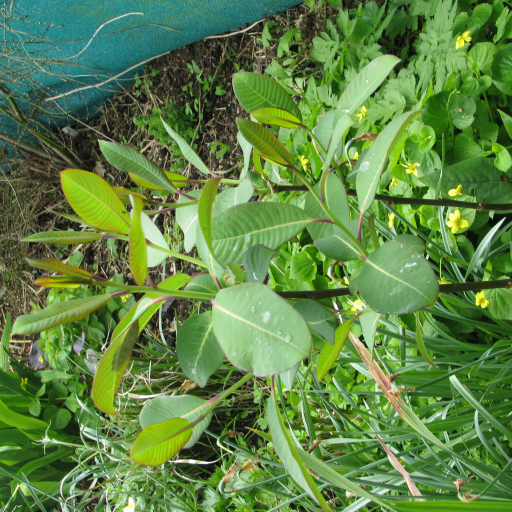
Plant Overview
Often called the Magnificent Willow, this plant is the ultimate "imposter" of the botanical world. Native to the high-altitude valleys of Sichuan, China, it defies everything you think you know about willows. Instead of narrow, wispy foliage, it boasts massive, leathery leaves that frequently lead garden visitors to mistake it for a rare Magnolia or a Rhododendron.
🔍 How to Identify
- 🍃 The Leaves: Unlike typical willows, these are massive (up to 8 inches long), oval-shaped, and have a beautiful glaucous (blue-green) tint with prominent, pale midribs.
- 🪵 Purple Shoots: New growth and young stems often sport a rich purple or reddish hue, providing a sharp contrast to the cool-toned foliage.
- 🧶 Stately Catkins: In late spring, it produces exceptionally long, upright catkins that can reach nearly a foot in length. The female catkins are particularly striking as they mature and release fluffy seeds.
🏡 In Your Garden
- 💧 Thirsty Roots: Like most members of the Salix family, this willow loves moisture. It thrives near ponds or in "heavy" soil that stays consistently damp. It will protest by dropping its large leaves if the ground dries out.
- 🛡️ Wind Protection: Because the leaves are so large, they can act like sails. It is best to plant it in a sheltered spot; strong, gusty winds can easily tear the foliage or cause physical stress to the branches.
- ☀️ Light Needs: It prefers full sun to partial shade. In hotter climates, a bit of afternoon shade helps prevent the edges of those magnificent leaves from scorching.
⚠️ Safety & Toxicity
- 🐾 Pet Safety: Salix magnifica is generally considered non-toxic to dogs, cats, and horses.
- 💊 Aspirin Connection: All willows contain salicin, the chemical precursor to aspirin, in their bark. While not a major threat, it should not be chewed on by pets or children, especially those with sensitivities to NSAIDs (non-steroidal anti-inflammatory drugs).
✨ Fun Fact
The legendary plant hunter Ernest "Chinese" Wilson first discovered this species in 1903. He was so convinced by its appearance that he initially collected it thinking it was a new type of Magnolia—he didn't realize it was actually a Willow until he saw it in flower!

Detailed Care Instructions
Growing Salix magnifica, or magnificent willow, can be a rewarding endeavor given its striking foliage and stature. Here's a comprehensive guide on how to grow this plant:
1. Choosing the Right Location
- Sunlight: Salix magnifica thrives best in full sun to partial shade. Ensure your chosen location gets at least 4-6 hours of direct sunlight.
- Soil Type: This willow prefers moist, well-drained soil. It can tolerate a range of soil types but performs best in slightly acidic to neutral pH (around 5.5 to 7.0).
2. Planting
- Timing: The best time to plant Salix magnifica is in the early spring or fall when the temperatures are cooler.
- Spacing: Space plants about 15-20 feet apart to allow for proper growth and air circulation.
- Planting Process:
- Dig a hole that's twice the width of the root ball and the same depth.
- Place the root ball in the hole, ensuring the top is level with the surrounding soil.
- Backfill the hole with soil, gently firming it around the root ball.
- Water thoroughly to settle the soil and eliminate air pockets.
3. Watering
- Dig a hole that's twice the width of the root ball and the same depth.
- Frequency: Keep the soil consistently moist, especially during the first year of growth. Water deeply at least once a week, more frequently during hot or dry periods.
- Mulching: Apply a 2-3 inch layer of mulch around the base (but not touching the trunk) to help retain soil moisture and regulate temperature.
4. Fertilizing
- Type: Use a balanced, slow-release fertilizer (e.g., 10-10-10) in early spring.
- Application: Follow the instructions on the fertilizer package for application rates. Avoid over-fertilizing, which can lead to excessive soft growth prone to pests and diseases.
5. Pruning
- Pruning Time: Prune in late winter or early spring before the plant breaks dormancy.
- Method:
- Remove any dead, damaged, or diseased branches to promote healthy growth.
- Thin out crowded branches to improve air circulation.
- Shape the plant as desired, but note that Salix magnifica has a naturally graceful form.
6. Pest and Disease Management
- Remove any dead, damaged, or diseased branches to promote healthy growth.
- Common Pests: Watch out for aphids, caterpillars, and willow leaf beetles.
- Diseases: The plant can be susceptible to rust, leaf spot, and cankers. Ensure good air circulation and avoid overhead watering to minimize disease risks.
7. Additional Care
- Staking: Young trees may need staking in windy areas to help establish a strong, upright growth habit.
- Winter Protection: In colder regions, protect young plants from harsh winter winds and ice damage.
8. Propagation
- Salix magnifica can be propagated from cuttings. Take 6-8 inch cuttings from healthy, non-flowering wood in late winter or early spring. Insert the cuttings into a well-draining, moist growing medium and keep them warm and humid until roots develop.
By following these steps, you can ensure your Salix magnifica thrives and adds beauty to your landscape. Enjoy your gardening!
Salix magnifica, a species of flowering plant in the willow family, has specific watering needs to ensure healthy growth. Here's a detailed guide on how to properly water this plant:
- Frequency:
- Young Plants: When the plant is newly established, it requires frequent watering to help the roots get established. Water it thoroughly at least 2-3 times per week.
- Mature Plants: Once established, reduce the frequency to about once a week, depending on weather conditions and soil moisture.
- Young Plants: When the plant is newly established, it requires frequent watering to help the roots get established. Water it thoroughly at least 2-3 times per week.
- Amount:
- Ensure that the soil is evenly moist but not waterlogged. The plant prefers consistently moist soil, so deep watering is ideal. Water until the soil is moist to a depth of about 6-8 inches.
- Avoid letting the soil dry out completely between waterings, as this can stress the plant.
- Ensure that the soil is evenly moist but not waterlogged. The plant prefers consistently moist soil, so deep watering is ideal. Water until the soil is moist to a depth of about 6-8 inches.
- Method:
- Slow and Deep Watering: Use a soaker hose or a drip irrigation system to provide deep watering that allows the soil to absorb moisture slowly. This helps encourage deep root growth.
- Avoid Surface Watering: Surface watering can lead to shallow roots and might not provide enough moisture. Ensure the water penetrates the root zone.
- Slow and Deep Watering: Use a soaker hose or a drip irrigation system to provide deep watering that allows the soil to absorb moisture slowly. This helps encourage deep root growth.
- Timing:
- Water early in the morning or late in the afternoon to reduce water loss through evaporation and to allow the leaves to dry before nightfall, which helps prevent fungal diseases.
- Water early in the morning or late in the afternoon to reduce water loss through evaporation and to allow the leaves to dry before nightfall, which helps prevent fungal diseases.
- Soil Considerations:
- Ensure the soil is well-draining. If the soil retains too much moisture, it can lead to root rot. Amending the soil with organic matter can improve its drainage capabilities.
- Mulching around the base can help retain soil moisture and regulate soil temperature. Use a layer of organic mulch about 2-3 inches thick, but keep it a few inches away from the trunk to prevent rot.
- Ensure the soil is well-draining. If the soil retains too much moisture, it can lead to root rot. Amending the soil with organic matter can improve its drainage capabilities.
- Climate Adaptation:
- In regions with high rainfall, adjust the watering schedule to avoid overwatering.
- During dry or hot periods, increase the frequency of watering, but always monitor the soil moisture to avoid waterlogging.
Remember to observe the plant for signs of water stress, such as wilting leaves or yellowing foliage, and adjust your watering schedule accordingly. Proper watering is crucial for the health and vitality of Salix magnifica.
- In regions with high rainfall, adjust the watering schedule to avoid overwatering.
Here's a guide to fertilizing Salix Magnifica:
- Soil Test: Before adding any fertilizer, perform a soil test to understand the nutrient composition and pH level of your soil. This helps in determining the right type and quantity of fertilizer needed.
- Timing: Fertilize in early spring just as new growth begins. You can also give a light feed in mid-summer if necessary, but avoid late-season fertilizing to prevent promoting new growth that may not harden off before winter.
- Type of Fertilizer: Use a balanced, slow-release fertilizer with an N-P-K ratio such as 10-10-10 or 14-14-14. This provides a steady supply of essential nutrients throughout the growing season.
- Application:
- Granular Fertilizer: Spread the granular fertilizer evenly around the base of the plant, extending out to the drip line (the area on the ground under the outer branches). Avoid direct contact with the stem to prevent burning.
- Watering: After applying the granular fertilizer, water the area well to help dissolve the nutrients and allow them to reach the root zone.
- Granular Fertilizer: Spread the granular fertilizer evenly around the base of the plant, extending out to the drip line (the area on the ground under the outer branches). Avoid direct contact with the stem to prevent burning.
- Compost and Organic Matter: Incorporate well-rotted compost or organic matter into the soil around the plant. This enriches the soil and improves its structure, aiding in moisture retention and nutrient uptake.
- Mulching: Apply a 2-3 inch layer of organic mulch, such as shredded bark or leaf mold, around the base of the plant. This helps retain moisture, suppresses weeds, and gradually releases nutrients as it decomposes.
- Monitoring: Keep an eye on the plant's growth and health. If you notice yellowing leaves or stunted growth, it might be an indication of nutrient deficiency or over-fertilization. Adjust the fertilizer regimen accordingly.
- Water Needs: Ensure the plant receives adequate water, especially during dry periods, to help dissolve and absorb the nutrients efficiently.
By following these steps, you can provide the Salix Magnifica with the nutrients it needs for optimal growth and health.
When cultivating Salix magnifica, the soil requirements are quite specific to ensure healthy growth and optimal development. Here's a detailed breakdown of the soil characteristics ideal for this plant:
- Soil Type: The plant thrives best in loamy or sandy-loam soils. These types of soils ensure good drainage while retaining adequate moisture levels.
- Moisture: Consistently moist soil is crucial. Salix magnifica prefers environments where the soil remains moist but not waterlogged. It’s important to avoid dry conditions as they can stress the plant.
- Drainage: While the soil should retain moisture, it must also be well-draining to prevent root rot. A balance between moisture retention and drainage is essential.
- pH Levels: The plant can tolerate a range of soil pH but generally prefers slightly acidic to neutral conditions, with an ideal pH range between 6.0 and 7.0.
- Organic Matter: High organic matter content is beneficial. The addition of compost or well-rotted manure improves soil texture, fertility, and moisture retention capabilities.
- Nutrient Content: The soil should be fertile, rich in essential nutrients to promote vigorous growth. Ensuring the presence of adequate levels of nitrogen, phosphorus, and potassium is key.
- Soil Depth: A deeper soil profile is advantageous since it accommodates the root structure, allowing the plant to access sufficient water and nutrients.
- Mulching: Applying a layer of mulch around the plant can help maintain soil moisture, control weeds, and add organic matter over time as it decomposes.
Regular soil testing can help to monitor and maintain the optimal conditions for Salix magnifica. By adhering to these soil requirements, you can create a supportive environment conducive to the successful growth and thriving of this unique plant.
Propagating Salix magnifica, a species in the Salicaceae family, can be done through several techniques including cuttings and seed germination. Here’s a detailed guide on both methods:
Propagating by Cuttings
Cuttings are the most common and effective method of propagating this plant. Here’s how you can do it:
- Select the Cutting:
- Opt for hardwood cuttings taken during the late autumn to early winter, or softwood cuttings during the growing season (spring to early summer).
- Choose healthy branches that are disease-free and have a diameter of around 1/4 to 1/2 inch (0.6 to 1.2 cm).
- Opt for hardwood cuttings taken during the late autumn to early winter, or softwood cuttings during the growing season (spring to early summer).
- Prepare the Cutting:
- For hardwood cuttings, cut sections that are about 8 to 12 inches (20 to 30 cm) long.
- For softwood cuttings, cut sections that are 3 to 6 inches (7 to 15 cm) long.
- Remove any leaves from the bottom half of the cutting.
- For hardwood cuttings, cut sections that are about 8 to 12 inches (20 to 30 cm) long.
- Plant the Cutting:
- Dip the bottom end of the cutting in rooting hormone to enhance root development.
- Plant the cutting in a pot filled with a well-draining soil mix, such as a mixture of peat and perlite.
- Ensure the cuttings are inserted about halfway into the soil.
- Dip the bottom end of the cutting in rooting hormone to enhance root development.
- Provide Optimal Conditions:
- Water the cuttings well after planting and keep the soil moist but not waterlogged.
- Place the pot in a location with indirect sunlight and maintain a temperature between 60°F to 75°F (15°C to 24°C).
- Cover the pot with a plastic bag or use a propagation dome to maintain humidity.
- Water the cuttings well after planting and keep the soil moist but not waterlogged.
- Transplant:
- Once the cuttings develop a strong root system, which typically takes several weeks to a few months, they can be transplanted into individual pots or directly into the garden.
Propagating by Seed
Though less common, propagating from seed is also possible:
- Once the cuttings develop a strong root system, which typically takes several weeks to a few months, they can be transplanted into individual pots or directly into the garden.
- Collect Seeds:
- Collect seeds when the capsules mature and begin to open.
- Collect seeds when the capsules mature and begin to open.
- Prepare the Seeds:
- Soak seeds in water for 24 hours before planting to enhance germination.
- Soak seeds in water for 24 hours before planting to enhance germination.
- Sow the Seeds:
- Sow seeds in a seed tray filled with a well-draining soil mix.
- Lightly press the seeds into the soil surface without covering them too deeply, as they need light to germinate.
- Sow seeds in a seed tray filled with a well-draining soil mix.
- Provide Optimal Conditions:
- Keep the soil consistently moist but not waterlogged.
- Place the seed tray in an area with bright, indirect sunlight.
- Maintain a temperature around 70°F (21°C).
- Keep the soil consistently moist but not waterlogged.
- Germination and Transplanting:
- Germination may take several weeks.
- Once seedlings are large enough to handle, transplant them into individual pots.
- Gradually acclimate them to outdoor conditions before planting them in the garden permanently.
General Care for New Plants
Regardless of the propagation method, young plants require proper care:
- Germination may take several weeks.
- Watering: Maintain consistent moisture, especially during the first growing season.
- Fertilizing: Use a balanced, slow-release fertilizer during the growing season.
- Pruning: Prune to shape and remove any dead or diseased branches.
- Pests and Diseases: Monitor for common pests such as aphids and follow adequate control measures.
By following these steps, you should successfully propagate and cultivate healthy Salix magnifica plants.








