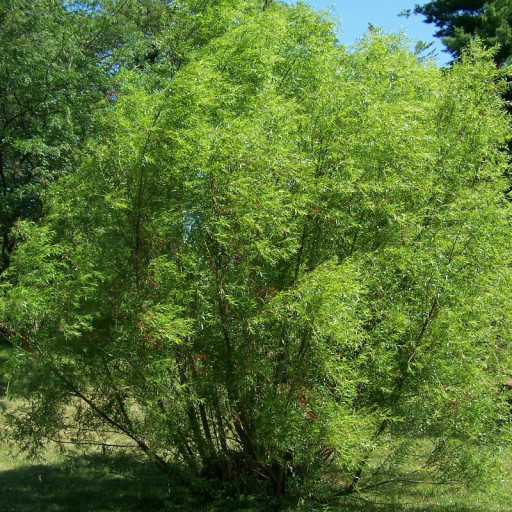
Plant Overview
Often called the Black Willow or the Gulf Willow, this North American native is a true giant of the wetlands. Unlike its weeping cousins, the Black Willow grows tall and upright, acting as a natural anchor for riverbanks and marshes. It is legendary for its rugged, dark bark and its ancient connection to modern medicine.
🔍 How to Identify
- 🌿 Narrow Foliage: The leaves are slender, lance-shaped, and finely toothed along the edges. Unlike many other willows, both the top and bottom of the leaf are a similar shade of bright green.
- 🌳 The "Black" Bark: As the tree matures, its bark becomes deeply furrowed and turns a dark brown to near-black color, which provides its botanical name, Salix nigra.
- 🌾 Spring Catkins: In early spring, the tree produces fuzzy, cylindrical flower clusters called catkins. They are yellowish-green and lack traditional petals, relying on the wind and bees for pollination.
🏡 In Your Garden
- 💧 The Ultimate Water-Hog: This plant is perfect for "problem areas" in a landscape that stay soggy or flood frequently. It is often used for erosion control because its massive, fibrous root system binds the soil together like organic rebar.
- 🏗️ Infrastructure Warning: Because its roots are incredibly thirsty and aggressive, never plant a Black Willow near sewer lines, septic tanks, or home foundations. It will seek out even the smallest crack in a pipe to reach the water inside.
- 💨 Brittle Beauty: While it grows exceptionally fast, the wood is relatively soft and brittle. Be prepared for "self-pruning" after heavy storms, as branches tend to snap more easily than those of oaks or maples.
⚠️ Safety & Toxicity
- 🟢 General Status: Non-toxic to humans, cats, and dogs. It is actually a vital food source for local wildlife, including deer and various butterfly larvae.
- 💊 Medicinal Note: The bark contains salicin, a chemical precursor to modern aspirin. While it has been used in folk medicine for centuries to treat pain, the concentration varies wildly and should not be ingested without professional guidance, especially by those allergic to aspirin.
✨ Fun Fact
The Black Willow is a "living pharmacy." Ancient civilizations, from Native Americans to the Greeks, chewed on willow bark to cure headaches. It wasn't until the 1800s that scientists isolated the salicin from willow trees to create the first aspirin tablets!

Detailed Care Instructions
| Color | Gold |
| Soil Ph | 4.5-7.5 |
| Invasive | Weed |
| Soil Type | Moist, Well-Drained Soil, Wet Soil |
| Bloom Time | Early Spring |
| Plant Type | Deciduous Tree |
| Mature Size | 30-60 Ft. Tall, 40-60 Ft. Wide |
| Native Area | Eastern To Midwest North America |
| Sun Exposure | Full Sun, Part Shade |
| Hardiness Zones | 4-9 |
To grow a Salix Nigra plant, also known as the Black Willow, you can follow these steps:
- Obtain seeds or cuttings: Salix Nigra can be grown from seeds or propagated from cuttings. If you choose to use seeds, collect them from mature female catkins during late spring or early summer. Alternatively, obtain cuttings from a mature Salix Nigra tree during the dormant season.
- Prepare the planting site: Select a suitable location with full sun or partial shade and moist, well-draining soil. The soil can be sandy or loamy, but it should retain moisture.
- Germinating seeds: If you opt to grow from seeds, cold stratify them by placing them in a sealed plastic bag with a moistened paper towel. Keep the bag in the refrigerator for 60-90 days to mimic winter conditions. After stratification, sow the seeds in pots or directly in the ground, and cover them with a thin layer of soil.
- Planting cuttings: If using cuttings, dip the cut ends in a rooting hormone to promote root growth. Plant the cuttings in pots or directly in the ground around 8-10 inches deep. Ensure that at least two or three buds are above the soil.
- Watering and maintenance: Water the newly planted seeds or cuttings regularly to keep the soil consistently moist. It may take several weeks or even months for the plants to establish roots and show signs of growth. Remove any competing weeds and provide occasional fertilizer if necessary.
- Pruning: Prune Salix Nigra during late winter or early spring to maintain shape and remove any dead or damaged branches.
- Protection from pests and diseases: Monitor the plant for pests like aphids or leaf beetles. Additionally, be vigilant against diseases such as canker or powdery mildew. Use appropriate organic or chemical treatments to control pests and diseases as needed.
Remember that Salix Nigra is known for its preference for wet areas and can tolerate flooding, making it suitable for wetland or riparian plantings. Ensure to provide adequate moisture if growing in drier conditions.
- Patience: Growing Salix Nigra may require some patience as it can take several years to mature into a full-sized tree. Regular care and attention will help ensure its healthy growth.
By following these steps and providing the necessary care, you should be able to successfully grow a Salix Nigra plant.

Place in a bright room that is sun drenched almost all day. Or directly in a south-facing window.

Water the plant deeply and thoroughly, ensuring that the soil is moist but not waterlogged. Allow the top layer of soil to dry out slightly between waterings, as overwatering can lead to root rot. Use a watering can or hose with a nozzle attachment to water the plant at the base, avoiding getting water on the leaves. In hot and dry weather, increase watering frequency to prevent the plant from becoming dehydrated. Adjust watering according to the season and the plant's growth cycle.
To fertilize this plant, you should apply a balanced fertilizer in early spring, before new growth appears. Use a fertilizer that is high in nitrogen and potassium, and low in phosphorus. Apply the fertilizer at a rate of 1 pound per 100 square feet of planting bed. Water the fertilizer into the soil thoroughly after application. Repeat the fertilization process every four to six weeks throughout the growing season.
Salix Nigra plant requires moist soil that is well-draining and slightly acidic. It prefers soil that is rich in organic matter and has a loamy texture. The plant can also tolerate clay soil as long as it is not compacted. It is important to avoid soil that is too dry or too alkaline, as the plant may struggle to survive in these conditions. Additionally, adding a layer of mulch around the base of the plant can help to keep the soil moist and provide additional nutrients as it breaks down over time.
To propagate this plant, take cuttings of young, healthy stems in the early spring before new growth appears. The cuttings should be about 6-8 inches long and include a few leaves at the top. Remove the lower leaves and dip the cut end in rooting hormone. Plant the cutting in a well-draining potting mix and keep it moist and shaded until roots develop. Once rooted, the new plant can be transplanted into the garden.








