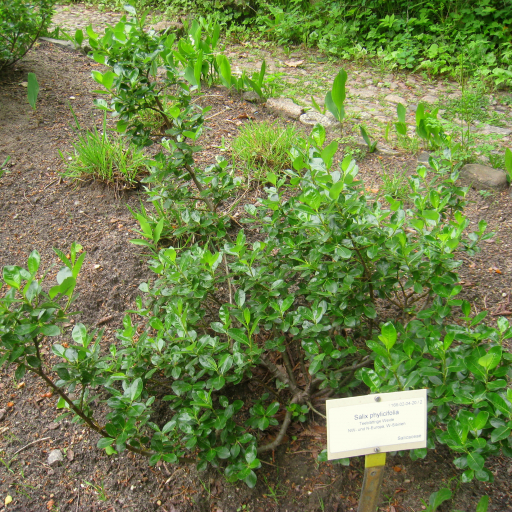
Plant Overview
Often called the Tea-leaved Willow due to its striking resemblance to the tea plant (Camellia sinensis), this hardy shrub is a jewel of the northern highlands and damp valleys. It is a resilient survivor, often found clinging to rocky stream banks or thriving in boggy meadows where other plants might drown. With its glossy, dark foliage and vibrant winter stems, it bridges the gap between wild ruggedness and garden elegance.
🔍 How to Identify
- 🍃 Leaf Texture: The leaves are elliptical and remarkably shiny on the top side, featuring a deep "forest green" that looks polished. The undersides are a contrasting pale, glaucous blue-grey.
- 🥢 Stem Color: Young twigs are a standout feature, typically appearing smooth, hairless, and ranging from a rich chestnut brown to a deep, purplish-red.
- ☁️ Silky Catkins: In early spring, before the leaves fully emerge, it produces upright, silvery-grey "pussy willow" catkins that eventually turn golden with pollen.
🏡 In Your Garden
- 💧 Thirst for Moisture: This willow is a "water-lover" through and through. It is the perfect candidate for those tricky, soggy spots in your yard or positioned near a natural pond where it can help stabilize the soil.
- ✂️ Hardy Pruning: To keep the plant looking vibrant and to encourage those colorful young stems, it benefits from "coppicing" (cutting back hard in late winter). It has a vigorous growth habit and will bounce back quickly.
⚠️ Safety & Toxicity
- 🟢 Generally Safe: The Tea-leaved Willow is considered non-toxic to humans and most pets.
- 💊 Salicin Content: Like all members of the Salix family, the bark contains salicin (the natural precursor to aspirin). While not dangerous, if a curious pet chews on a large amount of the branches, they might experience a mild stomach upset.
✨ Fun Fact
The Tea-leaved Willow is a vital "first responder" for biodiversity. Because it produces catkins so early in the spring, it provides one of the first reliable sources of nectar and pollen for bumblebees waking up from winter hibernation.

Detailed Care Instructions
To grow Salix phylicifolia, also known as bog willow or tea-leaved willow, you can follow these steps:
- Select a suitable location: Salix phylicifolia prefers moist or wet soil conditions, so choose a spot in your garden that has well-draining soil and is consistently damp. It can tolerate full sun to partial shade.
- Prepare the soil: Before planting, loosen the soil to improve drainage and remove any weeds or rocks. You can add organic matter like compost or peat moss to enhance soil moisture retention.
- Propagate from cuttings: Salix phylicifolia can be propagated through softwood cuttings. Take cuttings of about 4 to 6 inches with a sharp, sterilized knife from healthy young plant stems. Remove the lower leaves and dip the cut end in a rooting hormone (optional). Plant the cuttings in a container or directly in the prepared soil, leaving about 2 inches above the soil surface.
- Water regularly: Ensure the soil remains consistently moist, especially during the establishment phase. Provide regular watering, but avoid waterlogging.
- Mulch and weed control: Apply a layer of organic mulch around the base of the plant to help retain moisture and suppress weed growth. Mulching also protects the shallow roots from temperature fluctuations.
- Prune if necessary: Salix phylicifolia generally has a dense and bushy growth habit. Pruning can be done in late winter or early spring to remove any dead or damaged branches and to maintain the desired shape or size.
- Fertilize sparingly: Salix phylicifolia does not require heavy fertilization. A balanced slow-release fertilizer in the spring can be applied to promote healthy growth.
- Pest and disease control: Monitor for common pests such as aphids, caterpillars, or leaf beetles and take appropriate measures if an infestation occurs. Inspect the plant regularly for signs of diseases such as leaf spot or powdery mildew and address them promptly.
Remember to consult local gardening resources or a horticulturist for specific regional recommendations and to ensure the best care for your Salix phylicifolia plant.

Place in a bright room that is sun drenched almost all day. Or directly in a south-facing window.

Salix phylicifolia is a type of plant that requires regular watering to thrive. When watering this plant, it is important to ensure that the soil around the roots is moist but not waterlogged. To achieve this, it is recommended to use a watering can or a hose with a gentle spray attachment rather than a high-pressure nozzle.
When watering Salix phylicifolia, it is important to remember that this plant prefers moist soil. This means that it may need to be watered more frequently during hot, dry weather or if the plant is located in a particularly sunny or exposed area. Additionally, if the soil around the plant is dry to the touch, it may require watering even if the weather has been mild.
When watering Salix phylicifolia, it is important to avoid splashing water directly onto the leaves or stems. Instead, water should be directed at the base of the plant, around the roots. This will help to prevent water from evaporating before it reaches the plant's roots, as well as reduce the risk of fungal diseases.
Overall, watering Salix phylicifolia requires regular attention and observation of the plant's needs. By providing the right amount of water at the right time and in the right way, this plant can thrive and grow into a beautiful addition to any garden or landscape.
To fertilize this plant, apply a balanced, slow-release fertilizer in early spring just before new growth starts. Use a nitrogen-rich fertilizer to promote leafy growth. Avoid fertilizing in late fall or winter, as it may lead to damage or death of the plant. Ensure to water the plant deeply after fertilizing to help the nutrients penetrate the soil and reach the roots.
Salix Phylicifolia is a plant that requires a particular type of soil for optimal growth. The ideal soil for this plant is well-draining and nutrient-rich, with a pH level that varies between slightly acidic to slightly alkaline. Organic matter and nitrogen are also essential components of the soil needed to ensure the plant thrives.
The plant prefers moist soil, but it should not be waterlogged, as this may cause root rot. Clay soil is not recommended for growing Salix Phylicifolia plant, as it tends to retain water, thus increasing the chances of root rot.
It is advisable to add compost to the soil before planting the Salix Phylicifolia to improve its nutrient composition. The compost will also help in improving the drainage of the soil, thus preventing waterlogging.
To maintain healthy roots and ensure the plant grows well, it is recommended to maintain the soil moisture content at a constant level without overwatering. Overwatering will cause the soil to become soggy, thus predisposing the plant to root rot.
To propagate this plant, take cuttings in the early summer when the plant is actively growing. Cut a stem approximately 4-6 inches long from the parent plant, making sure to use sharp and clean pruning shears or scissors. Remove all leaves except for the top couple of sets. Dip the cut end in rooting hormone powder and gently tap off excess. Place the cutting in a container filled with a well-draining soil mix such as perlite and peat moss. Water the soil and keep it moist but not soaking wet. Cover the container with a plastic bag or wrap to create a humid environment. Place the container in a bright, indirect light location and monitor regularly for signs of rooting. Once new roots are visible, remove the plastic covering and gradually acclimate the new plant to normal indoor or outdoor conditions.








