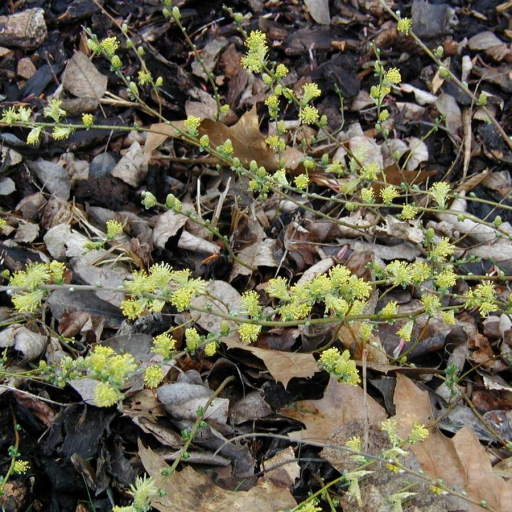
Plant Overview
Often called the Creeping Willow or "Dwarf Willow," Salix repens is the pint-sized hero of the willow family. Unlike its towering cousins that weep over riverbanks, this charming shrub stays low to the ground, creating a shimmering, silvery carpet. In the wild, it is a rugged survivor, often found braving the salty winds of coastal sand dunes or the damp mystery of moorlands.
🔍 How to Identify
- 🌿 The Leaves: Small, oval-shaped leaves that are distinctly "bicolor." They are usually a deep green on top but possess a beautiful, silky-silvery underside that glints when the wind catches them.
- 🐈 The Catkins: In early spring, before the leaves fully emerge, it produces upright, fuzzy "pussy willow" catkins. These start out silvery-grey and turn bright yellow as they fill with pollen.
- 🏗️ Growth Habit: It rarely exceeds 2–3 feet in height. Instead, it spreads horizontally, with slender, reddish-brown branches that often take root wherever they touch the damp earth.
🏡 In Your Garden
- 💧 The Moisture Link: While most willows are "water gluttons," the Creeping Willow is surprisingly adaptable. It thrives in boggy spots or near ponds, but its deep root system allows it to handle sandy, well-draining soil better than most of its relatives.
- 🐝 The Early Buffet: This plant is an ecological superstar for pollinators. Because it flowers so early in the spring, it provides a vital first meal for queen bumblebees and early-season butterflies emerging from hibernation.
⚠️ Safety & Toxicity
- 🟢 Status: Generally non-toxic to humans and common household pets.
- 💊 The Aspirin Connection: Like all willows, the bark contains salicin, the chemical precursor to aspirin. While not "poisonous," chewing on the branches can cause stomach upset in curious dogs or cats, and should be avoided by anyone with a sensitive stomach or aspirin allergies.
✨ Fun Fact
Because it is so resilient and flexible, the Creeping Willow is often used in "bio-engineering" to prevent soil erosion on steep banks. Its roots weave a living underground net that holds the earth together against wind and rain!

Detailed Care Instructions
| Humidity | Normal |
| Lighting | Full Sun |
| Difficulty | Easy |
| Hardiness Zones | 4 - 10 |
To grow Salix repens, also known as creeping willow, you can follow these steps:
- Choose a suitable location: Salix repens thrives in moist, well-draining soil. It prefers full sun to partial shade but can tolerate a wide range of light conditions.
- Prepare the soil: Loosen the soil and mix in organic matter like compost to improve drainage and fertility. This will benefit the plant's growth and development.
- Propagation: Salix repens can be grown from stem cuttings. Take a stem cutting from a healthy parent plant, about 6-8 inches long, with several leaves attached. Remove the lower leaves and dip the cut end in a rooting hormone to stimulate root growth.
- Planting: Dig a small hole in the prepared soil and plant the cutting in it, burying about half of the stem. Firmly press the soil around the cutting to ensure good contact.
- Watering: Keep the soil consistently moist but not waterlogged. Water the plant regularly, especially during dry periods, to mimic its preferred moist habitat.
- Mulching: Apply a layer of organic mulch around the base of the plant to retain soil moisture and suppress weed growth. This will also help to maintain cool root temperatures.
- Pruning: As a low-growing shrub, Salix repens generally does not require extensive pruning. However, you can trim back any straggly or dead branches to maintain a neater appearance.
- Care and maintenance: Fertilize the plant once a year with a balanced, slow-release fertilizer to provide essential nutrients. Monitor for pests or diseases and address any issues promptly.
- Propagation through division: If the plant becomes overcrowded or spread by suckers, it can be divided. Dig up the clump, carefully separate the individual plants, and replant them in suitable locations.
Remember to check with local gardening experts or nurseries for specific advice tailored to your climate and conditions, as Salix repens may have specific requirements in different regions.

Place in a window with dappled sun or a spot in the middle of a room. Or directly in a window facing west or east.

Salix repens plant requires regular watering to maintain its health and vitality. To water this plant effectively, one should first ensure that the soil is well-draining and moist. This can be achieved by watering the plant deeply but not too frequently, allowing the soil to dry out slightly between watering intervals.
When watering Salix repens, it is essential to avoid getting water on the leaves as this can cause damage and lead to fungal growth. Instead, one should water the soil directly at the base of the plant, either with a watering can or a soaker hose. It is also recommended to mulch around the base of the plant to help retain moisture in the soil and prevent weeds from growing.
In addition to regular watering, Salix repens may benefit from occasional fertilization to encourage healthy growth. However, one should be cautious not to over-fertilize the plant, which can lead to nutrient burn and other issues.
Overall, taking care to water Salix repens properly can help ensure that it remains healthy and thriving for years to come.
To fertilize this plant, apply a slow-release fertilizer in the spring. Make sure to follow the recommended application rate and mix the fertilizer with soil around the roots. Water well after fertilizing. Avoid applying fertilizer during hot summer months or during dormancy in the winter.
Salix Repens is a type of woody shrub that is native to Europe, Asia, and North America. When planting this shrub, it is important to choose the right type of soil to ensure its healthy growth.
The ideal soil for Salix Repens should be well-draining, with a pH level between 6 and 7. It is also important that the soil is rich in organic matter, such as compost or manure, to provide the plant with the necessary nutrients.
In terms of texture, the soil should be loamy or sandy, as this will allow for good water drainage and prevent waterlogging. The plant also prefers a slightly acidic soil environment.
If planting Salix Repens in a container or pot, ensure that it has proper drainage holes to prevent excess water from accumulating in the soil.
Overall, it is important to choose a soil that provides good drainage, is rich in organic matter, and has the appropriate pH level for the Salix Repens plant.
Salix repens can be propagated by using cuttings. Take a twig that is approximately 1 foot long and remove all the leaves from the bottom 6 inches. Dip the cut end of the twig in rooting hormone and plant it in a pot filled with moist potting soil. Keep the soil moist and place the pot in a bright but shaded area. The cuttings should begin to root in approximately 4 weeks.
Common pests of the creeping willow include Larvae. Make a habit of checking your creeping willow frequently for pests so that any infestations can be caught and managed early.








