Plant Overview
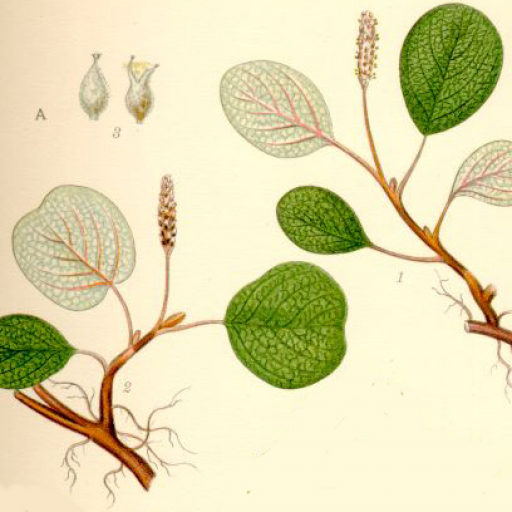
Often referred to as the Net-leaved Willow, this tiny survivor is a "giant" of the arctic and alpine world, compressed into a miniature frame. Unlike its weeping cousins that tower over riverbanks, Salix reticulata forms a lush, silver-green carpet just inches above the rocky soil. It is a masterpiece of evolution, designed to hug the earth to escape the biting winds of the high mountains and tundra.
🔍 How to Identify
- 🍃 Leaf Texture: The leaves are the stars here—deeply wrinkled and "reticulated" (net-like) on top, giving them a rugged, leathery appearance.
- ⚪ Underside Contrast: If you flip a leaf over, you’ll find a striking, silky white or silvery-grey underside covered in fine hairs.
- 🌱 Growth Habit: This is a prostrate shrub, meaning it creeps along the ground. It rarely grows taller than a few inches, forming dense, woody mats over rocks.
- 🧶 Upright Catkins: In early summer, it produces charming reddish-pink or yellow catkins that stand vertically like tiny fuzzy candles.
🏡 In Your Garden
- ⛰️ The Alpine Specialist: Because it originates from limestone ridges and scree slopes, it thrives in rock gardens. It needs "cool feet"—soil that stays moist but drains rapidly, mimicking the constant trickle of melting snow.
- 🧊 Cold Hardiness: This plant is virtually bulletproof when it comes to frost. However, it struggles in hot, humid climates where the air doesn't circulate well, as it is biologically programmed for the crisp air of the peaks.
- 🐢 Slow and Steady: It is a slow grower and doesn't like to be moved once established. Its deep, woody root system is designed to anchor it against mountain gales.
⚠️ Safety & Toxicity
- ✅ Status: Generally non-toxic and safe for curious pets or children.
- 💊 Salicin Content: Like all members of the Salix family, the bark and leaves contain salicin (the natural precursor to aspirin). While not "poisonous," it has a very bitter taste that usually discourages animals or children from eating enough to cause a stomach ache.
✨ Fun Fact
Despite its tiny size, the Net-leaved Willow is technically a tree! It has a woody trunk and branches just like an Oak or a Maple; it has simply evolved to grow horizontally to survive in environments where a vertical trunk would be snapped by wind or crushed by snow.

Detailed Care Instructions
To grow Salix reticulata, also known as the net-leaved willow, follow the steps below:
- Plant Selection: Obtain young willow plants from a local nursery or reputable online supplier. Choose healthy, disease-free specimens with well-developed root systems.
- Site Selection: Salix reticulata prefers moist to wet soil conditions, so choose a location in your garden that receives full or partial sunlight and has well-draining soil. It is often found near streams or wetlands in the wild.
- Prepare the Soil: Prior to planting, prepare the soil by loosening it with a garden fork or tiller. Remove any weeds or grass from the planting area.
- Planting: Dig a hole approximately twice the width of the root ball and slightly deeper than the height of the root ball. Place the plant in the hole, ensuring that it sits at the same level or slightly higher than the surrounding soil. Backfill the hole with soil, gently firming it around the roots.
- Watering: Immediately after planting, thoroughly water the soil around the base of the plant to settle it in. Afterward, keep the soil consistently moist but not waterlogged. Regularly check moisture levels and adjust watering accordingly.
- Mulching: Apply a layer of organic mulch, such as wood chips or straw, around the base of the plant. Mulching helps retain moisture, suppresses weed growth, and protects the roots from extreme temperatures.
- Pruning: Prune Salix reticulata in spring or winter to remove any dead, damaged, or overcrowded branches. Regular pruning will help maintain a desired shape and size.
- Fertilization: Apply a balanced slow-release fertilizer in spring, following the package instructions. This will provide the plant with essential nutrients throughout the growing season.
- Pest and Disease Control: Monitor the plant for common pests like aphids and caterpillars. If necessary, use organic insecticides or insecticidal soap to control pests. Additionally, watch for diseases such as powdery mildew or leaf spot, and promptly treat any issues using appropriate fungicides.
- Winter Care: Salix reticulata is a hardy plant but may benefit from additional protection during severe winters. Consider applying a layer of mulch around the base of the plant to insulate the roots.
Remember to research the specific needs and conditions of Salix reticulata as some variations may exist within the species. Regular maintenance, adequate water supply, and suitable growing conditions will help your Salix reticulata thrive.

Place in a bright room that is sun drenched almost all day. Or directly in a south-facing window.

To water this particular plant, ensure that the soil remains consistently moist but not waterlogged. Check the soil regularly to determine moisture levels and adjust watering accordingly. During periods of hot weather or prolonged drought, it may be necessary to increase watering frequency to prevent the plant from drying out. To avoid damaging the plant's delicate root system, water slowly and deeply, allowing the water to soak in before applying more. Additionally, avoid watering the leaves or foliage directly as this can promote disease and damage. Instead, aim to water at the base of the plant, directing the water towards the roots.
To fertilize Salix Reticulata, follow these instructions:
- Timing: Apply fertilizer in early spring, just before new growth starts, to promote healthy and vigorous growth.
- Select a balanced fertilizer: Choose a slow-release, balanced fertilizer with equal amounts of nitrogen (N), phosphorus (P), and potassium (K). For example, a 10-10-10 or 20-20-20 fertilizer would work well.
- Dilution: Follow the manufacturer's instructions on the fertilizer package to determine the amount of fertilizer to dilute in water.
- Application: Apply the diluted fertilizer evenly around the base of the plant. Avoid direct contact with the plant's stem to prevent fertilizer burn.
- Watering: After applying the fertilizer, water the plant thoroughly to allow the nutrients to penetrate the soil and reach the roots.
- Repeat: Repeat the fertilization process once every four to six weeks during the growing season to maintain healthy growth and vibrant foliage.
- Avoid over-fertilizing: It is important not to over-fertilize the Salix Reticulata plant, as excessive nutrients can cause damage. Always follow the recommended dosage instructions provided by the fertilizer's manufacturer.
Remember that it is essential to consider the specific needs of your specific Salix Reticulata plant and adjust the fertilizer application accordingly. The instructions provided are general guidelines for fertilizing this plant species.
Salix Reticulata, commonly known as (insert common name here), grows best in a well-draining soil that is moist and nutrient-rich. The soil should be slightly acidic with a pH between 5.5 and 7.0. A mixture of loam, sand, and peat moss is recommended to ensure proper drainage while retaining moisture.
Additionally, Salix Reticulata requires a soil with a good amount of organic matter, such as compost, to provide the necessary nutrients for healthy growth. It is important to avoid high levels of salt and heavy metals in the soil, which can harm the plant over time.
Ideally, the soil should be prepared by adding organic matter and allowing it to decompose for several weeks before planting Salix Reticulata. This will ensure that the soil is well-prepared and ready to support healthy growth.
Salix reticulata is a species of woody perennial plant that belongs to the family Salicaceae. It can be propagated through various methods, including:
- Seeds: Collect mature seeds from existing Salix reticulata plants. Clean the seeds by removing any surrounding material. Soak the seeds in water for 24 hours to soften the hard outer shell. Sow the seeds in well-draining soil, covering them with a thin layer of soil. Keep the soil consistently moist but not waterlogged. Germination usually takes place within a few weeks to a couple of months.
- Cuttings: Take semi-hardwood cuttings from a healthy Salix reticulata plant during the growing season, typically in late spring or early summer. Select cuttings that are around 6-8 inches in length and have multiple nodes. Remove lower leaves from the cutting, leaving only a few at the top. Dip the cut end into a rooting hormone powder to encourage root development. Plant the cutting in a pot with a well-draining rooting medium, such as a mixture of perlite and peat moss. Keep the cutting in a warm and humid environment with indirect sunlight. Mist the cutting regularly to maintain humidity. Roots should develop within a few weeks to a few months.
- Division: This method is suitable for mature Salix reticulata plants that have developed multiple stems or clumps. Carefully dig up the plant and separate the clumps or stems. Ensure that each clump or stem has enough roots attached. Replant the divided sections in separate pots or locations, ensuring they are planted at the same depth as before. Water the divisions thoroughly and keep them well-watered until they establish in their new locations.
Once the new Salix reticulata plants have rooted or established, provide them with appropriate care, including regular watering, well-draining soil, and adequate sunlight or shade based on their specific requirements. Remember that propagating plants can be a delicate process, so ensure proper care and attention during each stage to increase the likelihood of successful propagation.








