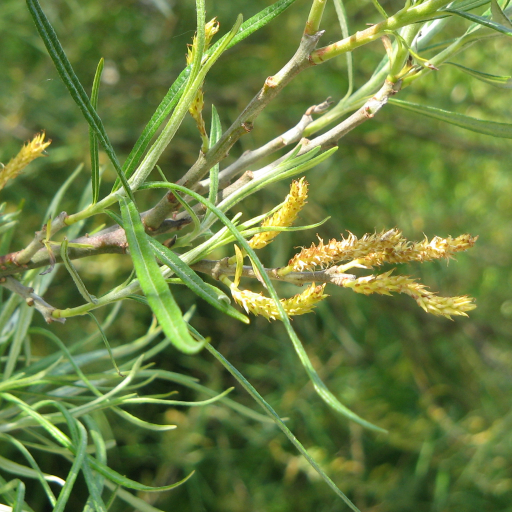
Plant Overview
Commonly known as the Rosemary-leaved Willow, this elegant shrub is a master of disguise. While it belongs to the willow family, its slender, needle-like foliage mimics the look of a Mediterranean herb garden. Native to the damp fens and sandy dunes of Europe and Central Asia, it brings a soft, silvery texture to northern landscapes where true rosemary might struggle to survive.
🔍 How to Identify
- 🌿 The Foliage: The most striking feature is the leaves—long, narrow, and linear, measuring up to 2 inches but staying very thin. They are dark green on top with a beautiful, silky white-velvet underside.
- 🎋 Stem Structure: It grows as a deciduous shrub with very slender, upright, reddish-brown branches that become arching and graceful as the plant matures.
- 🐱 Early Blooms: In early spring, before the leaves fully emerge, the branches are dotted with small, silky catkins (pussy willows) that provide an early food source for waking bees.
🏡 In Your Garden
- 💧 The "Wet Feet" Fan: Unlike many garden shrubs that rot in soggy soil, this willow thrives in wet conditions. It is the perfect candidate for a rain garden, the edge of a pond, or low-lying areas where water tends to collect.
- ✂️ Texture Management: To keep it looking its best and to emphasize the fine-textured foliage, many gardeners practice "coppicing"—cutting it back hard in late winter. This encourages a flush of vibrant, slender new growth every spring.
- 🌬️ Wind & Salt: It is remarkably tough against the elements. Its flexible branches and narrow leaves make it highly resistant to wind damage, and it can even tolerate some salt spray in coastal regions.
⚠️ Safety & Toxicity
- 🟢 Status: Generally non-toxic and safe for gardens with children and pets.
- 💊 The Aspirin Connection: Like all members of the Salix genus, the bark contains salicin, the chemical forefather of modern aspirin. While not "poisonous," chewing on the branches could cause a mild stomach upset or a reaction in those with aspirin sensitivities.
✨ Fun Fact
When the wind blows, the Rosemary-leaved Willow appears to change color! The breeze flips the leaves to reveal their silver-white undersides, creating a shimmering, "frosted" effect that looks like light dancing across water.

Detailed Care Instructions
To grow Salix rosmarinifolia, also known as Rosemary Willow, you will need to follow these steps:
- Seed Propagation: Obtain seeds from a reliable source. Sow the seeds in a seed tray or small pots filled with a well-draining potting mix. Cover the seeds lightly with soil and keep them moist. Place the tray in a warm and well-lit location.
- Germination: The seeds usually take 2-3 weeks to germinate. Keep the soil consistently moist during this period. Once the seedlings have developed a few sets of true leaves, they can be transplanted to individual containers.
- Container or Ground Planting: Whether you choose to plant the Salix rosmarinifolia in containers or directly in the ground, ensure that the soil is well-draining to prevent waterlogging. If planting in the ground, choose a sunny location with fertile soil. If planting in containers, use pots with drainage holes and a good quality potting mix.
- Watering: Salix rosmarinifolia requires regular watering, especially during dry periods. Ensure the soil remains evenly moist but not waterlogged. Avoid overwatering as it can lead to root rot.
- Pruning: Regular pruning in late winter or early spring promotes bushier growth and keeps the plant well-maintained. Prune out any dead or diseased branches and shape the plant as desired.
- Fertilization: Apply a balanced slow-release fertilizer in early spring to provide the necessary nutrients for healthy growth. Follow the manufacturer's instructions for application rates.
- Pest and Disease Control: Salix rosmarinifolia is generally disease-resistant, but it may be susceptible to aphids or fungal diseases. Regularly inspect the plant for any signs of infestation or disease, and take appropriate measures such as spraying with insecticidal soap or using organic fungicides if necessary.
- Winter Care: Salix rosmarinifolia is hardy in USDA zones 4-8. In colder regions, it may benefit from a layer of mulch to protect the roots during winter.
With proper care and maintenance, Salix rosmarinifolia can grow into an attractive shrub that adds beauty to your landscape.
The most effective way to water this plant is to do so deeply and infrequently. Water should be applied at the base of the plant, rather than on the foliage. The soil should be allowed to dry out slightly in between waterings, as the plant prefers well-drained soil. When watering, it is best to avoid getting water on the leaves, as this can encourage disease. This plant is tolerant of dry conditions, so be careful not to overwater. During periods of drought, be sure to give the plant a good soak to keep it healthy.
To fertilize this particular plant, use a slow-release, balanced fertilizer during the growing season. Apply the fertilizer around the base of the plant and water thoroughly afterwards. Avoid applying fertilizer during the dormant season. Aerating the soil around the plant can also help improve nutrient uptake.
Salix Rosmarinifolia requires well-drained soil that is rich in organic matter. It is best to use a soil mix that contains a balance of sand, garden soil, and compost. The soil should have a pH level of 6.0-7.5, which is slightly acidic to neutral. It is important to ensure that the soil is moist but not waterlogged, as too much water can lead to root rot. Regularly monitoring the plant's soil moisture levels, and watering when necessary, can help keep the plant healthy and thriving. Proper soil preparation and maintenance are essential for the long-term health of Salix Rosmarinifolia.
Salix Rosmarinifolia is a plant that can be propagated easily through various methods. One of the most common propagation methods is using softwood cuttings. To do this, take a stem from the plant that is about 4-6 inches in length and make a clean cut just below a leaf node.
Strip off the leaves from the lower part of the cutting and dip the cut end in a rooting hormone. This will help the cutting to root more easily. Place the cutting in a pot filled with moist soil or in a propagation tray with a rooting medium such as perlite or vermiculite.
Keep the cutting in a warm, humid area with indirect sunlight. Mist the cutting with water every few days to keep it moist and ensure it stays healthy. After a few weeks, the cutting should start to develop roots.
Once the rooting has occurred, gradually expose the new plant to more sunlight and less humidity. After a few weeks, transplant the new plant into a larger pot or outside in the garden. With care and attention, your new Salix Rosmarinifolia plant will grow and flourish.








