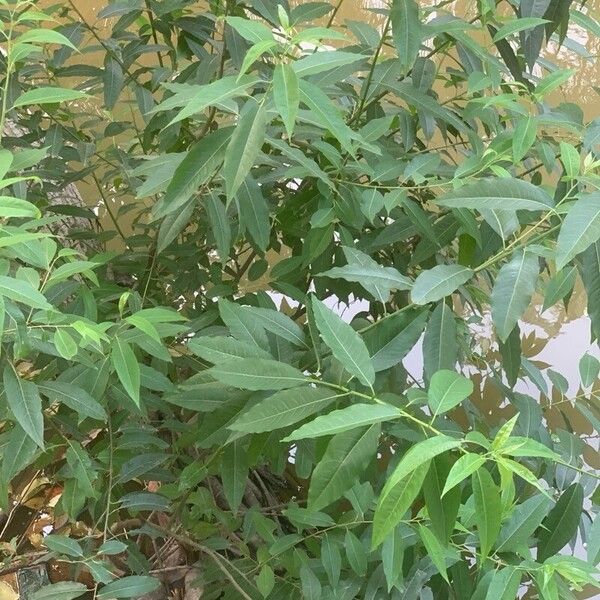
Plant Overview
Often called the Indian Willow or "Gadh-baish," Salix tetrasperma is a graceful, medium-sized tree that serves as a vital guardian of riverbanks across South and Southeast Asia. Unlike its European weeping cousins, this willow thrives in tropical heat, signaling the arrival of spring with its fragrant, fuzzy catkins. In local folklore, it is often seen as a symbol of flexibility and endurance, bending with the floodwaters rather than breaking.
🔍 How to Identify
- 🌿 The Foliage: Look for long, narrow, lance-shaped leaves that are a vibrant green on top and a pale, silvery-green underneath. When young, the leaves have a delicate, silky texture.
- 🌾 The Catkins: The tree produces drooping, cylindrical flower spikes (catkins). The male flowers are yellowish and fragrant, appearing just as the new leaves begin to sprout.
- 🪵 The Bark: The trunk features thick, greyish-brown bark with deep vertical fissures, giving older trees a rugged, ancient appearance.
🏡 In Your Garden
- 💧 Water Lovers: This species has "wet feet," meaning it thrives in boggy soil or near ponds. It is a fantastic choice for preventing soil erosion on sloping banks or near water features.
- ☀️ Sun Seeker: To maintain its lush, dense canopy, it needs plenty of direct sunlight. While it is hardy, it dislikes being moved once established due to its extensive and thirsty root system.
- 🏗️ Root Awareness: Be mindful of where you plant it! Its roots are incredibly vigorous and will seek out moisture, meaning they can interfere with underground pipes or foundations if planted too close to the home.
⚠️ Safety & Toxicity
- 🟢 Safe for Touch: The Indian Willow is generally safe for humans to touch and handle.
- 🐕 Pet Note: Like all willows, the bark contains salicin (the natural precursor to aspirin). While not typically lethal, if your dog or cat chews on the branches or bark, it can lead to gastrointestinal upset or salicylate poisoning. Keep an eye on curious chewers!
✨ Fun Fact
The Indian Willow is a natural chemist! For centuries, the bark has been used in traditional medicine to treat fevers and aches. It is the biological "ancestor" of the modern aspirin tablet we use today.

Detailed Care Instructions







