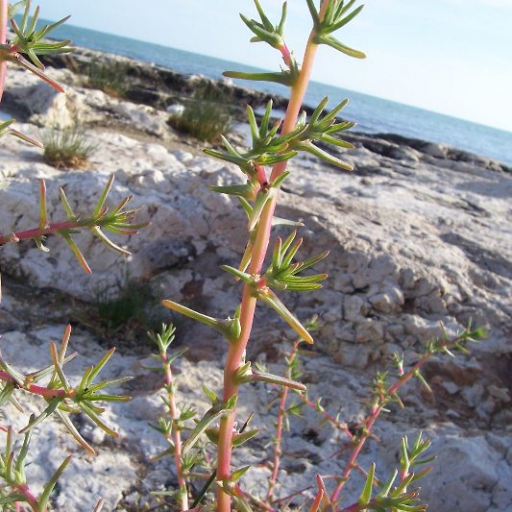
Plant Overview
Known as "Agretti" or "Friar’s Beard" in Italian kitchens, Salsola soda is a succulent survivor of the Mediterranean salt marshes. Originally an industrial powerhouse used for making glass and soap, it has transitioned into a gourmet delicacy prized for its salty, mineral-rich crunch. It looks like a wild sea grass but tastes like a sophisticated cross between spinach and samphire.
🔍 How to Identify
- 🌿 Succulent Foliage: The leaves are long, needle-like, and fleshy, resembling very thick chives or vibrant green pine needles.
- 🎋 Branching Form: It grows in a bushy, upright clump, usually reaching about 12 to 18 inches in height.
- 🌸 Hidden Blooms: The flowers are tiny and greenish, tucked away in the leaf joints (axils) without traditional petals, making them very hard to spot.
🏡 In Your Garden
- 🌊 The Salt Factor: This plant is a "halophyte," meaning it is specially adapted to thrive in salty environments. In a home garden, it appreciates well-drained soil and can handle coastal winds that would kill more sensitive herbs.
- ⏳ The Harvest Window: Because it is an annual with a short life cycle, the stems must be harvested when young and tender (about 6-8 inches tall). Once the plant begins to mature and flower, the texture becomes woody and the flavor turns bitter.
⚠️ Safety & Toxicity
- 🥗 Safe for Consumption: Salsola soda is non-toxic and highly nutritious for humans, packed with Vitamin A, iron, and calcium.
- 🐾 Pet Note: While generally safe, like spinach, it contains oxalates. It is unlikely to cause issues in small amounts, but it’s best to keep curious pets from grazing on large quantities if they have a history of kidney stones.
✨ Fun Fact
Before modern chemical manufacturing, the ash produced by burning this plant was the primary source of sodium carbonate (soda ash). This was the "secret ingredient" used by the legendary glassmakers of Murano, Venice, to create their famously clear and high-quality crystal.

Detailed Care Instructions
To grow Salsola soda, also known as saltwort or barilla plant, follow these steps:
- Climate: The plant is adapted to desert and coastal areas, so it thrives in warm, arid regions with full sun exposure. Ensure your climate matches these conditions.
- Soil: Salsola soda prefers well-draining, sandy or loamy soil. It can tolerate slightly salty or alkaline soil but doesn't thrive in highly acidic conditions. The pH level should be around 7.
- Planting: Sow the seeds directly into the soil after the last frost date in your area. The seeds should be planted about ¼ inch (0.6 cm) deep and spaced around 12-18 inches (30-45 cm) apart. If you're starting from transplants, they can be planted at the same spacing.
- Watering: Initially, water the young plants regularly to establish their root system. Once established, salsola soda is drought-tolerant and requires little water. Allow the soil to dry out between waterings to prevent root rot.
- Fertilizer: Salsola soda doesn't require much fertilization. However, you can apply a balanced, slow-release fertilizer once or twice during the growing season to encourage healthy growth.
- Maintenance: Remove any weeds surrounding the plant to avoid competition. Prune back any dead or damaged stems to keep the plant tidy. It's also important to remove saltwort plants after they go to seed, as they may become invasive in some areas.
- Pests and diseases: Salsola soda is generally resistant to pests and diseases. However, keep an eye out for aphids, scales, or mites. In case of infestation, use an organic pest control method or insecticidal soap to mitigate the issue.
- Harvesting: Salsola soda can be harvested once it reaches maturity, usually after about 90-100 days. Cut the stems just above the soil level, leaving the roots in place for regrowth. Hang the harvested plants upside down in a cool, dry place to dry and collect the saltwort for various uses.
- Uses: Salsola soda is primarily cultivated for its ash, which contains valuable soda. The ash is used in glass and soap production and has historically been used for making soda bicarbonate. Additionally, the leaves and young shoots of the plant can be cooked and consumed as a vegetable.
Remember to check with local agricultural authorities or extension offices regarding regulations and potential invasiveness in your area before growing salsola soda.

Place in a bright room that is sun drenched almost all day. Or directly in a south-facing window.

To water this plant, ensure that the soil is completely dry before watering. Stick your finger into the soil about 2 inches deep and if it feels dry, then it is time to water. Use a watering can or hose with a gentle stream of water to avoid damaging the plant. Water slowly and deeply to reach the roots. Avoid overwatering as it may cause the roots to rot. Allow the soil to dry out between waterings, as this plant is drought tolerant and does not require as much water as other plants.
To fertilize this plant, it is recommended to use a balanced, slow-release fertilizer with a ratio of 10-10-10 or 20-20-20. Apply the fertilizer during the growing season, which is typically in the spring and summer months. Follow the instructions on the fertilizer package for application rates and frequency. It is important not to over-fertilize, as this can lead to damage or death of the plant. Additionally, it is recommended to water the plant before and after fertilization to prevent burning of the roots.
The preferred soil for Salsola Soda plant is a well-draining soil with a pH level that is slightly acidic to neutral. This type of soil should be rich in organic matter and be able to hold moisture, but not to the point of becoming waterlogged. The roots of this plant are sensitive to excess moisture, so it is necessary to avoid overwatering. It is better to let the soil dry out completely before watering it again. The ideal soil for this plant should also have good aeration, which will help the roots grow strong and healthy. To improve the quality of the soil, it is recommended to add a slow-release fertilizer to it before planting. This will supply the plant with the necessary nutrients it needs to grow. Overall, the soil requirements and conditions for this plant are similar to those for most other plants - well-draining, rich in organic matter, and with a balanced pH level.
To propagate this plant, one can start by collecting the seeds once they are fully mature. The seeds should be planted in soil that is well-draining and can retain moisture. The seeds should be covered with a light layer of soil and watered regularly to ensure that they remain moist until they germinate.
Another method of propagation is by taking stem cuttings. Cuttings should be taken in the spring or summer from mature plants with healthy growth. The cuttings should be approximately four to six inches in length and should be taken from the top of the plant. Remove any leaves from the bottom half of the cutting and plant it in a well-draining soil mixture. Cover the cutting with a plastic bag to create a greenhouse-like environment and keep the soil moist.
Once the cuttings have rooted and started to grow, they can be transplanted into a larger container or outside in the garden. It is important to keep the soil moist and to avoid overwatering, which can cause root rot. With proper care, this plant can easily be propagated and will thrive in a variety of different growing conditions.








