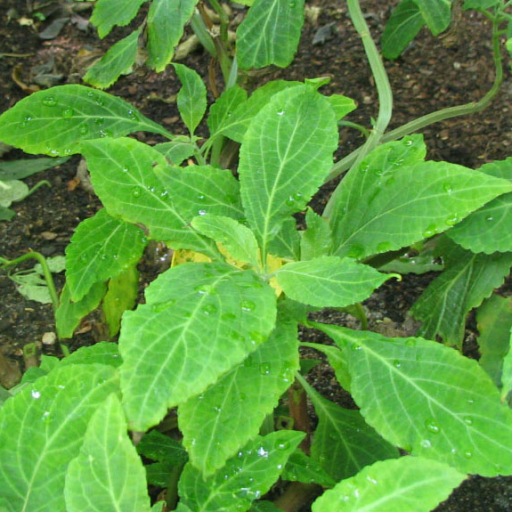
Plant Overview
Known as the "Diviner’s Sage" or Ska María Pastora, this rare member of the mint family originates from the secluded, misty cloud forests of Oaxaca, Mexico. Unlike your common kitchen sage, this plant has a long, mystical history tied to the Mazatec people, who used it for spiritual healing and visionary rituals. It is a unique botanical specimen that thrives in the damp shadows of the forest canopy, acting more like a creeping vine than a sturdy bush.
🔍 How to Identify
- 🌿 Square Stems: True to the mint family (Lamiaceae), it features distinct four-sided stems. However, these are notably hollow and quite brittle, often breaking under their own weight.
- 🍃 Large, Velvety Leaves: The leaves are broad, ovate, and can grow up to 9 inches long. They have a finely serrated edge and a soft, slightly "toothed" texture with a matte green finish.
- 🌸 Rare Blooms: Flowers are a rare sight. When they appear, they grow in upright spikes of white blossoms cradled by deep purple calyxes, creating a striking contrast.
🏡 In Your Garden
- ☁️ Humidity is King: Coming from a cloud forest, this plant craves high humidity. If the air is too dry, the leaf edges will turn brown and crispy almost overnight; it often requires a terrarium or frequent misting in indoor settings.
- 💧 The Wilting Tell: It is a dramatic communicator. If it gets too much direct sun or lacks water, the entire plant will collapse and wilt flat against the soil, "resurrecting" quickly once moved to a cool, shaded spot and hydrated.
- 🌱 Fragile Foundation: Because its stems are so succulent and fragile, it is best kept away from high-traffic areas. In the wild, this fragility is a survival tactic—broken stems fall to the forest floor and easily sprout new roots.
⚠️ Safety & Toxicity
- 🚫 Hallucinogenic Properties: This plant contains Salvinorin A, one of the most potent naturally occurring psychoactive compounds known. It is absolutely NOT a culinary herb and should never be confused with common sage.
- ⚖️ Legal Status: Due to its powerful effects on the human brain, the possession and cultivation of this plant are restricted or illegal in many countries and several U.S. states.
- 🐾 Pets and Kids: High risk. Ingestion can cause intense disorientation and psychological distress. It should be kept strictly out of reach of children and domestic animals.
✨ Fun Fact
Salvia divinorum is considered a "natural clone." Because it almost never produces viable seeds, it reproduces primarily by "layering"—when a stem breaks and hits the ground, it grows roots. This means almost every plant currently in cultivation around the world can be traced back to just a few original specimens collected in Mexico decades ago!

Detailed Care Instructions
| Humidity | High |
| Lighting | Part Sun |
| Difficulty | Medium |
| Temperature | 18°C - 28°C |
| Hardiness Zones | 10 - 11 |
Growing Salvia divinorum can be a rewarding and challenging experience. Here are some steps to help you successfully grow this plant:
- Obtain Salvia divinorum clones or seeds: Purchase clones or find a reputable source to obtain Salvia divinorum clone cuttings or seeds.
- Choose a suitable location: Salvia divinorum is a tropical plant that requires warm temperatures and high humidity. Therefore, it's best to grow it indoors or in a greenhouse. Ensure the location receives indirect sunlight or provide artificial lighting using fluorescent or LED grow lights.
- Prepare the soil: Salvia divinorum prefers well-draining soil with a slightly acidic pH level. Use a mix of potting soil, peat moss, and perlite to create a loose and well-draining soil mixture.
- Planting: If you have clones, gently remove any lower leaves and insert the cutting into a pot filled with the prepared soil mixture. If you have seeds, sow them on the soil surface and lightly cover them with a thin layer of soil.
- Watering: Salvia divinorum prefers consistently moist soil, so avoid letting it dry out completely. Water the plant regularly but avoid overwatering, as it can lead to root rot. Ensure there is proper drainage to prevent waterlogging.
- Humidity and temperature: Maintain a high humidity level around 70-80% for optimal growth. Use a humidifier or place a water tray near the plant to increase humidity. Keep the temperature between 70-85°F (21-29°C) during the day and around 10°F (5°C) lower at night.
- Fertilization: Use a balanced liquid fertilizer once a month during the growing season (spring and summer). Follow the manufacturer's instructions for the recommended dosage.
- Pruning: Regularly trim the plant to promote branching and compact growth. Pruning can also help to keep the plant in a manageable size for indoor cultivation.
- Harvesting: Salvia divinorum is typically harvested by taking cuttings from the mother plant. Once the plant has matured, it will produce new leafy shoots from the base, giving you the opportunity to take cuttings for propagation.
- Propagation: Propagate Salvia divinorum through stem cuttings. Remove a healthy, mature stem and dip it in rooting hormone before planting it in a rooting medium. Keep the cuttings in a warm, humid environment until roots form.
Remember that Salvia divinorum contains psychoactive compounds and may have legal restrictions in some regions. Ensure you are familiar with the local regulations before growing it.

Place in a bright room that is sun drenched almost all day. Or directly in a south-facing window.

To properly care for this plant, it is important to water it regularly. You should check the soil for moisture by sticking your finger about an inch deep into the soil and feeling if it is dry or moist. If the soil feels dry to the touch, it is time to water the plant. When watering, try to avoid getting water on the leaves of the plant, as this can encourage fungal growth. Instead, water the soil directly until it is moist. Allow the soil to dry out a bit before watering again to avoid overwatering, which can lead to root rot. It may also be helpful to mist the plant occasionally, especially during times of low humidity.
To fertilize this plant, use a balanced fertilizer with equal amounts of nitrogen, phosphorus, and potassium. Apply the fertilizer once a month during the growing season, which is typically in the spring and summer months. Be careful not to over-fertilize, as this can damage the plant. Water the plant deeply before and after fertilizing to ensure the nutrients are evenly distributed throughout the soil. Additionally, it's important to keep an eye on the plant's growth and adjust the fertilization schedule accordingly.
The ideal soil for Salvia Divinorum plant would be a well-draining, porous soil that is high in organic matter and nutrients. A mixture of peat, perlite, and vermiculite would be suitable for this plant. The pH of the soil should be around 6.0 to 7.5. It is essential to avoid using heavy clay soils or soils that are too sandy, as they will not provide the necessary nutrients and moisture for the plant to thrive. The soil should be kept moist but not waterlogged, and the plant should be kept in a warm and humid environment. Additionally, regular fertilization with a balanced fertilizer will help to provide the necessary nutrients for healthy growth.
To propagate this plant, take a cutting of the stem that is at least 6 inches in length. Remove the lower leaves and dip the cut end into rooting hormone. Plant the cutting in a mix of soil and perlite and keep it moist. Keep the cutting in a warm, humid place and wait for new growth to appear. Once the new growth has reached a sufficient size, it can be transplanted into its own pot or into the ground.








