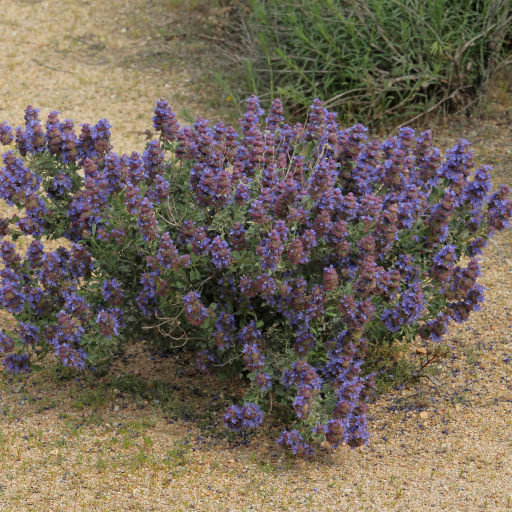
Plant Overview
Commonly known as Purple Sage or Desert Sage, Salvia dorrii is the shimmering jewel of the high deserts in the Western United States. This plant gained legendary status as the namesake of Zane Grey’s famous Western novel, Riders of the Purple Sage. Beyond its literary fame, it is a rugged survivor, thriving in harsh, arid landscapes where other plants might wither, painting the desert in hues of silver and electric violet.
🔍 How to Identify
- 🌿 The Foliage: Look for small, spoon-shaped leaves that are a striking silvery-gray. This color comes from a dense layer of tiny hairs that protect the plant from the intense desert sun.
- 🔮 The Blooms: The flowers are truly unique; they feature vibrant blue-to-purple petals peeking out from layers of papery, dark purple "bracts" (modified leaves) that look like stacked pom-poms.
- 👃 The Scent: If you gently rub a leaf, it releases a sharp, refreshing, and clean sage aroma that is much more intense than your standard kitchen sage.
🏡 In Your Garden
- 🏜️ Drainage is Vital: Being a desert native, this plant has a "death wish" if its feet get wet. It requires extremely well-draining, gritty soil and should never be overwatered, especially during its dormant winter period.
- 🦋 Pollinator Magnet: While it is incredibly drought-tolerant, it is a high-energy hub for nature. It is a favorite of native bumblebees and butterflies, who are attracted to the nectar-rich purple spikes.
- ✂️ Pruning Strategy: It develops a woody base over time. To keep it from looking "leggy" or messy, light pruning after the flowering season helps maintain a tight, silver mound.
⚠️ Safety & Toxicity
- ✅ Status: Generally considered non-toxic to humans and common pets.
- 🐾 Pet Note: While not poisonous, the high concentration of essential oils in the leaves can cause mild stomach upset if a curious dog or cat decides to graze on it heavily.
- 👐 Skin Safety: For most people, the plant is safe to touch, though its strong fragrance can be quite persistent on the skin.
✨ Fun Fact
Native American tribes, including the Paiute and Shoshone, historically used Salvia dorrii for both medicinal and ceremonial purposes. It was often used as a "smudge" or incense, as the smoke from the burning leaves was believed to purify the air and clear headaches.

Detailed Care Instructions
To grow a Salvia dorrii plant, also known as Desert Sage or Purple Sage, follow these steps:
- Start with seeds: Obtain Salvia dorrii seeds from a reputable supplier or harvest them from mature plants. Alternatively, you can purchase young plants from a nursery.
- Soil requirements: Salvia dorrii thrives in well-draining soil. Prepare a mixture of sandy soil and organic matter, such as compost, to improve drainage and provide nutrients.
- Germination: Plant the seeds shallowly in seed trays, pots, or directly in the garden soil during spring or fall. Make sure to keep the soil moist, but not waterlogged. Germination typically takes around two to three weeks.
- Transplanting: Once the seedlings have grown a few inches tall and developed a strong root system, carefully transplant them into larger pots or directly into well-prepared garden beds. Space them about 12-18 inches apart to allow for their mature spread.
- Sunlight and temperature: Salvia dorrii requires full sun to thrive, so choose a location in your garden where it receives at least six hours of direct sunlight each day. It is also important to consider the temperature, as Salvia dorrii is adapted to arid climates. It can tolerate hot temperatures, but severe frost can damage the plant.
- Watering: Initially, water the newly transplanted plants regularly to help establish their root system. Once established, reduce watering frequency, as Salvia dorrii is drought-tolerant and prefers slightly drier conditions.
- Pruning: To encourage bushier growth and increase flowering, you can prune the plant in early spring or after the blooming period. Trim back any dead or damaged branches and shape the plant as desired.
- Fertilization: Salvia dorrii generally does not require heavy fertilization. If desired, apply a balanced, slow-release fertilizer during the growing season to provide necessary nutrients.
- Maintenance: During the growing season, keep an eye out for pests, such as aphids or spider mites, and use organic or chemical methods to control them if necessary. Monitor the plant for signs of diseases, and promptly take action if any issues arise.
By following these steps, you can successfully grow Salvia dorrii and enjoy its beautiful purple flowers and aromatic foliage.

Place in a bright room that is sun drenched almost all day. Or directly in a south-facing window.

To water this plant, the first thing to consider is the soil type. Salvia Dorrii plant prefers well-draining soil. Therefore, it is essential to water it carefully to ensure that excess water does not accumulate around the roots causing rotting.
When watering the plant, it is best to use a watering can or hose with a low-pressure setting. Slowly water the base of the plant, being careful not to get water on the leaves. Watering should be done early in the morning or late in the evening to minimize evaporation during hot weather.
It is also essential to water the plant more frequently during hot and dry weather conditions to prevent dehydration. However, Salvia Dorrii plant is drought-tolerant and does not need too much water.
Overwatering the plant can cause problems such as root rot, which can quickly kill the plant. Therefore, it is better to water the plant deeply but less frequently to prevent waterlogging around the roots.
Lastly, it is advisable to check the moisture level of the soil before watering. This can be done by touching the soil with your fingers or using a soil moisture meter. Water the plant only when the soil feels dry to the touch.
To fertilize this plant, use a slow-release fertilizer with balanced amounts of nitrogen, phosphorus, and potassium. Apply the fertilizer according to the product instructions, being careful not to over-fertilize as this plant is sensitive to excessive nutrients. Fertilize once in early spring before new growth begins and again in mid-summer. Alternatively, you can use organic fertilizers such as compost or aged manure. Spread a thin layer of the organic material around the base of the plant, avoiding contact with the stems or leaves. Water thoroughly after fertilizing.
Salvia dorrii plant prefers well-draining soil that is sandy or rocky in texture. The soil pH should be neutral to acidic, with a range between 6.0 and 7.5. It does not tolerate heavy, clay soils or ones that retain too much moisture, as this can lead to root rot. Therefore, it is important to use a soil mixture that provides good drainage and allows air to circulate around the roots. Mixing in coarse sand, gravel, or perlite can improve soil structure and drainage. Additionally, adding organic matter such as compost or leaf litter can enhance soil fertility. It is recommended to avoid using soil mixes that contain high levels of nitrogen or phosphorus, as these can promote excessive vegetative growth and reduce flowering.
To propagate this plant, you can collect mature seeds from the plant after its flowering season. Make sure the seeds are fully developed, plump, and dry before collecting them. You can then plant the seeds in well-draining, sandy soil in a sunny location. Water the seeds regularly, but do not overwater as this plant does not like to sit in water. You can also propagate this plant by taking stem cuttings in the spring and summer. Cut off a stem from the parent plant that is several inches long and has a few sets of leaves. Remove the lower leaves and dip the cut end in rooting hormone powder. Plant the cutting in well-draining soil and water it regularly. Place the cutting in a sunny location, but protect it from direct sunlight until it has established roots. With proper care, the cutting should develop roots and grow into a new plant.








