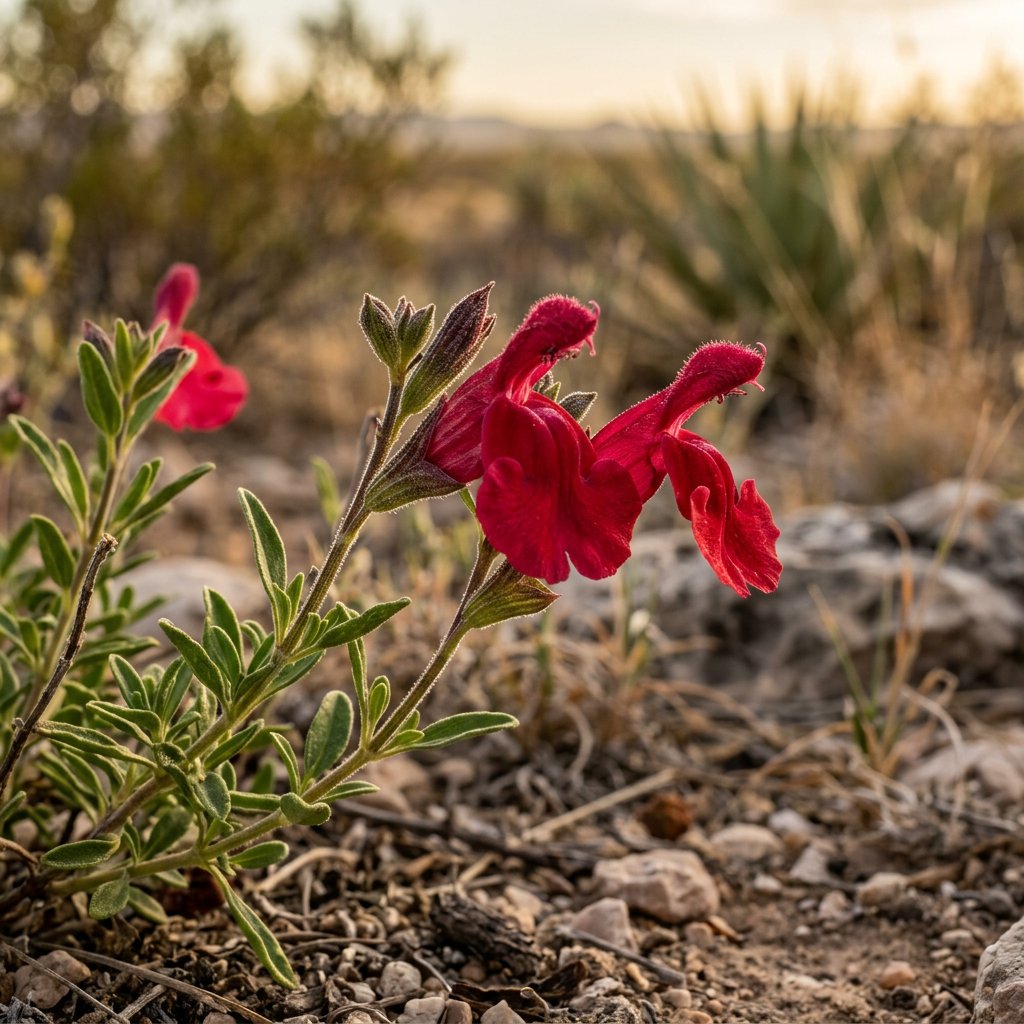
Plant Overview
Known affectionately as Autumn Sage or Cherry Sage, Salvia greggii is a resilient, woody shrub that hails from the rocky soils of Texas and Mexico. Despite its name, it isn't just a fall performer; it produces a riot of colorful, nectar-rich flowers from spring until the first frost. It’s a staple for xeriscaping and wildflower gardens, prized for its ability to look delicate while being "tough as nails" in the heat.
🔍 How to Identify
- 🍃 Small, Oval Leaves: Unlike many sages with fuzzy foliage, these leaves are small, smooth, and have a slightly glossy, deep green finish.
- 🌺 Two-Lipped Flowers: The blossoms are distinctively "bilabiate" (two-lipped), appearing in pairs along the stem in shades ranging from fiery red and hot pink to soft cream and purple.
- 👃 Aromatic Foliage: When the leaves are brushed or crushed, they release a sharp, spicy, and minty fragrance that is instantly recognizable.
🏡 In Your Garden
- ✂️ Pruning Strategy: This plant tends to become "leggy" or woody over time. To prevent it from looking sparse, give it a firm "haircut" (pruning back by about 4 inches) in late winter or early spring to encourage fresh, bushy growth.
- 💧 Drainage is King: It hates "wet feet." If your garden has heavy clay, plant it in a raised bed or a container. It thrives on neglect once established and prefers a lean soil over one that is heavily fertilized.
- 🦋 The Hummingbird Diner: Because of the tubular shape of the flowers, it is one of the most effective plants for attracting hummingbirds. They can't resist the high-energy nectar hidden deep within the blooms.
⚠️ Safety & Toxicity
- ✅ Non-Toxic Status: Salvia greggii is generally considered non-toxic to humans, dogs, and cats.
- 🦌 Deer Resistant: While safe for pets, the pungent aroma of the leaves acts as a natural deterrent for deer and rabbits, who typically find the scent and taste unappealing.
✨ Fun Fact
The plant was named after Josiah Gregg, an 19th-century explorer and merchant who collected specimens while traveling through the American Southwest and Mexico. Interestingly, while the wild species is usually red, gardeners have bred hundreds of cultivars, including "Hot Lips," which can change its flower color from red to white depending on the temperature!

Detailed Care Instructions
To grow Salvia Greggii (also known as Autumn Sage), follow these steps:
- Choose a suitable location: Salvia Greggii thrives in full sun or partial shade, so select a spot that receives at least six hours of direct sunlight. Ensure the soil is well-drained and has good air circulation.
- Prepare the soil: Salvia Greggii prefers slightly acidic to neutral soil (pH level of 6.0 to 7.5). Amend the soil with organic matter such as compost to improve drainage and fertility.
- Planting: Dig a hole that is twice as wide and deep as the plant's root ball. Place the Salvia Greggii in the hole, making sure the top of the root ball is level with or slightly above the soil level. Fill the hole with soil and gently pat it down. Space each plant about 18-24 inches apart.
- Watering: Water the plant thoroughly after planting, making sure the soil is evenly moist. Water regularly, especially during the first growing season, until the plant establishes a strong root system. Salvia Greggii is drought-tolerant, but regular watering is essential for optimal growth and flowering.
- Mulching: Apply a layer of organic mulch around the base of the plant, maintaining a distance of a few inches from the stem. Mulch helps retain soil moisture, suppress weeds, and regulate soil temperature.
- Pruning: To encourage bushier growth and prolific blooming, prune the plant regularly. Cut back about one-third of the plant's total height in late winter or early spring before new growth appears. Deadhead spent flowers throughout the blooming season to promote continuous flowering.
- Fertilizer: Salvia Greggii generally doesn't require heavy feeding. Apply a balanced slow-release fertilizer sparingly in spring to provide necessary nutrients. Avoid using excessive amounts of nitrogen, as it can promote excessive foliage growth at the expense of flowering.
- Pest and disease control: Salvia Greggii is generally resistant to pests and diseases. However, keep an eye out for aphids, spider mites, or snails, which might occasionally infest the plant. In case of infestation, treat with an appropriate organic or chemical control method.
By following these guidelines, you can successfully grow and enjoy Salvia Greggii in your garden!

Place in a bright room that is sun drenched almost all day. Or directly in a south-facing window.

Watering Salvia Greggii plant should be done regularly, but not too frequently in order to avoid water-logging. The best practice is to keep the soil moist but not overly wet. The soil should be allowed to dry out slightly between watering, but not to the point of wilting. When watering, be sure to water deeply at the base of the plant, rather than spraying water over the leaves. This helps to prevent diseases caused by moisture on the leaves. Additionally, it is important to avoid watering in the evenings, as this can also promote disease growth. Instead, water early in the morning or late in the afternoon when the sun is not at its strongest.
For best results in fertilizing this plant, use a balanced, slow-release fertilizer with equal amounts of nitrogen, phosphorus, and potassium. Apply the fertilizer every three months during the growing season, following the manufacturer's instructions for application rates. If the plant starts to show signs of nutrient deficiency such as yellowing leaves, increase the frequency of fertilization to once every two months. Water the plant thoroughly after fertilizing to help the nutrients absorb into the soil. Avoid fertilizing during periods of drought or extreme heat, as this can cause fertilizer burn to the roots. Instead, wait until there is adequate moisture in the soil before applying fertilizer.
For optimal growth, it is recommended to use a well-draining soil mix that is rich in nutrients and organic matter. The pH level of the soil should be slightly acidic to neutral, ranging from 6.0 to 7.0. The soil should be moist but not waterlogged to prevent the roots from rotting. It is also important to ensure good air circulation around the plant to prevent fungal diseases. Adding a layer of mulch around the plant can help retain moisture and suppress weed growth. When planting, add a slow-release fertilizer to the soil to provide nutrients for the plant over time.
To propagate this plant, you can take softwood cuttings from the tips of the stems during the spring or summer months. Select a stem that is healthy and has no signs of disease or damage. The cutting should be approximately 4-6 inches long and include at least 2-3 pairs of leaves.
Remove the bottom pair of leaves and any flowers or buds from the stem. Dip the cut end of the stem into a rooting hormone powder to encourage rooting.
Fill a small pot with well-draining soil mix and make a hole in the center. Insert the cutting into the hole and firm the soil around it. Water the cutting thoroughly and place it in a warm, bright location out of direct sunlight.
Keep the soil moist but not waterlogged and mist the cutting regularly to maintain humidity. After a few weeks, the cutting will begin to develop roots and new growth. Once the new growth is established, you can transplant the young plant into a larger pot or outdoors in a well-draining, sunny location.
Common pests of the san antone-oregano include Spider mites, aphids, whiteflies. Make a habit of checking your san antone-oregano frequently for pests so that any infestations can be caught and managed early.








