Plant Overview
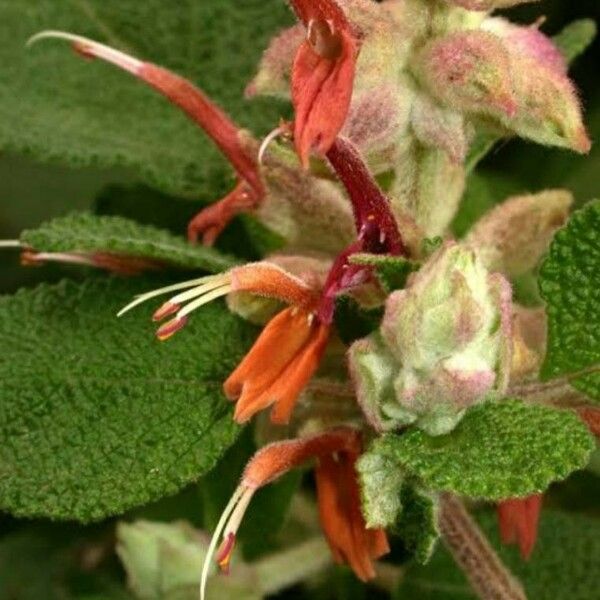
Often known as the "Woolly-flower Sage," Salvia lasiantha is a hidden gem native to the high-altitude slopes of Mexico. This shrubby perennial captures the essence of a desert sunset with its warm, apricot-toned blossoms that look like they are wearing tiny fur coats. While many sages are known for their scent, this species is most beloved for its unique "shaggy" texture and its ability to thrive in rugged, dry environments.
🔍 How to Identify
- 🌸 Velvety Blooms: The tubular flowers are distinctively covered in dense, fine hairs in shades of orange, peach, or terracotta, giving them a "fuzzy" appearance.
- 🍃 Textured Foliage: The leaves are ovate with serrated edges and a wrinkled (rugose) surface, often featuring a dusty green hue that complements the warm flowers.
- 📏 Shrubby Habit: It grows as an upright, multi-branched shrub that can reach between 3 to 6 feet in height, creating a soft, hazy silhouette in a garden bed.
🏡 In Your Garden
- ☀️ Highland Heritage: Because it originates from the dry pine-oak forests of Mexico, it requires excellent soil drainage. It "hates wet feet" and will quickly decline if left in standing water or heavy, compacted clay.
- 🐦 Pollinator Magnet: The long, nectar-rich tubes are a primary fuel source for hummingbirds. Its bright, warm colors act as a neon sign for pollinators, making it a centerpiece for any wildlife-friendly landscape.
⚠️ Safety & Toxicity
- 🌿 Safe Status: Salvia lasiantha is generally considered non-toxic to humans and common household pets like dogs and cats.
- 👐 Tactile Warning: While not poisonous, the fine "wool" on the flowers and stems can occasionally trap dust or pollen, which might cause a mild sneeze or skin tickle for those with high sensitivities during maintenance.
✨ Fun Fact
The botanical name lasiantha is derived from the Greek words lasios (shaggy/woolly) and anthos (flower). It literally translates to "shaggy flower," a perfect description for its adorable, unkempt floral appearance!

Detailed Care Instructions
To grow Salvia lasiantha, follow these steps:
- Choose a suitable location: Salvia lasiantha prefers full sun but can tolerate partial shade. Select a spot in your garden or a container with well-draining soil.
- Prepare the soil: Before planting, make sure the soil is loose, friable, and well-draining. Amend heavy clay or sandy soils with organic matter, such as compost or well-rotted manure, to improve drainage and fertility.
- Sow seeds: Salvia lasiantha can be grown from seeds. Sow the seeds directly into the prepared soil after the last frost date in your area. Lightly press the seeds into the soil, as they require light to germinate. Keep the soil consistently moist until germination occurs.
- Provide water: Water the plants regularly, keeping the soil slightly moist but not waterlogged. Salvia lasiantha has moderate water requirements, so adjust watering based on weather conditions to prevent overwatering or underwatering.
- Mulch: Apply a layer of organic mulch around the plants to help retain moisture, suppress weeds, and regulate soil temperature.
- Fertilize: Salvia lasiantha generally does not require heavy fertilization. However, you can apply a balanced, slow-release organic fertilizer in early spring to provide nutrients for healthy growth.
- Prune: Pinch back or trim the plants occasionally, especially after flowering, to promote bushier growth and encourage more blooming the following year. Deadhead any spent flowers to extend the blooming period and prevent self-seeding.
- Monitor pests and diseases: Salvia lasiantha is relatively resistant to pests and diseases. However, periodically inspect the plants for common issues such as aphids, mealybugs, or powdery mildew. Treat any infestations or diseases promptly with appropriate organic remedies.
- Harvest seeds: Towards the end of the blooming season, allow some flowers to remain on the plant and dry out naturally. Collect the seeds by gently shaking or collecting them from the dried flower heads. Store the seeds in a cool, dry place for future planting.
- Propagation: If desired, Salvia lasiantha can also be propagated by division or stem cuttings. Dividing established plants or taking stem cuttings in early spring or fall can produce new plants.
Remember to always check your local regulations regarding the cultivation of Salvia lasiantha, as it might be considered an invasive species in some regions.

Place in a bright room that is sun drenched almost all day. Or directly in a south-facing window.

To properly water this plant, the soil should be checked for moisture levels before each watering. The soil should be allowed to dry out slightly between waterings to avoid over-watering and root rot. It is recommended to water the plant deeply, ensuring the water reaches the roots, but avoid getting water on the foliage. Water should not be allowed to sit in the plant's saucer as this can also lead to root rot. During hot weather, the plant may require watering more frequently.
Apply a balanced fertilizer with equal parts nitrogen, phosphorus, and potassium. Fertilize once a month during the growing season, starting in early spring and ending in late summer. Use a slow-release fertilizer that will provide nutrients over time. Be careful not to over-fertilize, as this can lead to excessive growth and weak stems. Water the plant well before and after fertilizing to ensure the nutrients are absorbed properly.
Salvia Lasiantha plant prefers well-draining soil that is rich in nutrients. The ideal soil pH for this plant should be neutral to slightly acidic, with a pH range of 6.0 to 7.0. The soil should be loose and loamy, with good drainage to prevent waterlogging and root rot. Adding organic matter to the soil, such as compost or well-rotted manure, can help improve soil fertility and provide a good growing environment for the plant. Avoid using heavy clay soils or soils that are too sandy, as they may not provide the necessary nutrients and drainage that the plant requires. It is also recommended to mix in some perlite or sand to improve drainage further.
Salvia Lasiantha can be propagated through cuttings or seeds. To propagate through cuttings, select a healthy stem from the parent plant and cut a 6-inch section below a node. Remove the leaves from the lower 3 inches of the stem and dip the cut end in rooting hormone. Place the cutting in well-draining soil and keep it moist and in partial shade until roots develop.
To propagate through seeds, collect the seeds from the parent plant after the flowers have faded and the seed pods have dried. Plant the seeds in well-draining soil in a location with partial shade. Keep the soil moist and wait for the seeds to germinate, which can take between 7-14 days.
Both propagation methods require patience and care to ensure successful growth.








