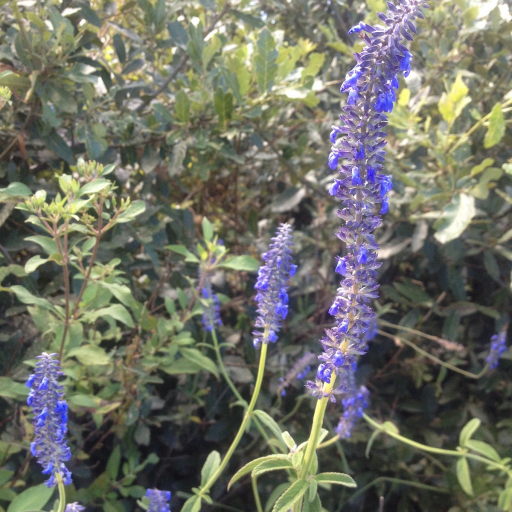
Plant Overview
Often called the Lavender Sage, this Mexican beauty creates a misty haze of violet in the garden that can fool even seasoned botanists from a distance. Native to the high-altitude pine-oak forests of Mexico and Central America, it is beloved for its airy, wild appearance and its ability to turn a dry corner of the yard into a buzzing sanctuary for pollinators.
🔍 How to Identify
- 🌿 Slender Foliage: The leaves are narrow, lance-shaped, and covered in fine hairs that give them a soft, grayish-green tint, reminiscent of culinary sage but much more delicate.
- 💜 Crowded Bloom Spikes: It produces long, upright stems topped with dense whorls of tiny, intense violet-blue flowers that bloom in succession from the bottom up.
- 👃 Herbaceous Scent: When the leaves are bruised or brushed against, they release a clean, medicinal aroma that is sharper than common sage but very refreshing.
🏡 In Your Garden
- ☀️ Sun Seeker: This plant craves bright light to keep its stems sturdy; in too much shade, it tends to "stretch" and may flop over under the weight of its own blossoms.
- 💧 Drainage is Key: Coming from rocky mountain slopes, it is highly susceptible to root rot in heavy clay. It thrives in "lean" soil where water moves quickly, making it an excellent candidate for raised beds or rock gardens.
- 🐝 Pollinator Magnet: It is a high-octane fuel source for hummingbirds and bees. If you plant this near a window, expect a constant parade of winged visitors throughout the late summer and fall.
⚠️ Safety & Toxicity
- ✅ Non-Toxic Status: Salvia lavanduloides is generally considered safe and non-toxic to humans, cats, and dogs.
- 🌱 Skin Sensitivity: While not poisonous, the fine hairs on the leaves and stems can occasionally cause mild mechanical irritation to those with very sensitive skin during pruning.
✨ Fun Fact
The specific name lavanduloides literally translates from Latin to "lavender-like." It was given this name because its flower spikes so closely mimic the appearance and texture of true Lavender (Lavandula), despite the two plants being different genera!

Detailed Care Instructions

Place in a bright room that is sun drenched almost all day. Or directly in a south-facing window.

Some plants require more regular watering than others, which should be done every few days. It's critical to maintain the soil moist all of the time. The water requirements of the same plant placed in pots with varying sizes will differ. Because the water in the smaller pot evaporates faster than the water in the larger pot, it will require more watering. Regardless of pot size, the surface should constantly be maintained moist.








