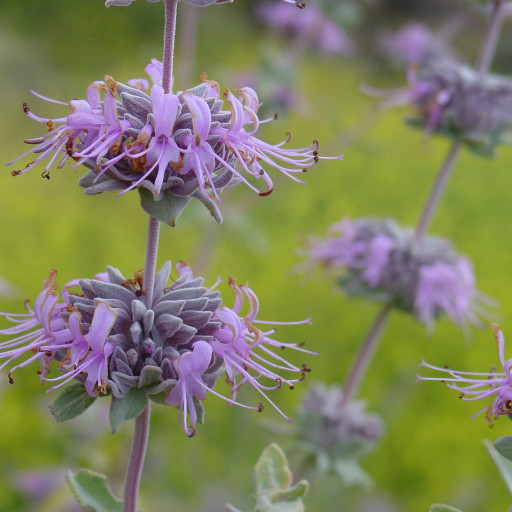
Plant Overview
Known as the "San Luis Purple Sage," this California native is a shimmering superstar of the coastal chaparral. Its luminous, silvery-white foliage looks almost like it’s glowing under the moonlight, providing a striking metallic contrast to its soft lavender flower spikes. It is a hardy survivor that defines the fragrant, sun-drenched hillsides of the West Coast.
🔍 How to Identify
- 🍃 Silvery Foliage: The leaves are lance-shaped and covered in dense, fine white hairs, giving the plant its signature "leucophylla" (white-leaf) appearance.
- 💜 Whorled Flowers: Small, tubular lavender blossoms grow in distinct, rounded clusters (whorls) stacked like pom-poms along tall, arching stems.
- 👃 Aromatic Scent: When the leaves are brushed or crushed, they release a powerful, earthy, and clean fragrance that is synonymous with the California wilderness.
🏡 In Your Garden
- ☀️ Drought Champion: This plant is "summer dormant," meaning it is biologically programmed to survive on very little water. In fact, overwatering during the hot summer months can actually harm the plant more than a heatwave would.
- 🦋 Pollinator Magnet: It is a vital high-energy resource for native bees, butterflies, and hummingbirds. If you have a corner of the garden that needs more "life," this is the plant to put there.
- 🌱 Space Requirements: Purple Sage is a vigorous grower and can spread up to 6 feet wide. It’s perfect for stabilizing slopes or filling large gaps in xeriscapes where other plants might struggle.
⚠️ Safety & Toxicity
- 🐾 Pet Friendly: Purple Sage is generally considered non-toxic to dogs, cats, and horses, making it a safe choice for family landscapes.
- 👶 Skin Safety: The plant is safe to touch and lacks the thorns or irritants found in other wild shrubs, though the intense aromatic oils may be a bit strong for those with very sensitive respiratory systems.
✨ Fun Fact
The silvery hairs on the leaves aren't just for decoration; they function like tiny sunscreens. They reflect sunlight and create a "boundary layer" of still air against the leaf surface, which prevents the plant from losing moisture to the dry desert winds.

Detailed Care Instructions
To grow Salvia leucophylla, also known as purple sage or San Luis Obispo sage, you can follow these steps:
- Choose a suitable location: Salvia leucophylla prefers full sun, so select a spot in your garden that receives at least 6 to 8 hours of direct sunlight each day. It also requires well-draining soil.
- Prepare the soil: Before planting, amend the soil with organic matter, such as compost, to improve its fertility, drainage, and moisture retention.
- Propagate from seeds or cuttings:
a. Seeds: Sow the seeds in late winter or early spring. Start by scarifying the seeds, which means gently scratching the outer coating to aid germination. Soak the seeds overnight before planting to enhance germination. Plant the seeds about 1/8 inch deep in prepared soil and water well. Keep the soil consistently moist until germination occurs, which usually takes around 10 to 21 days. Once the seedlings have grown a few inches tall, thin them, leaving the healthiest plants spaced about 12 to 18 inches apart.
b. Cuttings: Take stem cuttings from mature Salvia leucophylla plants in late spring or early summer. Choose healthy, non-flowering stems and make a clean cut just below a leaf node. Remove the lower leaves and dip the cut end into rooting hormone powder. Plant the cutting in a pot filled with moist, well-draining soil. Place the pot in a location with bright, indirect light, and keep the soil consistently moist. After several weeks, roots should develop, and you can transplant the rooted cutting into a larger pot or directly into the garden.
- Watering: Salvia leucophylla is drought-tolerant but benefits from regular watering during its first year of growth. Once established, it requires occasional deep watering during prolonged dry periods.
- Mulch: Apply a layer of organic mulch around the base of the plant to help retain moisture, suppress weed growth, and insulate the roots.
- Pruning: Prune Salvia leucophylla lightly after flowering to remove spent flower stalks and promote bushier growth. Avoid heavy pruning, as this plant tends to have a naturally open and airy growth habit.
- Pest and disease control: Salvia leucophylla is generally resistant to pests and diseases. However, keeping the area around the plant clean and free from debris will help minimize potential issues.
Remember to check the specific care requirements for your particular Salvia leucophylla variety, as different cultivars may have slightly different preferences or needs.

Place in a bright room that is sun drenched almost all day. Or directly in a south-facing window.

When watering this plant, it is important to use a gentle stream of water to avoid damaging the leaves and stems. Water should be applied directly to the soil at the base of the plant, rather than on the leaves or flowers. Over-watering can lead to root rot, so it is important to allow the soil to dry out completely between waterings. This plant is drought-tolerant, so it may only need to be watered every 2-3 weeks during the growing season. In the winter, it may not need to be watered at all if it receives sufficient rainfall. It is important to monitor the soil moisture level and adjust watering frequency accordingly.
To fertilize this type of plant, use a balanced fertilizer with equal parts nitrogen, phosphorus, and potassium. Apply the fertilizer once a month during the plant's active growing season, typically in the spring and summer. Water the plant thoroughly before and after applying the fertilizer. Avoid over-fertilizing, as this can lead to excessive growth and decreased plant health.
Salvia Leucophylla prefers a well-draining soil that is not too rich in nutrients. It thrives in soil with a pH of 6.5-7.5 and requires good air circulation around its roots. A mix of sandy loam and compost with a small amount of perlite or gravel added for drainage is ideal. The soil should be able to retain some moisture, but not become waterlogged. It is important to avoid using heavy clay soil or overly fertile soil, as these can cause root rot.
To propagate this plant, you would need to take softwood or hardwood cuttings from the parent plant. Softwood cuttings would be taken in the spring or early summer, while hardwood cuttings would be taken in the fall or winter.
Use a clean, sharp cutting tool to take a 4-6 inch (10-15 cm) cutting from the healthy, mature growth of the plant. Trim the bottom of the cutting to just below a node or leaf joint, and remove any lower leaves.
Prepare a rooting hormone according to its packaging instructions and dip the cutting in it to encourage rooting.
Fill a pot or container with well-draining soil, such as a mixture of perlite and peat moss. Make a hole in the soil and insert the cutting, gently pressing down to secure it.
Water the soil and cuttings well, and place the container in a bright area with indirect sunlight. Keep the soil moist, but not too wet, and mist the cuttings occasionally to help them stay hydrated.
After several weeks, check for root growth by gently tugging on the cuttings. If you feel resistance, roots have likely developed.
Once the roots have developed and the new plants are growing well, transplant them into individual pots or a larger container or into the ground in a sunny, well-draining location.
Common pests of the purple sage include Spider mites, aphids, whiteflies. Make a habit of checking your purple sage frequently for pests so that any infestations can be caught and managed early.








