Plant Overview
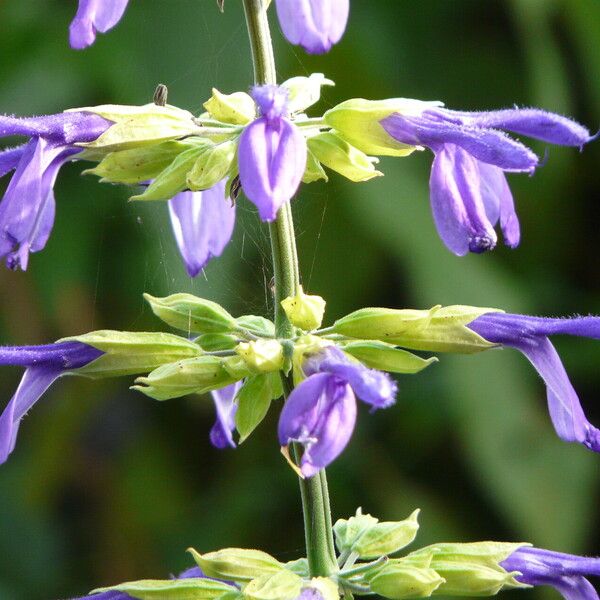
Commonly known as Mexican Sage or Mexican Mountain Sage, this towering beauty is a late-season star of the garden. Native to the brushy hillsides of Central Mexico, it is cherished for its dramatic "bicolor" appearance, where vivid neon-green cases hold deep indigo-blue flowers. It’s a favorite for gardeners who want to keep the "summer vibes" alive well into the autumn months.
🔍 How to Identify
- 🌿 The Foliage: The leaves are large, ovate (egg-shaped), and have a slightly rough, rugose texture with finely toothed edges. They are a rich, medium green.
- 🎨 The Calyxes: One of its most striking features is the lime-green "calyx" (the cup-like base of the flower). These remain bright even after the petals fall, providing color for months.
- 🌌 The Blooms: The flowers are long, tubular, and a saturated deep blue or royal purple. They emerge in dense spikes (racemes) that can grow up to a foot long.
- 📏 Growth Habit: This is a tall, semi-woody perennial. In the right conditions, it can reach 6 to 9 feet in height, creating a majestic "wall of blue" at the back of a flower bed.
🏡 In Your Garden
- ⏳ Patience is Key: Salvia mexicana is a "short-day" bloomer, meaning it waits until the days get shorter in late summer or fall to start its show. Don't worry if it looks like just a green bush all summer—the best is yet to come!
- 🌬️ Wind Protection: Because it grows so tall and has somewhat brittle, hollow stems, it should be planted in a spot protected from heavy winds or given some structural support to prevent it from flopping over during autumn storms.
- 🐦 Pollinator Party: This plant is an absolute magnet for hummingbirds and butterflies. Its tubular flowers are perfectly shaped for a hummingbird’s beak, making it a vital food source before their winter migration.
⚠️ Safety & Toxicity
- ✅ Status: Non-toxic and generally safe.
- 🐾 Details: Salvia mexicana is considered safe for cats, dogs, and horses. While it isn't "edible" like culinary sage (Salvia officinalis), it doesn't contain the harmful oils found in some other decorative plants. However, keep an eye on pets to ensure they don't treat the tall stems as a snack, which could cause mild digestive upset.
✨ Fun Fact
The most popular variety of this plant is called 'Limelight'. It was discovered in a garden in Mexico in the 1970s and became an instant sensation because the contrast between the electric-green calyxes and the violet flowers is so bright it almost looks like it's glowing!

Detailed Care Instructions

Place in a bright room that is sun drenched almost all day. Or directly in a south-facing window.

Some plants require more regular watering than others, which should be done every few days. It's critical to maintain the soil moist all of the time. The water requirements of the same plant placed in pots with varying sizes will differ. Because the water in the smaller pot evaporates faster than the water in the larger pot, it will require more watering. Regardless of pot size, the surface should constantly be maintained moist.







