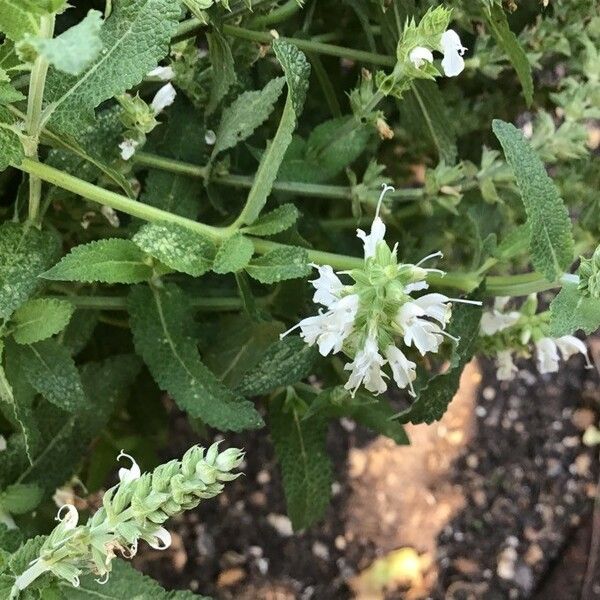
Plant Overview
Known as the "Wood Sage" or "Hybrid Sage," Salvia × sylvestris is the result of a natural romance between two European wild species. It is widely considered the "workhorse" of the perennial garden, adored by landscapers for its ability to produce intense, vertical spires of violet that seem to glow at twilight. It’s a tough-as-nails plant that bridges the gap between wild meadow beauty and refined garden elegance.
🔍 How to Identify
- 💜 Velvety Spikes: It features dense, upright racemes packed with tiny, hooded flowers, usually in shades of deep indigo, violet, or purple.
- 🌿 Rugose Foliage: The grayish-green leaves have a wrinkled, "crinkly" texture and are arranged oppositely along the stems.
- 📐 Square Stems: True to the Mint family (Lamiaceae), its stems are distinctly four-sided—if you pinch the stem between your fingers, you’ll feel the flat edges.
🏡 In Your Garden
- ☀️ Sun & Drainage: This plant is a sun-worshipper. While it is incredibly hardy, it hates "wet feet"; planting it in heavy, clay-rich soil without drainage can lead to root rot during the winter.
- ✂️ The Haircut Trick: One of its best traits is its "rebloom" potential. If you shear the plant back by half after the first flowers fade in early summer, it will often produce a second flush of blooms for the autumn.
- 🐝 Pollinator Runway: It is an absolute magnet for bumblebees and butterflies, who use the bottom "lip" of the flower as a landing pad to reach the nectar inside.
⚠️ Safety & Toxicity
- 🐾 Pet-Safe: Good news for pet owners—Salvia × sylvestris is generally considered non-toxic to dogs, cats, and horses.
- 🦌 Deer & Rabbit Resistant: While safe for pets, it is a "foe" to garden pests. The strong, herbal fragrance of the foliage is off-putting to deer and rabbits, making it an excellent perimeter plant.
✨ Fun Fact
The genus name Salvia is derived from the Latin word salvere, which means "to heal" or "to be healthy." While this specific hybrid is grown for its beauty, it carries the name of its famous medicinal cousins that have been used in folk medicine for centuries.

Detailed Care Instructions
To grow Salvia × Sylvestris plant, also known as woodland sage or perennial sage, follow these steps:
- Choose the right location: Salvia × Sylvestris prefers full sun to light shade. Select a well-draining area in your garden that receives at least 6-8 hours of sunlight per day.
- Prepare the soil: Amend the soil with organic matter such as compost or well-rotted manure to improve its fertility and drainage. This plant prefers moderately fertile soil.
- Planting: Dig a hole slightly larger than the root ball of the Salvia × Sylvestris plant. Place the plant in the hole and backfill with soil, firming it gently around the roots. Space multiple plants about 18-24 inches apart to allow for their spreading habit.
- Watering: Water the newly planted Salvia × Sylvestris thoroughly to settle the soil. Afterward, provide regular watering, ensuring the soil is consistently moist but not waterlogged. During hot and dry periods, increase the frequency of watering.
- Mulching: Apply a layer of organic mulch around the base of the plants to conserve moisture, suppress weed growth, and help maintain a cool root environment. Keep the mulch about 2 inches away from the stems to prevent rot.
- Pruning: After the first blooming period, typically in early summer, you can deadhead the spent flowers to encourage further blooming. It also helps to maintain an attractive appearance. Cut the flowering stalks back to their base in late winter or early spring to remove any winter damaged foliage.
- Fertilization: Salvia × Sylvestris generally does not require excessive fertilization. However, you can apply a general-purpose, slow-release fertilizer in spring to provide essential nutrients for the growing season.
- Winter care: Salvia × Sylvestris is winter hardy and does not require extensive protection. However, in areas with extremely cold winters, it may benefit from a layer of mulch or dry leaves around the base to provide insulation.
By following these steps, you should be able to successfully grow Salvia × Sylvestris and enjoy its beautiful flowers and aromatic foliage.

Place in a bright room that is sun drenched almost all day. Or directly in a south-facing window.

To water this plant, ensure that the soil is completely dry before watering it. When watering the plant, do not allow the water to touch the foliage as it can cause fungal diseases. You should also avoid over-watering the plant and ensure that the water is able to penetrate to the roots. It is recommended to water this plant deeply once a week, rather than watering it frequently with less water.
To ensure optimal growth for this perennial plant, it is recommended to fertilize it with a balanced fertilizer during the early stages of its growing season. As the plant matures, it can benefit from a slow-release fertilizer once a year in the spring. Additionally, adding organic matter to the soil can improve the plant's overall health and nutrition. It's important to avoid over-fertilization, as this can lead to excessive growth and decreased flowering.
The recommended type of soil for Salvia × Sylvestris plants is well-draining and fertile. The soil pH should be between 6.0 and 7.5. A soil mix that contains equal parts of sand, loamy soil, and peat moss is a good choice. The soil should be rich in organic matter, and compost can be added to increase the fertility of the soil. The plant prefers soil that is moist but not waterlogged. Therefore, the soil should be moistened thoroughly but allowed to dry out between waterings. The plant likes full sun or partial shade. Therefore, the soil should be placed in a location with plenty of sunlight. Finally, it is essential to amend the soil with nutrients such as nitrogen, phosphorus, and potassium to promote healthy growth.
One method to propagate this plant is through stem cuttings. Begin by selecting a healthy stem from the parent plant and make a clean cut using sharp shears. Remove any leaves from the lower two-thirds of the stem and dip the cut end into a rooting hormone powder. Place the cutting in a pot containing a well-draining soil mix and water thoroughly. Cover the pot with a plastic bag to create a humid environment and place it in a bright, but indirect light. Keep the soil moist and check for root growth after a few weeks. Once roots have formed, the plant can be transplanted to a larger container or into the garden.








