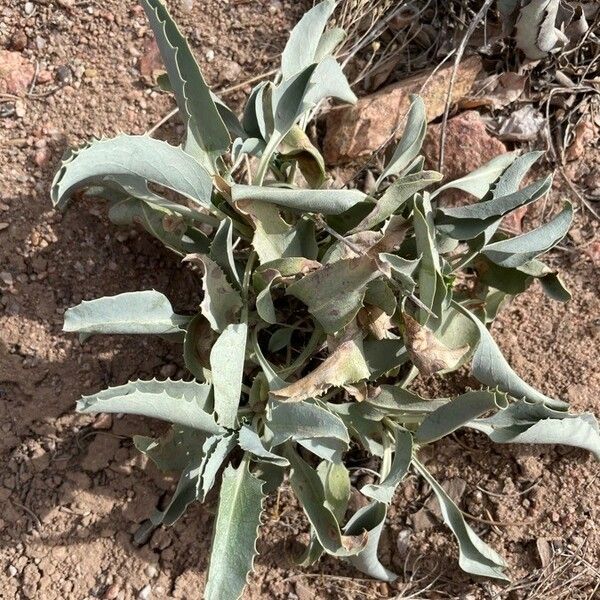
Plant Overview
Known as "Vasey’s Sage" or the "Wand Sage," this desert native is a master of survival in the arid landscapes of Southern California and Baja. It is beloved by xeriscape enthusiasts for its ethereal, silvery appearance and its ability to thrive where other plants would wither. In the heat of the day, its pale foliage seems to shimmer, acting as a beacon for desert pollinators.
🔍 How to Identify
- 🍃 Silvery Foliage: The leaves are a soft, light gray-green with a felt-like texture. This "hairiness" is a clever adaptation to reflect the harsh desert sun and trap moisture.
- 🪄 Wand-like Stems: It earns the name "Wand Sage" from its tall, slender flower stalks that can reach up to 5 feet high, rising far above the main mound of foliage.
- 🌸 Delicate Blooms: The flowers are tiny and tubular, appearing in whorls along the stalks. They are typically white or the palest shade of lavender, accented by long, protruding stamens.
🏡 In Your Garden
- 🏜️ Drainage is King: This plant hates "wet feet." It evolved in rocky, sandy desert washes, so it requires exceptionally well-draining soil. If your garden has heavy clay, consider planting it in a raised mound or a rock garden.
- 🐝 Pollinator Magnet: If you want to transform your yard into a sanctuary, this is the plant to do it. It is a high-value nectar source that attracts hummingbirds, butterflies, and native carpenter bees from miles around.
- ☀️ Summer Dormancy: In its natural habitat, it may drop some leaves or look a bit "sleepy" during the peak of summer heat to conserve energy. Avoid the temptation to overwater it during this time; it prefers to stay dry once established.
⚠️ Safety & Toxicity
- ✅ Non-Toxic: Salvia vaseyi is generally considered safe and non-toxic for humans and household pets like cats and dogs.
- 🐾 Deer Resistant: Thanks to its high oil content and strong aromatic scent, deer and rabbits almost always leave this plant alone, making it a great choice for rural properties.
- 🧴 Aromatic Oils: While the scent is pleasant (reminiscent of traditional white sage), the concentrated oils on the leaves may cause very minor skin irritation for individuals with extreme sensitivities.
✨ Fun Fact
The silvery "hairs" (trichomes) on the leaves of Vasey's Sage aren't just for show—they act like a built-in air conditioning system. They reflect UV rays away from the plant and create a "boundary layer" of still air that prevents the wind from stealing the plant's precious internal moisture.

Detailed Care Instructions
To grow Salvia vaseyi, also known as Vasey's sage, follow these steps:
- Location: Choose a suitable location for planting the Salvia vaseyi. It prefers full sun to partial shade and well-draining soil. Ensure that the planting spot has good air circulation.
- Soil preparation: Prepare the soil by removing any weeds or debris. The soil should be well-draining and slightly acidic with a pH between 6.0 and 7.0. If the soil is heavy or clay-like, mix in some organic matter, such as compost or peat moss, to improve drainage.
- Planting: Dig a hole that is slightly wider than the plant's container, and as deep as the root ball. Gently remove the plant from the container and place it in the hole. Backfill with soil, firmly pressing it around the root ball to remove any air pockets. Leave a small space around the base of the plant to create a watering well.
- Watering: Water the plant thoroughly after planting to ensure good root establishment. Allow the soil to dry out slightly between each watering, as Salvia vaseyi prefers slightly dry conditions. However, it is important not to let the soil become completely dry.
- Mulching: Apply a layer of organic mulch, like straw or wood chips, around the base of the plant. This will help retain moisture in the soil and suppress weed growth. Leave a small gap around the plant's stem to prevent rot.
- Pruning: Prune Salvia vaseyi lightly after it has finished blooming. This will help maintain a more compact and tidy appearance. Remove any dead or damaged branches.
- Fertilizer: Salvia vaseyi does not require heavy fertilization. In late winter or early spring, apply a slow-release balanced fertilizer according to the package instructions. Avoid over-fertilizing, as it can encourage excessive foliage growth rather than flowering.
- Pests and diseases: Salvia vaseyi is relatively resistant to pests and diseases. However, keep an eye out for common garden pests like aphids or spider mites. If necessary, treat them with organic insecticides or insecticidal soaps.
- Propagation: Salvia vaseyi can be propagated from seeds or stem cuttings. Collect seeds after the plant has finished blooming and sow them in well-draining soil. To propagate through stem cuttings, take a 4-6 inch cutting from a healthy plant and place it in moist soil or water until roots develop.
- Winter care: Salvia vaseyi is a hardy perennial, but in colder regions, it may benefit from some winter protection, especially during the first couple of years. Mulch around the base of the plant with a layer of straw or leaves to insulate the roots and help prevent frost damage.
By following these steps, you can successfully grow and care for Salvia vaseyi in your garden.

Place in a bright room that is sun drenched almost all day. Or directly in a south-facing window.

To provide adequate moisture to the Salvia Vaseyi plant, you should begin by examining the soil in the planting area. The top 2-3 inches of soil should be allowed to dry out slightly before watering again, as the plant prefers soil that is well-draining and not too wet. When watering, ensure that the water is applied at the base of the plant, being careful not to wet the foliage or flowers. Use a watering can or hose fitted with a spray nozzle to deliver a gentle, consistent stream of water. Avoid overwatering, as this can lead to root rot and other issues. Depending on the location and weather conditions, you may need to water the Salvia Vaseyi plant once or twice a week during the growing season, gradually cutting back as the weather cools in late summer and fall.
To fertilize this plant, use a balanced fertilizer at a rate of 1 tablespoon per gallon of water. Apply the fertilizer every two weeks during the growing season, which typically runs from spring through early fall. Water the plant thoroughly after each application to ensure the fertilizer is distributed evenly. Avoid over-fertilizing, as this can lead to poor growth and development.
Salvia Vaseyi plant is a type of plant that requires a well-draining soil that is rich in nutrients. The soil should also have a slightly acidic pH level. It is recommended to use a mixture of peat moss, sand, and perlite to ensure good drainage and aeration of the soil. Adding organic matter, such as compost or aged manure, to the soil can also improve its fertility. It is important to avoid using heavy clay soils or soils that retain too much water as this can lead to root rot and other fungal diseases. Regular fertilization with a balanced, slow-release fertilizer can help to maintain the plant's health and vitality.
Salvia Vaseyi is a flowering perennial plant that belongs to the mint family. It is commonly propagated through stem cuttings, which can be taken in the spring or summer.
To propagate Salvia Vaseyi from stem cuttings, select a healthy stem that is at least 4-6 inches long and has several nodes or leaves. Using a sharp, clean pair of scissors or pruning shears, make a clean cut just below a leaf node.
Remove the leaves from the bottom half of the stem, leaving only a few leaves at the top. Dip the cut end of the stem into rooting hormone, which will help the plant root more quickly.
Plant the cutting into a small pot filled with well-draining potting soil. Water the cutting thoroughly and cover it with a plastic bag or plastic wrap to create a mini greenhouse. This will help keep the cutting moist and increase humidity.
Place the potted cutting in a warm, bright location, but not in direct sunlight. Check the soil regularly and water as needed to keep it consistently moist, but not waterlogged.
After a few weeks, check the cutting for roots by gently tugging on the stem. If it resists, then roots have likely formed. At this point, remove the plastic bag or wrap and gradually expose the cutting to more light.
Once the cutting has rooted and established itself, it can be transplanted into a larger pot or into the ground. Keep the newly planted Salvia Vaseyi moist but not waterlogged, and it should begin to grow and thrive.








