Plant Overview
Known as the "Tapiro" or "Sauco" in its native regions, the Mexican Elderberry is a versatile superstar of the North and Central American landscape. Often seen as a sprawling shrub or a graceful small tree, it acts as a literal "grocery store" for local wildlife, providing nectar for pollinators and antioxidant-rich berries for birds. In traditional folklore, it is often called the "Tree of Music" because its hollow stems were historically used to craft flutes and whistles.
🔍 How to Identify
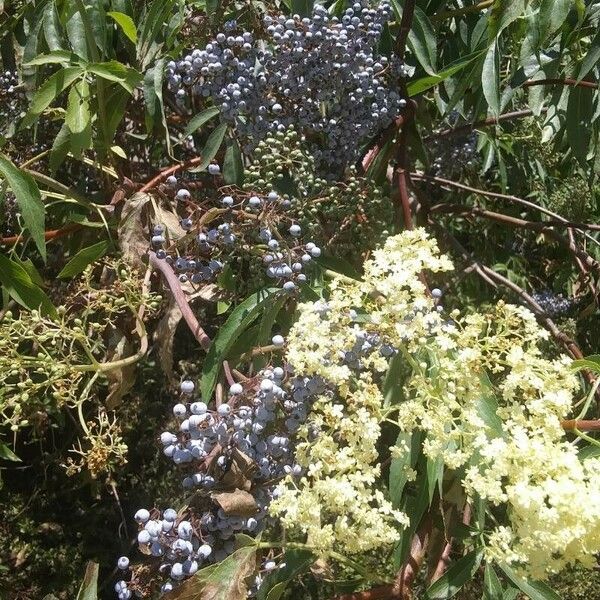
- 🌿 The Foliage: Look for "pinnately compound" leaves, meaning each leaf is made up of 3 to 9 smaller leaflets with serrated (saw-toothed) edges arranged opposite each other.
- 🌼 The Blooms: During spring and summer, the plant is topped with large, flat-topped clusters of tiny, creamy-white flowers that have a faint, sweet fragrance.
- 🍇 The Berries: Following the flowers, heavy clusters of dark purple to black berries appear, often covered in a dusty, pale-blue waxy coating called a "bloom."
🏡 In Your Garden
- 🦋 A Wildlife Magnet: If you want to see your garden come alive, this is the plant to choose. It is a primary host for the rare Elderberry Longhorn Beetle and provides essential nesting sites for native bees.
- ✂️ Shape Shifting: The Mexican Elderberry is famous for its "wild" growth habit. To keep it looking like a neat garden tree rather than a messy thicket, it requires aggressive pruning in the winter; it is incredibly resilient and bounces back quickly.
- 💧 Drought Strategy: Unlike its European cousins, the Mexican variety is remarkably drought-tolerant once established, making it perfect for "xeriscaping" or low-water landscapes.
⚠️ Safety & Toxicity
- 🚫 Status: Toxic if consumed raw.
- 🐕 Details: The leaves, stems, bark, and roots contain cyanogenic glycosides, which can cause severe nausea or worse if ingested. While the cooked berries are famous for jams and syrups, raw berries and all other plant parts are toxic to humans, dogs, and cats. Always keep an eye on curious pets and children.
✨ Fun Fact
The Mexican Elderberry is often called the "Physic Tree" by herbalists. While the berries are famous for immune-boosting syrups, the wood is so light and pithy that it was the primary material used by the Cahuilla people of California to create "clapper sticks" for ceremonial music.

Detailed Care Instructions








