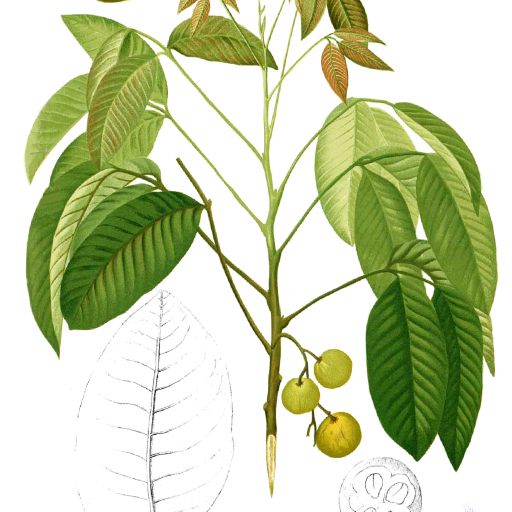
Plant Overview
Known as the "Cottonfruit" or "Sentul," the Santol is a nostalgic giant of Southeast Asian landscapes. This fast-growing tropical tree is beloved for its dual nature: it provides a massive canopy of shade and produces unique, velvety fruits with a snow-white, cotton-like center. Whether it’s the centerpiece of a Filipino backyard or a wild resident of an Indonesian forest, the Santol is a symbol of tropical abundance.
🔍 How to Identify
- 🍃 The Triple Leaf: Its leaves are "trifoliate," meaning they grow in distinct groups of three. Before they drop, they often turn a brilliant, fiery red, creating a beautiful contrast against the green canopy.
- 🍑 Velvety Fruit: The fruit is round and roughly the size of a grapefruit, covered in a thin, peach-fuzz skin that ranges from golden yellow to a bruised red.
- ☁️ Cottony Pulp: Inside, the fruit contains 3 to 5 segments of white, fluffy pulp that clings tightly to large, brown seeds. The texture is famously similar to cotton candy or wet silk.
🏡 In Your Garden
- 🌳 Space is Non-Negotiable: This isn't a plant for a small balcony or a pot. The Santol grows into a massive, towering tree with a deep taproot, meaning it needs plenty of room for its roots to stretch without hitting pipes or foundations.
- 💧 Tropical Thirst: While it can tolerate a bit of drought once established, it thrives in high humidity and consistent rainfall. It loves deep, organic soil that drains well—standing water at the roots is its primary enemy.
⚠️ Safety & Toxicity
- ✅ Fruit is Safe: The white pulp is delicious, ranging from incredibly sour to honey-sweet depending on the variety. It is widely used in jams, candies, and even spicy savory dishes.
- 🚫 Seed Warning: Never swallow the seeds. Santol seeds have extremely sharp ends that do not break down in the digestive tract. Swallowing them can cause "Santol Seed Syndrome," a serious medical emergency involving bowel perforation that often requires surgery.
- 🐾 Pet Safety: While the fruit flesh is generally non-toxic, the seeds pose the same physical danger to dogs and cats as they do to humans.
✨ Fun Fact
In the Philippines and Thailand, the Santol is more than just a fruit; it’s a culinary staple. The outer rind (the "meat" under the skin) is often grated and cooked with coconut milk, shrimp paste, and bird's eye chilies to create a rich, savory dish called Sinantolan.

Detailed Care Instructions
To grow a Sandoricum Koetjape plant, also known as the Santol or Cottonfruit tree, follow these steps:
- Obtaining Seeds or Seedlings: Buy Santol seeds or seedlings from a reputable nursery or garden center. If you live in a suitable climate, you may also find fallen fruits with seeds that you can plant.
- Choosing a Suitable Location: Select a spot in your garden or yard that receives full sun or partial shade. Santol trees prefer warm tropical or subtropical climates.
- Preparing the Soil: Santol trees grow well in a variety of soil types but prefer well-draining soil. Ensure the soil is fertile, loamy, and can retain some moisture.
- Planting the Seeds or Seedlings: If using seeds, soak them in water for 24-48 hours to help with germination. Plant the pre-soaked seeds or seedlings in a pot or directly in the ground, leaving about 1 inch (2.5 cm) of space around each seedling. Bury the seeds or seedlings about 1 inch (2.5 cm) deep.
- Watering and Irrigation: Water the newly planted Santol tree thoroughly but avoid overwatering, as it can cause root rot. Water regularly, keeping the soil consistently moist but not waterlogged.
- Mulching: Apply a layer of organic mulch (such as wood chips or straw) around the base of the tree to help retain soil moisture and suppress weed growth.
- Fertilization: Use a balanced slow-release fertilizer suitable for fruit trees to provide adequate nutrients. Follow the instructions on the fertilizer package and apply it according to the recommended frequency.
- Pruning: Prune the Santol tree regularly to promote healthy growth and maintain its shape. Remove any dead or diseased branches and thin out crowded areas to improve air circulation.
- Pest and Disease Control: Monitor the tree for any signs of pests, such as aphids or fruit flies, and take appropriate measures to control them. Santol trees are generally resistant to diseases, but it's essential to keep an eye out for common issues like fungal infections.
- Harvesting: Santol fruits take approximately 2-3 years to mature. Harvest the fruits when they turn yellowish or reddish-orange, depending on the variety. Twist or cut off the fruits from the branches, being careful not to damage the tree.
Remember, Santol trees can grow quite large (up to 60 feet or 18 meters), so ensure you have enough space for their mature size before planting. Additionally, consult with local experts or gardening resources to ensure the specific requirements and challenges for growing Sandoricum Koetjape in your region.

Place in a bright room that is sun drenched almost all day. Or directly in a south-facing window.

To water this plant, it is important to consider its environmental needs. The plant prefers well-draining soil and consistent moisture. Watering should be done when the top inch of soil feels dry to the touch. The plant should not be allowed to dry out completely. When watering, it is important to avoid splashing water onto the leaves as this can lead to fungal problems. Water should be directed towards the base of the plant. Overwatering should also be avoided as this can lead to root rot.
To fertilize this plant, use a slow-release granular fertilizer that has equal ratios of nitrogen, phosphorus, and potassium. Apply the fertilizer around the base of the plant, but avoid having it directly touch the stems. Water the plant immediately after fertilizing to help the nutrients absorb into the soil. Fertilize the plant once every three months during the growing season, which is typically from spring to fall.
Sandoricum Koetjape plant prefers well-drained soil that is slightly acidic with a pH range of 5.5-6.5. The soil should be rich in organic matter and have good water retention capacity. It is recommended to use a soil mix that includes a combination of peat moss, perlite, and vermiculite to provide proper drainage, moisture retention, and aeration. The soil should also be free from any pests or diseases that can harm the plant. It is important to ensure that the soil is not too compact or too loose, as this can affect the root development and growth of the plant. Regular fertilization is also recommended to help the plant grow healthy and strong.
Sandoricum Koetjape plant can be propagated through several methods such as seed propagation, air-layering propagation, and grafting propagation.
For seed propagation, the seeds should be collected from a mature Sandoricum Koetjape plant. The seeds should be cleaned and soaked in water overnight to soften the outer covering. The next day, the seeds should be sown in a potting mix and kept in a warm, humid environment. After several weeks, the seeds should have germinated and the seedlings should be transplanted into individual pots.
Air-layering propagation involves making a cut on the stem of the Sandoricum Koetjape plant and covering it with moist sphagnum moss and plastic wrap. After several weeks, roots will form and the rooted stem can be cut and transplanted into a potting mix.
Grafting propagation involves taking a scion from a mature Sandoricum Koetjape plant and grafting it onto a rootstock of a related plant. This method is more complex and requires some experience, but it can result in a stronger and more disease-resistant plant.
Overall, propagating a Sandoricum Koetjape plant requires care and patience, but can result in a beautiful and productive plant.








