Plant Overview
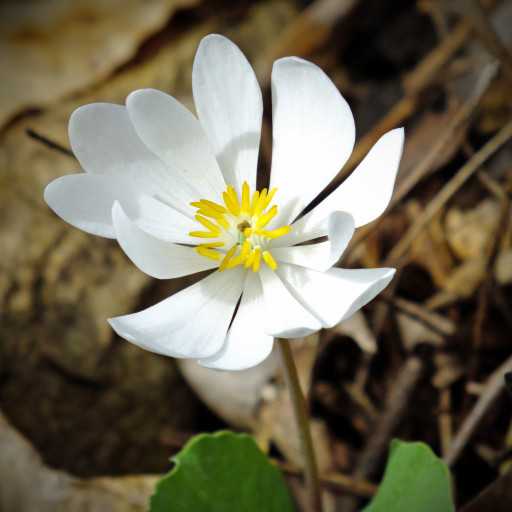
Meet the Bloodroot, a fleeting spring beauty that arrives like a ghost in the forest understory. Its common name comes from the startling, crimson-red sap found in its roots, which was historically used by Native Americans as a vivid dye and traditional medicine. As a "spring ephemeral," this plant performs a disappearing act, blooming early in the year and retreating underground before the heat of summer arrives.
🔍 How to Identify
- ❄️ The Bloom: Features crystalline white petals (usually 8 to 12) surrounding a bright golden-yellow center. The flowers open in the sunlight and close tightly at night.
- 🛡️ The Cloaked Leaf: A single, large, grayish-green leaf with deep, rounded lobes. Interestingly, the leaf emerges wrapped tightly around the flower bud like a protective velvet cloak.
- 🩸 The Rootstock: If the thick, horizontal rhizomes are broken, they "bleed" a thick, bright orange-red juice that is unmistakable.
🏡 In Your Garden
- 🍂 Woodland Preferences: Bloodroot thrives in "dappled shade." It loves the specific conditions under deciduous trees where it gets full sun in the early spring before the trees leaf out, and cool shade during the summer.
- ⏳ The Dormancy Phase: Don’t panic when the plant vanishes! By mid-to-late summer, the leaves will yellow and die back completely. It isn't dead; it is simply resting underground until next spring.
- 🌱 Soil Nuance: It demands rich, moist, well-drained soil high in organic matter (think leaf mold). It struggles in heavy clay or areas where water pools, as the fleshy rhizomes are prone to rot.
⚠️ Safety & Toxicity
- 🚫 Status: Toxic and potentially caustic.
- 🧤 Skin Irritation: The red sap contains an alkaloid called sanguinarine. If it touches your skin, it can cause irritation or even "escharotic" effects (killing skin tissue), so it is best to wear gloves when dividing them.
- 🐾 Pets & Kids: Highly toxic if ingested. Keep away from curious pets and children, as consumption can cause severe gastrointestinal distress and other serious symptoms.
✨ Fun Fact
Bloodroot has a "sweet" partnership with ants! Its seeds have a fleshy attachment called an elaiosome that ants love to eat. The ants carry the seeds back to their nests, eat the snack, and "toss out" the seed in their underground trash heaps—which happen to be the perfect nutrient-rich spot for a new Bloodroot to grow.

Detailed Care Instructions
| Humidity | Normal |
| Lighting | Shade |
| Difficulty | Medium |
| Hibernation | Cold Period |
| Hardiness Zones | 3 - 8 |
To successfully grow Sanguinaria Canadensis, also known as bloodroot, you can follow these steps:
- Find a suitable location: Bloodroot prefers partially shaded areas with moist, well-drained soil. It can tolerate full shade but also grows in areas with some sun. Avoid dry or water-logged locations.
- Prepare the soil: Before planting, loosen the soil and remove any weeds or debris. Bloodroot prefers a slightly acidic soil pH of around 6.0 to 7.0.
- Planting: Bloodroot rhizomes can be planted in the spring or fall. Dig a hole that is large enough to accommodate the rhizome, around 1-2 inches deep. Place the rhizome horizontally in the hole, ensuring that the growing points (eyes) are facing upward. Cover it with soil and gently press it down.
- Watering: Keep the soil evenly moist but not waterlogged. Bloodroot requires consistent moisture, especially during the growing season and dry spells.
- Mulching: Apply a layer of organic mulch, such as leaf compost or wood chips, around the plant to help conserve moisture and suppress weed growth. Be careful not to bury the rhizome too deeply, as this can prevent it from growing.
- Fertilizing: Bloodroot generally does not require additional fertilization. However, if your soil is poor, you can feed the plant with a balanced, slow-release fertilizer during the spring.
- Maintenance: Bloodroot is a low-maintenance plant. Remove any weeds that may compete with the plant for nutrients and water. Keep an eye out for pests or diseases, although bloodroot is generally resistant to most common issues.
- Propagation: Bloodroot can be propagated by dividing the rhizomes in late summer or early fall. Carefully dig up the rhizomes, divide them, and replant in prepared soil.
- Enjoy: Bloodroot produces pretty white flowers in early spring, usually in March or April, which last for a short period. Enjoy the beauty of the flowers and the lush foliage before it goes dormant in summer.
Remember that bloodroot is a native plant in many regions, so it's crucial to only source plants from reputable nurseries or propagate from sustainable sources.

Place in a window with dappled sun or a spot in the middle of a room. Or directly in a window facing west or east.

To properly irrigate this particular plant, you should provide it with adequate amounts of water. It prefers moist soil and requires a moderate amount of watering throughout the growing season. You should ensure that the soil is consistently damp, but not waterlogged, especially during hot or dry periods. When watering, you should aim to moisten the soil to a depth of at least a few inches, as this will help prevent the roots from drying out. It is also important to water the plant at its base, as getting the leaves and flowers wet can lead to disease or fungal issues. Additionally, you should avoid allowing water to accumulate in the saucer or tray under the pot, as this can lead to root rot. Overall, a careful and consistent watering routine can help ensure that this plant thrives and remains healthy.
This species of plant requires a fertilizing routine that is gentle and not too frequent. Apply a slow-release fertilizer once in the springtime, at the onset of new growth. Use a fertilizer mix with low nitrogen levels to prevent leaf burn or damage to the plant. It is critical to water the plant adequately after fertilizing to avoid root damage from the salts present in the fertilizer. Additionally, fertilizing the plant too often or with too much fertilizer may cause it to become excessively lush and vulnerable to disease.
The ideal soil for this plant is low in nutrients and slightly acidic with a pH range of 5.5 to 7.0. It should be well-draining and moist, but not waterlogged. It can also benefit from the addition of organic matter such as leaf mold or compost to improve soil texture and fertility. It is important to avoid using soil that is heavily fertilized or contains high levels of nitrogen, as this can cause the plant to become too lush and reduce its blooms.
To propagate this plant, you can take rhizome cuttings in early spring. Carefully dig up the rhizomes and select healthy ones with several buds. Cut them into sections, each with at least one bud and a few roots. Plant the sections in a well-draining soil mix and keep them moist and in a shady location until they establish.








