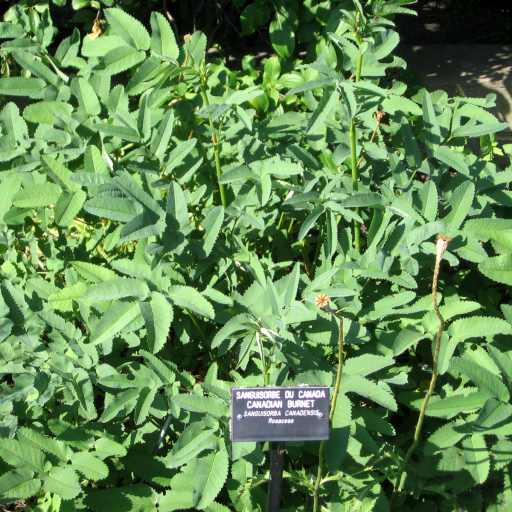
Plant Overview
Often called the Canadian Burnet or White Burnet, this North American native is a late-summer showstopper that looks like a cluster of white fireworks frozen in time. Historically valued by herbalists for its ability to "soak up blood" (as its Latin name suggests), it is now a favorite for gardeners looking to add vertical drama and architectural elegance to damp, sun-drenched corners of their landscape.
🔍 How to Identify
- ☁️ The Bloom: Its most striking feature is the "bottlebrush" flower—cylindrical spikes of fuzzy, bright white stamens that appear to glow at dusk.
- 🌿 The Foliage: The leaves are deeply divided and serrated, resembling a more robust version of a fern or a rose leaf, arranged in a neat basal clump.
- 📏 The Stature: This is a tall plant, often reaching 4 to 5 feet, with slender but remarkably sturdy stems that rarely need staking despite their height.
🏡 In Your Garden
- 💧 Wetland Roots: Unlike many garden perennials that fear "wet feet," the Canadian Burnet thrives in soggy, marshy soil. It is a perfect candidate for rain gardens or the edges of a pond where other plants might rot.
- ⏳ Patience is Key: This plant invests a lot of energy into its deep root system early on. While it may take a season or two to reach its full height, once established, it is incredibly long-lived and will return reliably for decades.
- 🦋 Pollinator Magnet: Because it blooms late in the season (August through October), it serves as a vital "gas station" for butterflies and bees preparing for the colder months.
⚠️ Safety & Toxicity
- ✅ Safe for All: Sanguisorba canadensis is generally considered non-toxic to humans, dogs, and cats.
- 🍵 Historical Use: In fact, various parts of the plant were used by indigenous peoples and early settlers for medicinal teas, though you should never ingest wild plants without professional guidance.
- 🛡️ Skin Sensation: While not toxic, the serrated edges of the leaves can be slightly coarse; sensitive gardeners may prefer wearing gloves when pruning large clumps.
✨ Fun Fact
The name Sanguisorba comes from the Latin words sanguis (blood) and sorbeo (to soak up). In ancient medicine, the plant was crushed and applied to wounds to stop bleeding, a practice that earned it a permanent place in early European and North American apothecary gardens.

Detailed Care Instructions
To grow Sanguisorba Canadensis (Canadian Burnet) plants, follow these steps:
- Choose a suitable location: Sanguisorba Canadensis prefers full sun to partial shade. Select a spot in your garden that receives at least 4-6 hours of direct sunlight each day.
- Prepare the soil: The plant thrives in fertile, well-draining soil. Amend the soil by adding organic matter like compost to improve its texture and fertility. Avoid heavy clay soils and waterlogged areas.
- Sowing seeds: Start with fresh Sanguisorba Canadensis seeds or purchase them from a reputable nursery. This plant can be propagated from seeds or division of mature plants. If using seeds, sow them in mid to late spring directly into the prepared soil, at a depth of about 1/4 inch. Space the seeds 12-18 inches apart.
- Watering: Keep the soil consistently moist but not waterlogged. Sanguisorba Canadensis prefers moderate moisture levels. Regular watering is necessary, especially during dry spells, to promote healthy growth.
- Mulching: Apply a layer of organic mulch, such as shredded bark or compost, around the base of the plants to help retain moisture and suppress weed growth.
- Maintenance: Remove any weeds that compete with the plant for nutrients and moisture. Additionally, deadhead spent flowers regularly to encourage continuous blooming.
- Fertilizing: Apply a balanced, slow-release fertilizer once in early spring before growth begins. Follow the instructions on the fertilizer package for the proper application rate.
- Pruning: Sanguisorba Canadensis does not require regular pruning. However, if the plant becomes overgrown or develops weak or crowded stems, you can prune it in early spring before new growth emerges. Trim back any dead or damaged foliage as well.
- Support: As the plant grows, some varieties may require staking or support to prevent them from sprawling.
- Division: Sanguisorba Canadensis plants can be divided every 2-3 years during early spring or early fall. Dig up the clump and separate it into smaller sections, ensuring each section has healthy roots. Replant the divisions in a suitable location.
By following these steps, you can successfully grow Sanguisorba Canadensis plants in your garden.

Place in a bright room that is sun drenched almost all day. Or directly in a south-facing window.

1. Identify the plant you want to water. Look for a tall plant with long, slender leaves and small, fluffy flowers. The plant may grow up to 3 feet tall and have a spreading habit.
2. Choose a watering container. Use a watering can or hose with a nozzle that allows for gentle watering. A watering can with a long spout will make it easier to water the base of the plant.
3. Check the soil moisture. Stick your finger about an inch into the soil. If the soil feels dry, it's time to water. If the soil is still moist, wait a day or two before watering.
4. Water the plant at the base. Gently pour water onto the soil at the base of the plant. Avoid getting water on the leaves or flowers as this can cause damage.
5. Water deeply. Sanguisorba Canadensis plants prefer deep watering, so water until the soil is thoroughly wet. Allow the water to soak in slowly, and then water again until the soil is saturated.
6. Water regularly. Sanguisorba Canadensis plants need regular watering to thrive, especially during the hot summer months. Water them deeply once or twice a week, depending on the weather and soil drainage.
7. Keep the soil moist. The soil should be kept moist but not waterlogged. If the soil becomes waterlogged, it can lead to root rot and other plant diseases.
To promote healthy growth and flowering of the plant, apply a balanced, slow-release fertilizer in early spring. Use a fertilizer with equal amounts of nitrogen, phosphorus, and potassium. Apply the fertilizer according to the package instructions and water the plant thoroughly immediately after fertilizing. Repeat the application once or twice during the growing season, spacing them out by at least 6 weeks. Avoid over-fertilizing as it may cause excessive foliage growth, weak stems, and reduced flowering.
When choosing soil for this particular plant species, it is important to consider the plant's specific needs and preferences. It typically thrives in well-draining soil that is high in organic matter and nutrients. The ideal pH level is slightly acidic to neutral, with a range of 5.5 to 7.0.
It is recommended to use a soil mix that includes a well-balanced blend of peat moss, perlite, and vermiculite, along with some additional organic matter such as compost or aged manure. This will help to ensure that the soil is well-hydrated and able to retain moisture, while also providing the necessary nutrients for healthy growth.
When planting, it is important to ensure that the soil is moist but not overly saturated, as this can cause root rot and other problems. In addition, regular fertilization with a balanced, water-soluble fertilizer can help to promote strong growth and healthy blooms throughout the growing season.
To propagate this plant, you can take stem cuttings in the spring or early fall. Cut a stem that is approximately 10 cm long and remove the leaves from the lower half of the stem. Dip the cut end of the stem in rooting hormone powder and plant it in moist, well-draining potting soil. Cover the cutting with a plastic bag to create a humid environment and place it in a bright, but not direct sunlight location.
Keep the soil moist and within a few weeks, the cutting should begin to form roots. Once the roots have established, you can transplant the new plant into a larger container or in the ground in a location that is suitable for its growth requirements.








