Plant Overview
Often called Salad Burnet or "Small Burnet," this charming perennial herb is a hidden gem of the cottage garden. Famous for its surprising cucumber-flavored leaves, it was once a staple in colonial kitchen gardens and cooling summer drinks. In folklore, it was believed to "make the heart merry," likely because of its refreshing taste and dainty, fern-like appearance.
🔍 How to Identify
- 🌿 The Foliage: Look for elegant, feathery rosettes of pinnate leaves. Each leaf consists of 4 to 12 pairs of small, oval leaflets with distinctively serrated or "toothed" edges.
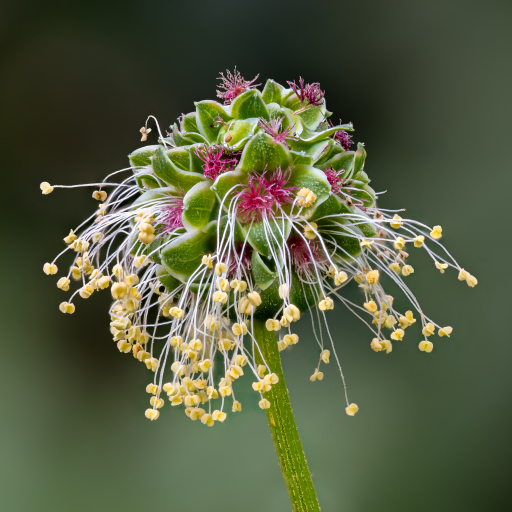
- 🧶 The Blooms: Unlike flashy flowers, this plant produces unique, globe-shaped clusters. These "thimbles" are greenish-purple and lack traditional petals, featuring tiny crimson styles that look like miniature fireworks.
- 🌱 Growth Habit: It typically forms a tidy, low-growing mound (about 1–2 feet tall). It keeps its green color even in the dead of winter in milder climates, earning it a reputation as a reliable "evergreen" herb.
🏡 In Your Garden
- 🥗 Culinary Context: To enjoy the best flavor, harvest the young, tender leaves. Once the plant flowers, the foliage can become slightly bitter and tough. It makes an excellent, low-maintenance substitute for cucumbers in salads or infused water.
- ⛰️ Soil & Resilience: Salad Burnet is incredibly hardy and thrives in chalky, alkaline soils where other herbs might struggle. It possesses a deep taproot, which makes it drought-tolerant once established, but it "hates moving house"—so pick its permanent spot carefully!
- ✂️ Self-Seeding: If you don't deadhead the flower globes, be prepared for many "baby burnets" next season. It is a prolific self-seeder that can quickly fill gaps in a rock garden or border.
⚠️ Safety & Toxicity
- ✅ Safe & Edible: Salad Burnet is non-toxic and widely recognized as a culinary herb for humans.
- 🐾 Pet Friendly: It is generally considered safe for dogs, cats, and horses. In fact, it is often included in "herbal leys" (diverse pasture mixes) because livestock find it highly palatable and nutritious.
✨ Fun Fact
The name Sanguisorba translates to "Blood-Sopper" (Sanguis meaning blood and sorbere meaning to soak up). Historically, the plant was used by soldiers and herbalists to help staunch wounds and stop internal bleeding!

Detailed Care Instructions
| Color | Green |
| Soil Ph | 6.0-8.0 |
| Toxicity | Non-Toxic |
| Soil Type | Medium-Moisture, Well-Drained |
| Bloom Time | Midsummer |
| Plant Type | Perennial, Grown As Annual |
| Mature Size | 9-24 Inches Tall |
| Native Area | Northern Africa, Western Asia |
| Sun Exposure | Full Sun Or Partial Shade |
| Hardiness Zones | 2-8 |
To grow Sanguisorba Minor plant, you can follow these steps:
- Choose a suitable location: Sanguisorba Minor plants prefer full sun to partial shade. Select a spot in your garden that receives at least 4-6 hours of direct sunlight per day.
- Prepare the soil: The soil should be well-draining, fertile, and rich in organic matter. Amend the soil with compost or well-rotted manure to improve its texture and nutrient content.
- Sowing seeds: Sow the Sanguisorba Minor seeds directly into the prepared soil in early spring or late summer. Lightly press the seeds into the soil and cover them with a thin layer of soil or compost. Keep the seeds moist but not waterlogged.
- Watering: Sanguisorba Minor plants require regular and consistent watering. Keep the soil evenly moist, especially during hot and dry periods. Avoid overwatering, as it can lead to root rot.
- Thinning: Once the seedlings emerge, you may need to thin them out to ensure proper spacing. Sanguisorba Minor plants should be spaced about 12-18 inches apart.
- Mulching: Apply a layer of organic mulch, such as straw or wood chips, around the plants to conserve moisture, suppress weed growth, and regulate the soil temperature.
- Fertilizing: Sanguisorba Minor plants do not require heavy fertilization. However, you can apply a balanced, slow-release fertilizer in spring to provide them with necessary nutrients. Follow the package instructions for the recommended dosage.
- Pruning: Regular pruning can help maintain the plant's shape and encourage bushier growth. Cut back any dead or diseased stems and remove faded flowers to promote continuous blooming.
- Pests and diseases: Keep an eye out for common pests like aphids or slugs. If necessary, use organic pest management methods or insecticidal soap to control infestations. Sanguisorba Minor is generally resistant to diseases.
- Harvesting: You can start harvesting the leaves of Sanguisorba Minor plant once it reaches maturity, usually around 8-12 weeks after sowing. Harvest the leaves individually or cut the entire plant near the base. The leaves can be used in salads, soups, or as a garnish.
Remember to research and understand the specific requirements of Sanguisorba Minor plants to ensure optimal growth and health.

Place in a window with dappled sun or a spot in the middle of a room. Or directly in a window facing west or east.

Watering the plant known as Sanguisorba Minor should be done by providing it with a steady supply of moisture. This can be achieved by watering it regularly, but not overwatering it, as this could cause root rot. The soil should be kept evenly moist, but not waterlogged. It is important to allow the top inch or so of soil to dry out before watering again. This can be tested by inserting a finger into the soil to feel for moisture. The plant should also be watered deeply to ensure that the roots receive enough moisture. This can be achieved by watering slowly and deeply, allowing the water to be absorbed by the soil before watering again. The plant should be watered more frequently during the summer months, as the heat and dry weather can cause the soil to dry out more quickly. Watering should also be adjusted based on the plant's location, as those in full sun or windy areas may require more frequent watering.
For best results, fertilize this plant in the early spring or late fall with a balanced, slow-release fertilizer. Use a granular fertilizer and apply it directly to the soil around the base of the plant. Water the plant thoroughly after fertilizing to help work the fertilizer into the soil. Avoid over-fertilizing, as too much fertilizer can lead to weak, leggy growth and decreased resistance to disease. For organic options, use a compost or well-aged manure to amend the soil around the plant.
Sanguisorba Minor plants prefer a well-drained soil that is fertile and rich in organic matter. The soil should be slightly acidic to neutral in pH, ideally between 5.5 and 7.0. A loamy soil with good water-holding capacity is also recommended. The plant can tolerate drought conditions but performs best with regular watering. Avoid planting in soil that has poor drainage as this can result in root rot. Additionally, adding a layer of mulch around the base of the plant can help retain moisture and prevent weed growth.
To propagate this plant, you will first need to identify a healthy mature plant. Take a cutting with a clean, sharp pair of scissors or pruning shears, making sure to include a stem that is at least a few inches long. Remove any lower leaves or flowers from the stem, and dip the cut end in rooting hormone powder to encourage growth.
Next, prepare a small pot with well-draining soil and create a small hole in the center. Insert the cutting into the hole and gently press the soil down around the stem to secure it. Water the cutting thoroughly, being careful not to overwater as this can cause it to rot.
Place the pot in a warm, bright location but out of direct sunlight. Maintain moist soil, and in a few weeks, you should notice new growth emerging from the stem. Once the new plant has established roots, you can transplant it into a larger pot or into the ground if desired.
Common pests of the salad burnet include Spider mites, thrips, snails. Make a habit of checking your salad burnet frequently for pests so that any infestations can be caught and managed early.








