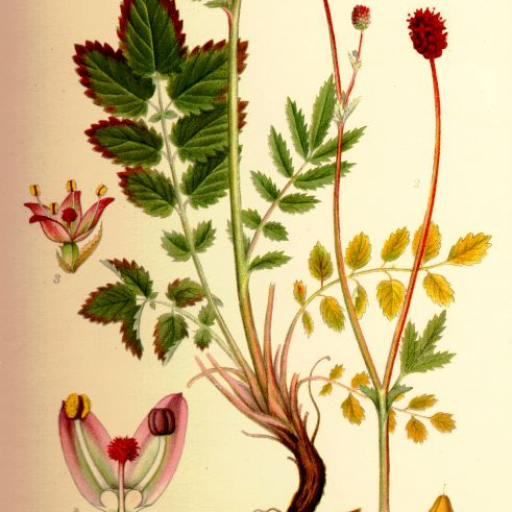
Plant Overview
Known as the "Great Burnet," this plant is a staple of romantic, wild-looking meadows and cottage gardens. Its name is derived from the Latin words sanguis (blood) and sorbeo (to soak up), reflecting its ancient history as a medicinal herb used to stop hemorrhages. With its deep crimson flower heads dancing on wiry stems, it adds a sense of rhythm and whimsy to any landscape.
🔍 How to Identify
- 🌸 Flower Heads: Distinctive, dark maroon or brownish-red "drumsticks" that lack traditional petals. They appear as dense, textured, oblong buttons at the ends of tall stems.
- 🍃 Foliage: Attractive pinnate leaves with 7 to 15 sharply toothed leaflets. The foliage stays low to the ground in a basal rosette, looking very similar to rose leaves.
- 📏 Growth Habit: A clump-forming perennial that sends up slender, leafless stalks. These stalks are surprisingly strong, though they give the plant an airy, "transparent" look.
🏡 In Your Garden
- 💧 The "Wet Feet" Factor: Unlike many perennials that rot in soggy conditions, the Great Burnet thrives in damp, heavy clay. It is the perfect candidate for rain gardens or those "trouble spots" where water tends to linger after a storm.
- ⚓ The Taproot Rule: This plant develops a very deep, sturdy taproot to find moisture. Because of this, it is notoriously grumpy about being transplanted. Pick its "forever home" carefully, as it hates being moved once established.
⚠️ Safety & Toxicity
- ✅ Status: Generally non-toxic and safe for all.
- 🥗 Details: Not only is it safe for humans, but the young, tender leaves are actually edible and possess a refreshing flavor similar to cucumber. It is also considered safe for cats, dogs, and horses, making it an excellent "pet-friendly" choice for a naturalistic garden.
✨ Fun Fact
In the Elizabethan era, Great Burnet leaves were often added to wine or water to create a "cool tankard." It was believed that drinking this infusion would "make the heart merry" and provide a cooling sensation during the peak of summer heat!

Detailed Care Instructions
To grow Sanguisorba officinalis (Great Burnet) plant, here are steps you can follow:
- Planting location: Choose a spot that receives full sun to partial shade. Great Burnet prefers well-draining soil, rich in organic matter.
- Soil preparation: Before planting, loosen the soil with a garden fork or tiller. Remove any weeds or debris and mix in organic compost or well-rotted manure to enhance the soil fertility.
- Planting time: Sow seeds in early spring or early autumn for cooler climates. In warmer regions, it is better to sow seeds in early autumn to provide ample time for root establishment before the heat of summer.
- Sowing the seeds: Scatter the seeds on the prepared soil and lightly press them into the ground. It is not necessary to cover the seeds with soil, as they require light to germinate.
- Watering: Keep the soil evenly moist until germination occurs, usually within 2-3 weeks. Once the seedlings emerge, water them regularly, allowing the top inch of soil to dry out between waterings.
- Transplanting: When the seedlings grow to a few inches in height, thin them to 12-18 inches apart to provide enough space for the mature plant's growth. Transplant healthy seedlings to their permanent locations.
- Maintenance: Mulch around the plants to suppress weeds and help retain moisture. Water the plants regularly, especially during dry spells. Great Burnet is relatively drought-tolerant once established.
- Pruning: In late winter or early spring, prune the plant to encourage new growth and maintain its shape. Remove any dead or damaged stems.
- Harvesting: Harvest the leaves and flowers as needed. The leaves can be used in salads or cooked like spinach, while the flowers can be used for herbal teas or as decorative additions to dishes.
- Propagation: Sanguisorba officinalis can also be propagated by division. Dig up the mature clumps, separate them into smaller sections, and replant them in prepared soil. This can be done in early spring or early autumn.
By following these steps, you can successfully grow Sanguisorba officinalis plants in your garden.

Place in a bright room that is sun drenched almost all day. Or directly in a south-facing window.

To properly water this plant, it is important to first assess the soil moisture. Use your finger to check the top inch of soil - if it feels dry, it is time to water. When watering, aim to saturate the soil to at least 6-8 inches deep to encourage deep root growth. Take care not to overwater as this can lead to root rot. Watering frequency will depend on factors such as climate, soil type, and pot size - generally, this plant prefers consistently moist soil but not waterlogged conditions.
To fertilize the plant, apply a balanced fertilizer in the spring before new growth begins. A slow-release granular fertilizer can be used, or a liquid fertilizer can be applied every two weeks during the growing season. Be sure to follow the instructions on the fertilizer package for the correct amount and application method. Avoid fertilizing too late in the season, as this can stimulate new growth that may not have enough time to harden off before winter.
Sanguisorba officinalis prefers a soil that is rich in nutrients and well-drained. A loamy soil or a soil that is rich in organic matter is ideal. The soil should have a pH level between 6 and 7.5. It is also important to ensure that the soil is evenly moist, but not waterlogged, as this can cause the roots to rot. Adding a layer of mulch around the base of the plant can help to retain moisture in the soil and prevent weeds. Regular fertilization with a balanced fertilizer can help to promote healthy growth and blooming.
One way to propagate this plant is through stem cuttings. Take a stem cutting that has at least two nodes and remove the lower leaves. Dip the end of the cutting in rooting hormone and plant it in a container filled with moist soil. Cover the container with plastic to create a humid environment for the cutting. Place the container in a bright, but indirect, location and keep the soil moist. After a few weeks, the cutting should start to root and can be transplanted to a larger container or directly in the ground.








