Plant Overview
Known as the Rock Sanicle or Mount Diablo Sanicle, this elusive little perennial is a true botanical treasure of the California wilderness. It is a specialist of the heights, often found clinging to life on rugged, rocky outcrops where few other plants dare to grow. Because of its very limited range and specific habitat needs, spotting one in the wild feels like finding a hidden gem tucked away in a mountain fortress.
🔍 How to Identify
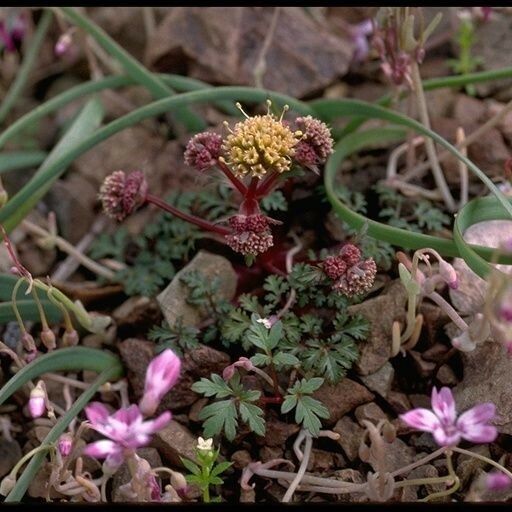
- 🍃 Lobed Foliage: The leaves are primarily basal (growing at the base) and deeply divided into three to five segments with sharp, tooth-like edges, giving them a rugged, "snowflake" appearance.
- ☀️ Golden Umbels: Its tiny, lemon-yellow flowers are tightly packed into small, rounded, pincushion-like clusters that sit atop short stems.
- 🪨 Compact Stature: It maintains a low, mounded growth habit, rarely reaching more than a few inches in height to protect itself from harsh mountain winds and intense sun.
🏔️ Habitat & Ecology
- 🧗 The Rock Specialist: This plant thrives in "lithic" environments, meaning it grows directly out of gravel, talus, or cracks in boulders. It avoids rich, heavy garden soils, preferring the extreme drainage provided by volcanic or metamorphic rock.
- 🦋 Pollinator Pitstop: Despite its small size, the bright yellow blooms are a vital early-season nectar source for small native bees and flies that patrol high-altitude ridges during the spring.
⚠️ Safety & Toxicity
- ✅ Low Risk: The Rock Sanicle is not known to be toxic to humans or common household pets, distinguishing it from some of its more dangerous relatives in the carrot family (like Poison Hemlock).
- 🧤 Skin Sensitivity: While not poisonous, the serrated edges of the leaves can be slightly scratchy. As with any rare wild plant, it is best to observe with your eyes and camera rather than your hands to protect both yourself and the plant.
✨ Fun Fact
The Rock Sanicle is so rare that it is considered a "California Endemic," meaning it grows naturally nowhere else on Earth except for a few specific ridges in Northern California, primarily around Mount Diablo and the Diablo Range!

Detailed Care Instructions

Place in a window with dappled sun or a spot in the middle of a room. Or directly in a window facing west or east.

Some plants require more regular watering than others, which should be done every few days. It's critical to maintain the soil moist all of the time. The water requirements of the same plant placed in pots with varying sizes will differ. Because the water in the smaller pot evaporates faster than the water in the larger pot, it will require more watering. Regardless of pot size, the surface should constantly be maintained moist.








