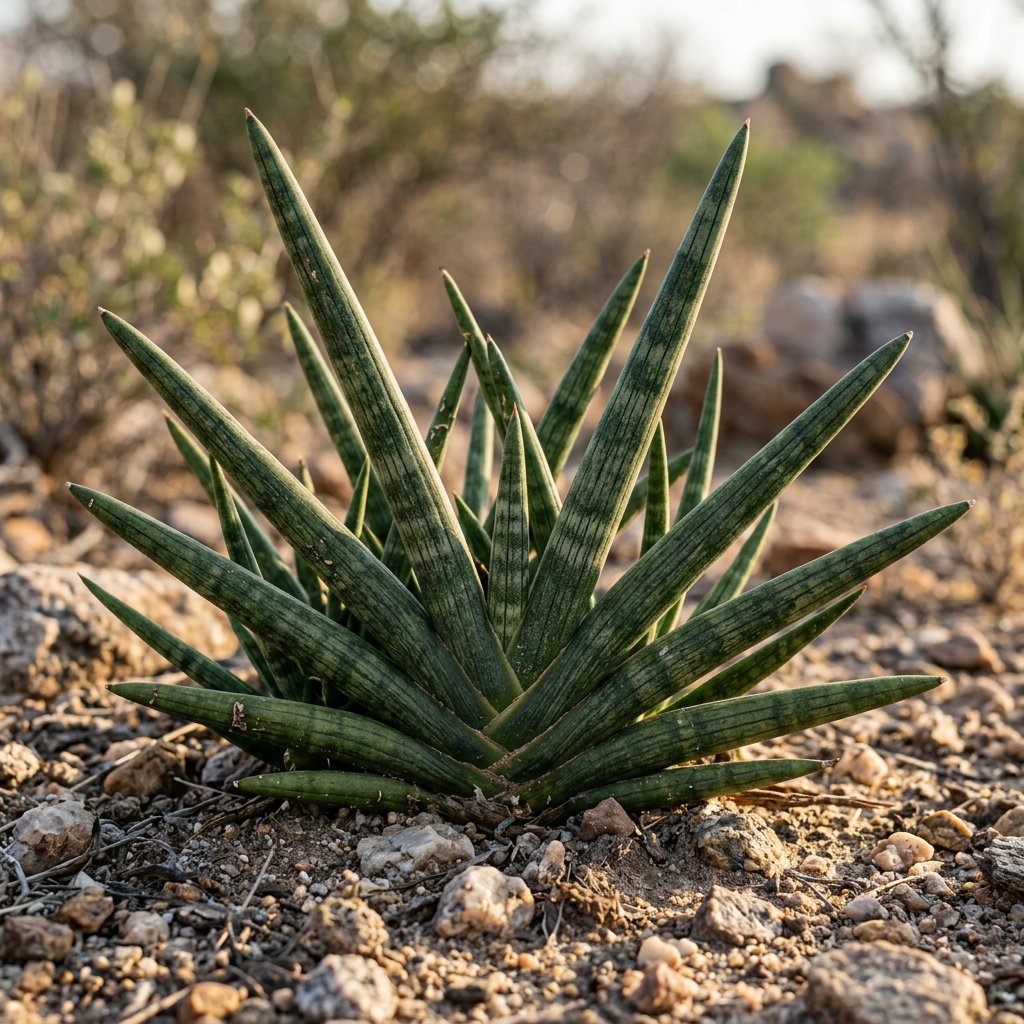
Plant Overview
Commonly known as the African Spear or Skyline Spear, this plant is a living piece of modern art. Native to the arid regions of Angola, it has traded the wide, flat leaves of its cousins for sleek, vertical rods that look more like a sculpture than a traditional houseplant. It is the ultimate "set it and forget it" companion, beloved by interior designers and forgetful gardeners alike for its indestructible nature.
🔍 How to Identify
- 📏 The Spears: The most striking feature is its sub-cylindrical, round leaves that grow upright. They are rigid, smooth, and taper to a fine (and sometimes sharp) point.
- 🎨 Striped Pattern: Each spear is adorned with subtle, horizontal bands of dark green and grayish-green, giving it a tactile, patterned appearance.
- 🎋 Structural Variety: In nurseries, you will often find them with their leaves braided into a "pigtail" or arranged in a perfect fan shape, though they naturally grow in a loose rosette.
🏡 In Your Garden
- 🏜️ Built for Drought: Because it stores a massive reservoir of water inside its thick, fleshy spears, this plant is incredibly sensitive to overwatering. It thrives best when the soil is allowed to dry out completely—if you are in doubt, it is always safer to wait another week.
- 🪴 Tight Quarters: The African Spear actually enjoys being "cramp-y." It prefers to be slightly root-bound in a sturdy pot. This physical stress often encourages the plant to produce "pups" (offshoots) or even a rare, nocturnal-blooming flower spike that smells like jasmine.
⚠️ Safety & Toxicity
- 🐾 Mildly Toxic: Like all members of the Sansevieria family, this plant contains saponins, which act as a natural insecticide but are harmful if eaten.
- 👶 Keep Out of Reach: If ingested by cats, dogs, or small children, it can cause nausea, drooling, and gastrointestinal upset. Additionally, the sharp tips of the leaves can be a physical poking hazard at eye level.
✨ Fun Fact
The African Spear is a master of the "night shift." While most plants stop producing oxygen when the sun goes down, this plant uses a special process called CAM photosynthesis to keep pumping out fresh oxygen all night long, making it a favorite for bedside tables!

Detailed Care Instructions
| Humidity | Normal |
| Lighting | Full Sun |
| Toxicity | Poisonous |
| Difficulty | Medium |
| Temperature | 18°C - 25°C |
| Hardiness Zones | 10A - 11B |
To grow a Sansevieria Cylindrica plant, also known as the cylindrical snake plant or African spear plant, follow the following steps:
- Choose the right location: Sansevieria Cylindrica can be grown both indoors and outdoors. Indoors, it thrives in bright, indirect light and can tolerate low light conditions. Outdoors, it can be grown in partial shade.
- Select a suitable pot: Choose a well-draining pot that is slightly larger than the root ball of your plant. A terra cotta pot works well as it allows the soil to dry out more quickly.
- Soil mixture: Use a well-draining soil mixture, such as a cactus or succulent mix, or create your own by combining regular potting soil with perlite or coarse sand to improve drainage.
- Watering: Allow the soil to dry out between waterings. Sansevieria Cylindrica is fairly drought-tolerant and can withstand underwatering better than overwatering. Avoid leaving the plant in standing water as it can lead to root rot.
- Fertilizing: Sansevieria Cylindrica plants do not require frequent fertilizing. You can apply a balanced, diluted houseplant fertilizer once or twice during the growing season.
- Temperature and humidity: This plant can tolerate a wide range of temperatures, but it prefers temperatures around 60-75°F (15-24°C). It can tolerate low humidity levels, making it a suitable choice for dry indoor environments.
- Propagation: Sansevieria Cylindrica can be propagated through division. Gently remove the plant from its pot and separate the individual cylindrical sections, ensuring each section has roots attached. Plant these sections in separate pots and care for them as you would for a mature plant.
- Pruning: Prune any damaged or brown leaves to maintain the plant's overall appearance. You can also remove any offsets or suckers that develop around the base of the plant.
- Pest control: Sansevieria Cylindrica is generally resistant to pests; however, you may occasionally encounter mealybugs or spider mites. If necessary, treat the plant with an appropriate insecticidal soap or neem oil.
Remember to observe and adjust your care routine based on the specific needs of your plant and the conditions in your environment.

Place in a window with dappled sun or a spot in the middle of a room. Or directly in a window facing west or east.

The best way to water this specific plant is to thoroughly soak the soil in its pot until the water runs out from the drainage holes. After watering, allow the soil to dry out completely before watering again, as over-watering can cause the roots to rot. It is important to use well-draining soil and to never let the plant sit in standing water. This plant also prefers to be watered from the bottom, if possible, by placing it in a tray of water for a few minutes and then removing it once the soil has soaked up the water.
To fertilize this plant, you should dilute a balanced liquid fertilizer to half strength and apply it during the growing season from spring to summer. Only fertilize once a month, as this plant does not require frequent fertilization. Avoid fertilizing during the fall and winter months, as the plant is dormant during this time. Water the plant thoroughly before and after fertilization to prevent burning the roots.
The ideal soil for this particular plant is well-draining and has a mix of organic material such as sand, bark, and peat. It is recommended to use a soil mix that does not retain too much moisture as this can lead to root rot. The pH of the soil should be around 6.0-7.5. It is important to avoid using heavy clay soils as it can suffocate the roots of the plant. In addition, adding slow-release fertilizers can aid in the proper growth of the plant.
Sansevieria Cylindrica is a plant that can be propagated using various methods. One way to propagate this plant is by using leaf cuttings. This involves cutting a leaf near the base of the plant and allowing it to dry out for a day or two before planting it in well-draining soil. Another method is by dividing the plant. This involves separating the offset or baby plants from the mother plant and planting them in separate pots. This should be done during the spring or early summer when the plant is actively growing. Lastly, Sansevieria Cylindrica can also be propagated through seed germination. The seeds should be soaked in warm water for 24 hours before planting them in soil. Keep the soil moist and warm until the seeds germinate.








