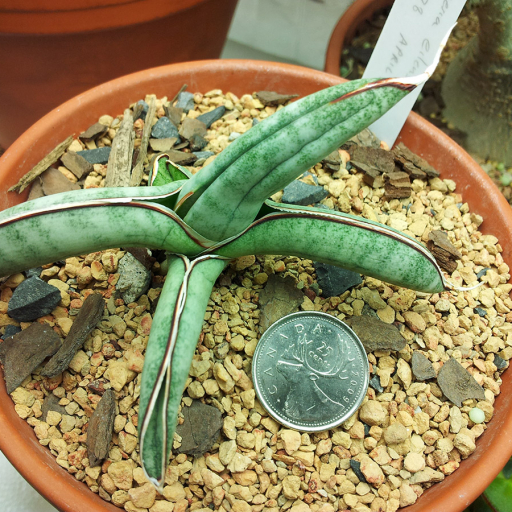
Plant Overview
Often called the "Somali Snake Plant," this architectural marvel is a true desert specialist hailing from the arid Horn of Africa. Unlike its tall, leafy cousins, Sansevieria eilensis is a slow-growing minimalist that looks more like a piece of living sculpture than a typical houseplant. It is highly prized by succulent collectors for its unique, chunky shape and its incredible ability to survive in some of the harshest conditions on Earth.
🔍 How to Identify
- 🌿 Leaf Structure: The plant features exceptionally thick, cylindrical leaves that curve downward. Unlike flat-leaved varieties, these are nearly round in cross-section with a distinct "channel" or groove running along the top.
- 🎨 Color & Texture: The skin is a dusty, glaucous bluish-green, often marked with subtle horizontal banding and fine, longitudinal white lines that give it a "pinstripe" look.
- 📏 Growth Habit: It is a low-profile plant, rarely growing taller than a few inches. It usually maintains only 2 to 3 leaves at a time, making it look like a strange, prehistoric claw emerging from the soil.
🏡 In Your Garden
- 🏜️ The Arid Specialist: Because it originates from the rocky Eil region of Somalia, this plant is the definition of "set it and forget it." It has a heavy-duty root system designed to store water for months; if you are unsure whether to water it, wait another week.
- 🪨 Soil Nuance: It requires a very gritty, inorganic potting mix—think 80% pumice or lava rock. It hates "wet feet" and will rot almost immediately if kept in standard potting soil that retains moisture.
- ☀️ Light Logic: While it can survive in lower light, it needs bright, indirect sun to maintain its bluish color and compact shape. Too little light will cause the leaves to stretch and lose their characteristic "chunky" look.
⚠️ Safety & Toxicity
- 🐾 Mildly Toxic: Like all members of the Sansevieria family, it contains saponins, which act as a natural insecticide but are toxic to mammals.
- 🤢 The Risk: If ingested by cats or dogs, it can cause drooling, nausea, vomiting, and diarrhea. Keep it on a high shelf away from curious nibblers.
- 🌵 Mechanical Hazard: The tips of the leaves can become quite hard and sharp as they age. Position the plant where it won't be accidentally bumped into.
✨ Fun Fact
Sansevieria eilensis is named after the town of Eil in Somalia, which is the only place in the world where it is found in the wild! Because its natural habitat is so small and specific, it was considered a "Holy Grail" species for succulent hunters for decades after its discovery in 1973.

Detailed Care Instructions
To grow Sansevieria Eilensis plant, also known as Eileens' Snake Plant, follow these steps:
- Choosing the right pot: Select a pot that has drainage holes to prevent waterlogging. The pot should be slightly larger than the root ball of the plant.
- Soil mix: Use a well-draining potting mix suitable for succulent plants. You can also mix regular potting soil with perlite or sand to increase drainage.
- Planting: Place the plant in the pot, ensuring that the crown of the plant sits at or just below the soil level. Gently fill the remaining space with the potting mix and pat it down lightly.
- Watering: Sansevieria plants are drought-tolerant and prefer infrequent watering. Allow the soil to dry out between watering sessions, and be cautious not to over-water as it can lead to root rot.
- Light requirements: Sansevieria Eilensis thrives in bright, indirect sunlight. Place the plant near a window where it can receive bright, filtered light for several hours a day. However, it can also tolerate low light conditions.
- Temperature and humidity: Sansevierias prefer average room temperatures, ideally between 60-85°F (15-29°C). They can tolerate lower temperatures down to 50°F (10°C). They can adapt to average household humidity levels, but avoid placing them near drafty areas or air conditioning vents.
- Fertilization: Feed the plant with a balanced houseplant fertilizer diluted to half-strength once every 2-4 months during the growing season (spring and summer). Avoid fertilizing during winter.
- Propagation: Sansevieria Eilensis can be propagated through division. When the plant has outgrown its pot, carefully remove it and separate the offsets or baby plants from the main clump. Plant the offsets in their own pots using well-draining soil.
- Pruning: Prune any dead, damaged, or yellowing leaves to maintain the plant's appearance and overall health. Use clean, sharp scissors or pruning shears to make clean cuts.
- Pests and diseases: Sansevierias are generally pest-resistant, but occasionally can be affected by mealybugs or spider mites. Inspect the plant regularly and treat any infestations promptly with organic pest control methods or insecticidal soap.
Remember to maintain a regular care routine, monitor the plant's growth, and adjust watering or lighting as needed. With the right conditions, your Sansevieria Eilensis plant should grow and thrive.

Place in a bright room that is sun drenched almost all day. Or directly in a south-facing window.

Sansevieria Eilensis plant should be watered regularly to keep the soil moist but not waterlogged. It is important to allow the soil to dry out partially between watering to prevent root rot. When watering, it is recommended to pour water directly onto the soil and avoid getting water on the leaves. Additionally, the plant should be placed in well-draining soil and a pot with drainage holes to prevent water from collecting at the bottom. The frequency of watering will depend on the humidity, temperature and light conditions of the plant's environment.
To fertilize this plant, use a balanced liquid fertilizer every two weeks during the growing season. Dilute the fertilizer to half its recommended strength and apply it to the soil around the base of the plant. Avoid fertilizing during the dormant season or when the plant is stressed. Always follow the product label instructions for application rates and frequency.
Sansevieria Eilensis requires well-drained soil with a pH range of 6.0 to 7.5. The soil should be rich in humus and organic matter, and have good aeration. A mix of peat moss, perlite, and sand is an ideal soil choice for Sansevieria Eilensis. The plant prefers slightly moist soil but is susceptible to root rot, so it's important not to overwater. It also benefits from occasional fertilization with a balanced, low-nitrogen fertilizer. To prevent any spread of diseases, it's advisable to use sterilized soil or sterilize the soil before using it for planting.
The process of propagating the Sansevieria Eilensis plant involves taking a cutting from the mother plant and rooting it in moist soil. To start, select a healthy stem that has at least one leaf. Use a sharp, clean pair of scissors to make a clean cut just below a leaf node.
Next, prepare a pot with moist potting soil. Make a hole in the soil with your finger and insert the stem cutting. Gently pack the soil around the stem to hold it in place. Water the soil so that it is evenly moist but not soggy.
Place the pot in a bright area with indirect sunlight, but avoid direct sunlight as it can cause the plant to dry out. Maintain a warm temperature of around 60-75°F (15-24°C) to encourage root growth.
It takes about 4-6 weeks for the roots to develop. You can check the progress by gently tugging on the stem. If you feel resistance, the roots have started to form.
Once the new plant has established a good root system, you can transplant it to a larger pot or move it to its permanent location. Be sure to keep the soil moist but not overwatered as the new plant establishes itself. With proper care, your new Sansevieria Eilensis plant should grow into a healthy specimen.







