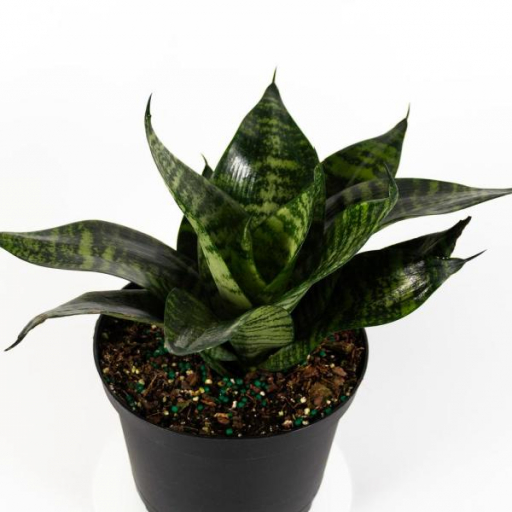
Plant Overview
Often called the Ceylon Bowstring Hemp, Sansevieria zeylanica is the quintessential "unkillable" houseplant. Originating from the dry, rocky landscapes of Sri Lanka, it has evolved to thrive in harsh conditions that would wither most other greenery. It is a favorite for urban dwellers and busy professionals because it asks for almost nothing while providing a sharp, architectural aesthetic.
🔍 How to Identify
- 🍃 Leaf Pattern: Features distinct horizontal, wavy bands of dark and silvery-green that resemble the scales of a snake. Unlike its cousin, the Laurentii, it lacks yellow margins.
- 🗡️ Sword Shape: The leaves grow vertically in a tight, upright rosette, tapering to a sharp, needle-like point at the tip.
- 📏 Texture: The leaves are thick, leathery, and incredibly rigid, designed to store large reserves of water for long periods.
🏡 In Your Garden
- 🏜️ The Rhizome Secret: This plant grows from thick, potato-like underground stems called rhizomes. These serve as water tanks, which is why the plant hates "wet feet." Overwatering is the only real way to kill it, as the rhizomes will quickly rot in soggy soil.
- ☀️ Light Adaptability: While it technically prefers bright, filtered light, it is legendary for its ability to survive in dim corners. Its growth will slow down in low light, but its structural beauty remains intact.
⚠️ Safety & Toxicity
- 🐾 Moderate Toxicity: This plant contains saponins, a natural chemical defense. It is toxic to cats and dogs; ingestion can lead to drooling, nausea, vomiting, and diarrhea.
- 👶 Physical Hazard: While not poisonous to touch, the tips of the leaves are very sharp. It is best kept on a pedestal or high shelf to prevent curious children or pets from getting poked.
✨ Fun Fact
- 🧵 Historical Hardware: The name "Bowstring Hemp" is literal. Historically, the incredibly strong and flexible fibers found inside the leaves were harvested and spun together to create high-quality bowstrings for traditional hunters in its native Sri Lanka.

Detailed Care Instructions
| Soil Ph | Slightly Acidic To Slightly Alkaline |
| Humidity | Dry |
| Lighting | Part Sun |
| Toxicity | Toxic |
| Soil Type | Well-Draining Sandy Loam |
| Difficulty | Easy |
| Plant Type | Evergreen Perennial |
| Mature Size | Up To 2-3 Feet Tall, Up To 1 Foot Across |
| Temperature | 15°C - 23°C |
| Sun Exposure | Full Sun To Partial Shade |
| Hardiness Zones | 9-11 |
To grow Sansevieria Zeylanica plant, follow these steps:
- Choose a pot: Select a well-draining pot that is slightly larger than the current root ball. The pot should have drainage holes at the bottom.
- Soil: Use a well-draining potting mix specifically formulated for succulents or cacti. Alternatively, you can make your own mix by combining equal parts of regular potting soil, perlite, and sand.
- Planting: Carefully remove the Sansevieria Zeylanica plant from its current container and gently loosen the roots. Place the plant into the new pot, ensuring that the top of the root ball sits slightly below the rim of the pot. Backfill the remaining space with the potting mix, making sure to press it down lightly.
- Sunlight: Sansevieria Zeylanica prefers bright, indirect light but can tolerate lower light conditions. Place the plant near a window that receives filtered sunlight throughout the day.
- Temperature and humidity: This plant prefers average room temperatures between 65-85°F (18-29°C). It can tolerate slightly lower temperatures but should be protected from frost. Sansevieria Zeylanica is adaptable to various humidity levels.
- Watering: Allow the soil to dry out partially between waterings. Sansevieria Zeylanica is drought-tolerant and susceptible to rot if overwatered. Avoid watering too frequently, especially during the dormant winter months.
- Fertilizer: Feed the Sansevieria Zeylanica plant with a balanced houseplant fertilizer diluted to half strength during the growing season (spring and summer). Apply the fertilizer every 2-3 months. Avoid fertilizing the plant during the dormant period.
- Pruning: Remove any dead or yellowing leaves by cutting them off at the base. This will help maintain the plant's overall health and appearance.
- Repotting: Sansevieria Zeylanica has a slow growth rate and typically only needs to be repotted every 2-3 years. When repotting, follow the same steps as mentioned above.
- Pests and diseases: Sansevieria Zeylanica is generally resistant to pests and diseases. However, watch out for common houseplant pests such as spider mites or mealybugs. If needed, treat the plant with an appropriate insecticide or wipe the leaves with a mild soap and water solution.
By following these guidelines and providing the right care, your Sansevieria Zeylanica plant should thrive and grow into a beautiful and low-maintenance houseplant.

Place in a window with dappled sun or a spot in the middle of a room. Or directly in a window facing west or east.
To water this plant, place it in a location where it can receive indirect sunlight. Then, fill a watering can with room temperature water. Slowly pour the water directly onto the soil around the base of the plant, being careful not to splash water on the leaves. Allow the soil to dry out slightly between waterings, as overwatering can lead to root rot. In general, water this plant every 2-3 weeks, depending on the humidity and temperature of your home.
To provide adequate nutrition to the Sansevieria Zeylanica plant, follow the guidelines below:
- Select a balanced, water-soluble fertilizer specifically designed for indoor plants. Ensure it contains a N-P-K ratio of 10-10-10 or a similar ratio.
- During the active growing season, which usually occurs in spring and summer, dilute the fertilizer according to package instructions. Typically, this involves mixing the fertilizer with water to achieve the desired concentration.
- Refrain from fertilizing the plant during its dormant period in fall and winter, as it requires less nutrition during this time.
- Before applying the fertilizer, ensure the soil is moist but not waterlogged. Water the plant thoroughly a day or two prior to fertilizing.
- Gently pour the diluted fertilizer mixture around the base of the plant, taking care not to splash it onto the leaves.
- In general, Sansevieria Zeylanica plants should be fertilized once a month during the growing season. However, it is crucial to monitor the plant's health and adjust the frequency if necessary. If the leaves appear yellow or nutrient-deficient, you may increase the frequency of fertilization. Conversely, if the leaves display signs of burning or fertilizer buildup, reduce the frequency or concentration.
- Regularly flush the soil by watering the plant thoroughly, allowing excess water to drain out. This helps prevent fertilizer salt buildup, which can harm the plant's roots.
Remember, observe the plant's response to fertilization and adjust accordingly to provide optimum nutrition while avoiding over-fertilization.
Sansevieria Zeylanica is a tropical plant that is native to the regions of East Africa. It prefers well-drained and fertile soil that is rich in organic matter. The soil should have a pH level between 5.5 and 7.5. This plant requires good air circulation around its roots so it is suggested to mix in some perlite or sand to improve drainage. A potting mix that is formulated for cacti and succulents or a standard potting soil mixed with sand/ perlite would be perfect for this plant. It is also important to ensure that the soil is not waterlogged as the roots of Sansevieria Zeylanica are prone to root rot. The soil should be moist but not saturated during the watering process.
To propagate this plant, you will need a healthy parent plant and a sharp, sterile knife or pair of scissors.
First, carefully remove one of the plant's leaves from the stem, making sure to cut as close to the base of the plant as possible. Be careful not to damage the plant or the remaining leaves when removing the leaf.
Next, allow the cut end of the leaf to dry for a day or two, until a callus forms over the cut site. This will help prevent the cutting from rotting when it is planted.
Once the cutting has callused over, plant it in a well-draining potting mix. You can use a mix of sand, perlite, and peat moss to ensure good drainage. Place the cutting in a bright location, but out of direct sunlight.
Keep the soil moist, but not soggy, and be patient. It may take several weeks or even months for the cutting to root and start producing new growth. Once you see new growth appearing, you can assume that the cutting has successfully rooted and can be moved to a larger pot or planted outside.








