Plant Overview
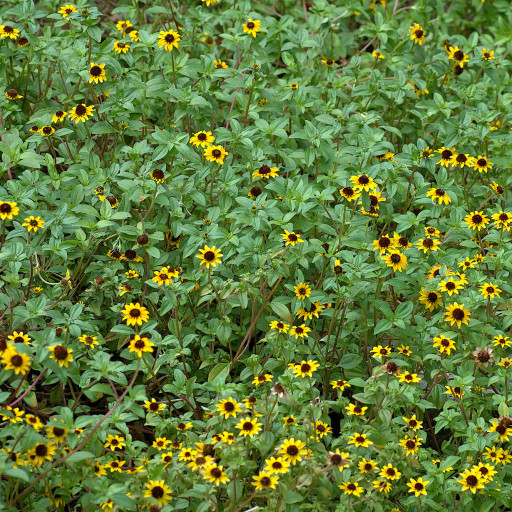
Often called the Mexican Creeping Zinnia or the "Little Sunflower," this sun-loving annual creates a golden carpet wherever it grows. Native to the rocky slopes of Mexico and Central America, it is a tough-as-nails survivor that disguises its ruggedness with a delicate, daisy-like charm.
🔍 How to Identify
- 🌼 The Flowers: Tiny, 1-inch blooms that resemble miniature sunflowers, featuring bright yellow or orange petals surrounding a prominent dark purple or chocolate-brown center.
- 🍃 The Foliage: Small, oval-shaped leaves that are a deep, lush green and often feel slightly "hairy" to the touch.
- 🌱 Growth Habit: It stays low to the ground (usually under 6 inches) but spreads wide, creating a dense, mat-like appearance that spills beautifully over edges.
🏡 In Your Garden
- ☀️ Sun Worshiper: This plant thrives in the heat that would make other flowers wilt. It is a "self-cleaning" plant, meaning it drops its old blooms naturally, so you don’t have to spend time deadheading to keep it looking tidy.
- 💧 Drought Nuance: While it loves a good drink, it hates "wet feet." Its wild ancestors grew in well-draining, rocky soil, so it’s perfect for rock gardens or hanging baskets where water can move through quickly.
- 🪴 Handling with Care: It has a somewhat sensitive root system. It prefers to stay where it was originally planted, as transplanting can lead to "root shock" that halts its growth for weeks.
⚠️ Safety & Toxicity
- ✅ Pet & Child Friendly: Sanvitalia procumbens is generally considered non-toxic to dogs, cats, and humans.
- 👐 Skin Sensitivity: While not poisonous, the fine hairs on the stems and leaves can occasionally cause very mild skin irritation for people with highly sensitive skin if handled extensively.
✨ Fun Fact
Despite its common name and striking resemblance, the Creeping Zinnia is not a "true" Zinnia! While they belong to the same botanical family (Asteraceae), it is actually more closely related to the Sunflower and the Black-eyed Susan.

Detailed Care Instructions
To grow Sanvitalia procumbens, also known as creeping zinnia or Mexican zinnia, you can follow these steps:
- Choose a suitable location: Sanvitalia thrives in full sun to partial shade. Find an area in your garden or landscape that receives at least 4-6 hours of direct sunlight per day.
- Prepare the soil: Sanvitalia prefers well-draining soil. Amend the soil with organic matter such as compost to improve drainage and fertility. Avoid heavy clay or sandy soils.
- Plant the seeds or seedlings: Sanvitalia can be grown from either seeds or seedlings. If starting from seeds, sow them directly into the prepared soil in early spring after the last frost date. Cover the seeds lightly with soil and keep the soil slightly moist until germination. If using seedlings, transplant them carefully into the prepared soil, maintaining adequate spacing between plants.
- Watering: After planting, water the Sanvitalia regularly to keep the soil consistently moist but not waterlogged. Avoid overwatering, as it can lead to root rot.
- Fertilization: It is generally not necessary to fertilize Sanvitalia if you prepared the soil with organic matter. However, if desired, you can use a balanced, slow-release fertilizer once or twice during the growing season, following the package instructions.
- Mulching: Apply a layer of organic mulch around the plants to help retain moisture, suppress weed growth, and regulate soil temperature.
- Pruning: Sanvitalia has a trailing habit and can become leggy. Regularly pinch back the tips of the plant to encourage branching and promote a more compact, bushier growth.
- Pest and disease control: Sanvitalia is relatively resistant to pests and diseases. However, keep an eye out for common garden pests like aphids, caterpillars, or slugs. Remove any diseased or infested plants immediately to prevent the spread.
- Winter care: Sanvitalia is generally treated as an annual plant in most regions. However, in regions with mild winters, it may survive as a perennial. If you want to overwinter your Sanvitalia, provide protection, such as covering with a layer of mulch or moving containers indoors.
By following these steps, you can successfully grow Sanvitalia procumbens and enjoy its cheerful, yellow flowers throughout the growing season.

Place in a bright room that is sun drenched almost all day. Or directly in a south-facing window.

To water this plant, you should thoroughly moisten the soil until you start to see water draining out of the bottom of the pot. Allow the soil to drain completely before returning the plant to its regular location. It is important not to let the soil dry out completely between waterings, but also avoid over-watering and allowing roots to sit in standing water. Keep an eye on the plant and adjust your watering routine as needed based on the specific growing conditions of your environment.
To fertilize this plant, use a balanced fertilizer with equal parts nitrogen, phosphorus, and potassium. Apply the fertilizer once a month during the growing season, starting in spring. Avoid applying too much fertilizer, as it can cause the plant to become leggy and lose its compact form. Water the plant before and after fertilizing to avoid burning the roots.
Sanvitalia Procumbens plant requires a well-draining soil mixture that is sandy, loamy, and slightly acidic. A fertilized potting soil or garden soil mixed with sand, perlite, or vermiculite is ideal for growing this plant. The soil should be moist but not waterlogged to prevent the roots from rotting. It is important to avoid using heavy clayey soil or a mixture that retains too much moisture, which can lead to root diseases. The plant prefers full sun exposure and requires frequent watering during the growing season, with occasional fertilization to promote growth and blooming.
To propagate this plant, you can start by taking cuttings from healthy and mature specimens. Select a stem that is at least 3 inches long with several leaves and make a clean cut just below a node. Remove the leaves from the bottom 2 inches of the stem, leaving only a few at the top. Dip the cut end into rooting hormone powder and place it into a pot with moist soil. Cover the pot with a plastic bag to create a greenhouse-like environment and place it in a bright, indirect light. Keep the soil moist and mist the cutting regularly. After a few weeks, the cutting should start to root and new growth will appear. Once the plant has established itself, you can transplant it into a larger pot or into the garden.
Common pests of the mexican creeping zinnia include Spider mites, aphids, larvae. Make a habit of checking your mexican creeping zinnia frequently for pests so that any infestations can be caught and managed early.








