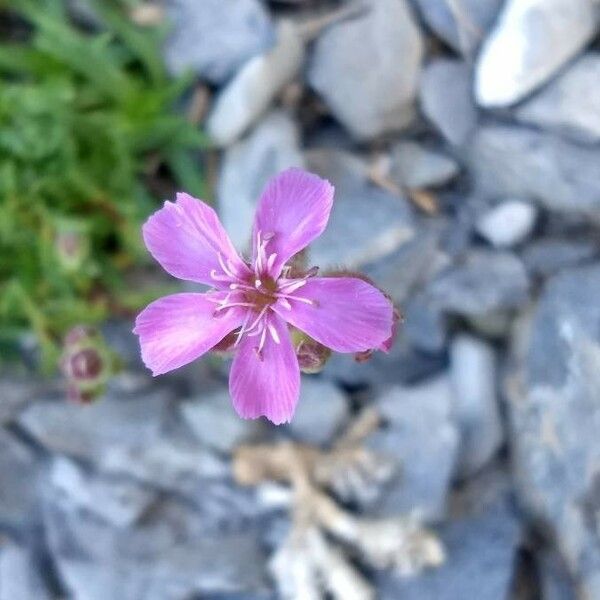
Plant Overview
Often called the Tufted Soapwort, this hardy alpine treasure clings to the limestone crags of the Pyrenees mountains. It forms dense, moss-like cushions that explode into a sea of rosy-pink flowers during the height of summer. Its genus name, Saponaria, hints at a secret history—it has been used for centuries as a natural, gentle cleanser.
🔍 How to Identify
- 🌸 The Bloom: Small, fragrant clusters of vibrant pink to purplish-red flowers, each featuring five delicate petals held in a tubular purple calyx.
- 🌿 The Foliage: Narrow, dark green, needle-like leaves that are slightly fleshy and grow in dense, "tufted" rosettes close to the ground.
- 🏗️ The Structure: A low-growing, woody-based perennial that forms a tight, mounding mat (caespitose habit) that looks like a living carpet over stones.
🏡 In Your Garden
- 🏔️ Alpine Roots: Because it naturally grows in mountain scree, this plant demands exceptional drainage. It is the "diva" of drainage—if its roots sit in soggy soil for even a day, it may pout. It thrives best in rock gardens, troughs, or the crevices of stone walls.
- ☀️ Sun & Grit: It loves a bright, sunny spot but appreciates a bit of gravel mulch around its crown. This keeps the foliage off the damp earth and mimics its high-altitude home, preventing crown rot during rainy seasons.
⚠️ Safety & Toxicity
- 🧼 Low Toxicity: The plant contains saponins, which are natural soap-like compounds. While it is generally considered safe to touch, it should not be eaten.
- 🐾 Pet & Child Safety: If ingested in large quantities, it can cause mild stomach upset, drooling, or nausea in curious pets or toddlers. It is best treated as an ornamental-only guest in your garden.
✨ Fun Fact
The name Saponaria comes from the Latin word sapo, meaning soap. Historically, the roots and leaves of this plant family were boiled to create a gentle, bubbly liquid used by museums to wash delicate, ancient tapestries that would be ruined by modern chemical detergents!

Detailed Care Instructions
To grow Saponaria caespitosa, also known as tufted soapwort, follow these steps:
- Choose a suitable location: Saponaria caespitosa thrives in full sun to partial shade. Ensure the location receives at least 6 hours of sunlight per day. The soil should be well-draining and slightly alkaline.
- Prepare the soil: Loosen the soil by removing any weeds, rocks, or debris. Add organic matter, such as compost or aged manure, to improve soil fertility and drainage.
- Sow the seeds: Directly sow Saponaria caespitosa seeds in the prepared soil during early spring or late fall. Lightly press the seeds into the soil, ensuring they are not covered too deeply. Leave spacing of about 12-18 inches between plants.
- Watering: Keep the soil consistently moist but not waterlogged until the seeds germinate, which usually takes about 2-3 weeks. Once established, reduce the frequency of watering, as too much moisture can lead to root rot.
- Thin and transplant: If the seeds are sown too densely, thin out the seedlings to allow proper airflow and prevent overcrowding. Dig up the excess seedlings and transplant them to another location or share them with other gardeners.
- Fertilization: Apply a balanced slow-release fertilizer in early spring to promote healthy growth. Follow the product instructions for application rates.
- Maintenance: Remove weeds that compete with the plants for resources. Deadhead the spent flowers to encourage continuous blooming. Monitor the plant for diseases or pests, such as powdery mildew or aphids, and take appropriate action if necessary.
- Division: After a few years, Saponaria caespitosa plants may become crowded and less vigorous. Divide the clumps every 3-4 years in early spring or fall. Dig up the clumps, separate them into smaller sections, and replant them.
With proper care and maintenance, your Saponaria caespitosa plant should grow and bloom beautifully, producing clusters of pink or white flowers from late spring to early summer.

Place in a bright room that is sun drenched almost all day. Or directly in a south-facing window.

Saponaria Caespitosa is a hardy perennial plant that requires regular watering to thrive. To water this plant, you should start by examining the soil. If the soil is dry to the touch, then it's time to water. You should aim to water the plant deeply, ensuring that the water is reaching the roots.
One way to do this is to water the plant slowly and deeply, allowing the soil to absorb the water before adding more. You can do this by using a watering can or a hose with a diffuser attachment to spread the water out evenly. Water the plant until you see water starting to drain from the bottom of the pot or bed.
It's important not to overwater the plant, as this can lead to root rot and other issues. Wait until the soil has dried out again before watering, and adjust your watering schedule as needed based on the weather conditions and the plant's growth and health.
Overall, providing regular and consistent watering is key to keeping your Saponaria Caespitosa plant healthy and vibrant. With the right care, this hardy and attractive plant can thrive for years to come.
To fertilize this plant, apply a balanced fertilizer in early spring, when new growth begins. Use a low nitrogen fertilizer to prevent excessive growth and promote flowering. Water the plant deeply before and after fertilizer application, and avoid getting fertilizer on the leaves or flowers. Repeat fertilization every 4-6 weeks during the growing season. Stop fertilizing in mid to late autumn to allow the plant to enter dormancy.
From a soil perspective, Saponaria Caespitosa prefers well-draining soil that is slightly acidic in nature. The plant does not thrive in soils that are too heavy and compacted as this can lead to poor root development and waterlogging. The ideal soil would be a sandy loam that has been enriched with organic matter such as compost or humus. The addition of these organic materials will improve soil structure and drainage while also providing essential nutrients for plant growth. It is also important to ensure that the soil pH is within the optimal range of 5.5 to 7.0 for optimal growth. Finally, it is advisable to avoid overly fertile soils as this can lead to excessive vegetative growth at the expense of flowering.
To propagate this plant, you will need to gather seeds. The best time to do this is in the summer when the seed pods have formed and are beginning to ripen. Collect the mature seeds by clipping the pods from the plant and placing them in a labeled container.
Once you have your seeds, prepare your soil. Saponaria Caespitosa prefers a well-draining, sandy soil, so be sure to mix in plenty of sand and organic matter. Spread the seeds evenly across the surface of the soil and cover them with a thin layer of sand.
Water the soil gently but thoroughly, being careful not to disturb the seeds. Place the seed pot or tray in a warm, sunny location – or you can put the seeds under grow lights – and keep the soil moist but not waterlogged.
In about two weeks, you should start to see the first sprouts emerging from the soil. Continue to care for the seedlings as they grow, gradually reducing their water intake as they become more established. Once they reach a few inches tall, you can transplant them into your garden or into individual pots.
With proper care, your propagated Saponaria Caespitosa will thrive and add beauty to your garden for many years to come.








