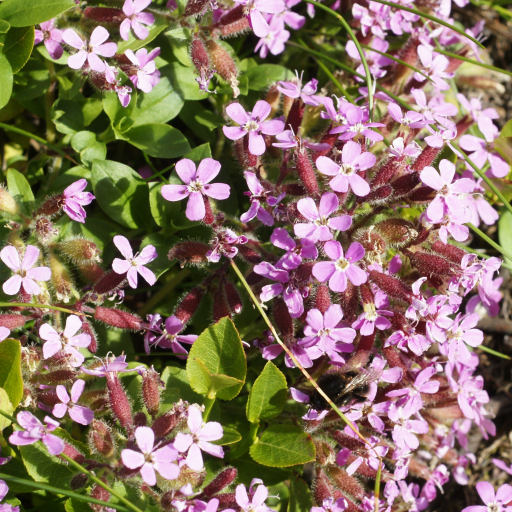
Plant Overview
Often called Rock Soapwort or the charmingly rhythmic "Tumbling Ted," this alpine native from the mountains of Europe is a favorite for anyone wanting a "floral waterfall" effect. It is a vigorous, mat-forming perennial that blankets rocky slopes and garden walls in a vivid haze of pink. Its name comes from the Latin word sapo (soap), hinting at a secret hidden within its roots and leaves.
🔍 How to Identify
- 🌸 The Blooms: Features masses of small, five-petaled flowers that range from bright candy-pink to a soft rose. They appear in dense clusters that can completely obscure the foliage during peak summer.
- 🍃 The Foliage: Small, oval-to-lance-shaped leaves that are a deep forest green. They are slightly hairy to the touch, which helps the plant retain moisture in windy, high-altitude environments.
- 🏃 The Growth Habit: It is a prostrate grower, meaning it stays low to the ground (usually under 6 inches) but spreads wide, trailing elegantly over the edges of containers or stone ledges.
🏡 In Your Garden
- 🧗 The Perfect Mountaineer: Because it originates in rocky terrain, it thrives in "lean" soil. If your soil is too rich or fertilized, the plant may become leggy and short-lived. It prefers the cracks between paving stones or the pockets of a dry-stone wall.
- ✂️ The Post-Bloom Haircut: Once the flowers fade, the plant can look a bit "spent." Shearing it back by half encourages a flush of fresh green growth and prevents it from becoming too woody or thin in the center.
- ☀️ Sun & Drainage: While it loves the sun, its absolute "must-have" is drainage. It hates "wet feet" during the winter, which can lead to crown rot.
⚠️ Safety & Toxicity
- 🧼 Low Toxicity: Rock Soapwort contains saponins. While not considered deadly, ingesting large amounts can cause an upset stomach, drooling, or vomiting in cats, dogs, and curious children.
- 🐟 Aquatic Warning: Saponins are notably toxic to fish. Avoid planting Saponaria directly adjacent to a koi pond where the leaves or petals might fall into the water and break down.
- 🖐️ Skin Sensitivity: Some gardeners with sensitive skin might experience mild irritation after handling the crushed foliage; gloves are recommended for heavy pruning.
✨ Fun Fact
True to its name, the roots and leaves of this plant produce a gentle, low-sudsing lather when crushed and boiled in water. Historically, this "soap" was used to clean delicate antique tapestries and wool, as it is much gentler than modern chemical detergents!

Detailed Care Instructions
| Humidity | Normal |
| Difficulty | Easy |
| Hibernation | Cold Period |
| Temperature | 20°C - 23°C |
| Hardiness Zones | 2 - 9 |
To grow Saponaria ocymoides, also known as rock soapwort, you can follow these steps:
- Location: Choose a location for planting that receives full sun or partial shade. This perennial plant prefers well-drained soil.
- Soil preparation: Prepare the soil by removing any weeds or grass from the area. Loosen the soil and incorporate organic matter, such as compost, to improve drainage and fertility.
- Planting: Dig a hole that is slightly larger than the root ball of the plant. Place the plant in the hole, making sure the top of the root ball is level with the soil surface. Backfill the hole with soil and gently firm it around the plant. Water thoroughly to settle the soil.
- Watering: Saponaria ocymoides prefers moderate moisture. Water the plant regularly, especially during dry spells, to keep the soil moist but not waterlogged. Avoid overwatering, as it can lead to root rot.
- Mulching: Apply a layer of organic mulch around the plant to help retain moisture, suppress weeds, and regulate soil temperature. Keep the mulch a few inches away from the stems to prevent rot.
- Fertilizing: Saponaria ocymoides generally doesn't require much fertilizer. However, you can apply a balanced slow-release fertilizer in early spring to promote healthy growth.
- Pruning: After the plant has finished flowering, you can trim back the spent flowers to encourage a second flush of blooms later in the season. Additionally, you can prune any dead or damaged stems as needed.
- Division: Every few years, you can divide mature clumps of Saponaria ocymoides to rejuvenate the plant. Dig up the clump and separate it into smaller sections, retaining healthy roots with each division. Replant the divisions in prepared soil and water well.
By following these guidelines, you can promote healthy growth and enjoy the beautiful flowers of Saponaria ocymoides.

Place in a bright room that is sun drenched almost all day. Or directly in a south-facing window.

To properly water this plant, it is important to understand its needs for moisture. Saponaria Ocymoides prefers a well-draining soil that is consistently moist but not overly wet. It is important to avoid allowing the soil to dry out completely, as this can lead to stress and damage to the plant.
When watering, it is best to use a gentle stream of water and avoid getting the leaves wet. Water deeply enough to saturate the root zone, but avoid over-watering, as excessive moisture can contribute to root rot and other problems.
It is recommended to water this plant approximately once a week, but the frequency may vary depending on factors such as temperature, humidity, and soil type. To determine when to water, check the soil moisture level by sticking your finger about an inch into the soil. If it feels dry at that depth, it's time to water.
In general, it is better to water deeply and infrequently than to water lightly and frequently. This ensures that the root system is staying well-hydrated without being constantly saturated, which can lead to a range of problems. Proper watering is one key to keeping this plant healthy and thriving.
To fertilize this plant, mix a well-balanced fertilizer into the soil around the base of the plant in early spring. Repeat the fertilization process every four weeks until the end of summer. Make sure to follow the directions and recommended amounts on the fertilizer packaging. Avoid fertilizing during the plant's dormant period in winter.
Saponaria Ocymoides plant prefers a well-drained soil that is slightly acidic to neutral. The soil should be rich in organic matter and nutrients, as this plant requires regular feeding to promote healthy growth. It is best to avoid using heavy clay soils or soils that are prone to waterlogging, as this can lead to root rot and other issues. A sandy loam soil is ideal, as it provides good drainage while still retaining moisture and nutrients. If your soil is particularly deficient in nutrients or organic matter, you may need to amend it with compost or other organic materials before planting. Overall, it is important to choose a soil type that is well-suited to your specific growing conditions and the needs of your Saponaria Ocymoides plant.
To propagate this plant, you will need to take stem cuttings from a mature, healthy plant in the spring or early summer. Choose a stem that is new growth and has several sets of leaves. Using a sharp, clean pair of scissors or pruning shears, cut the stem at a 45-degree angle just above a set of leaves.
Remove the lowest set of leaves from the stem cutting, leaving only the upper sets of leaves intact. Dip the cut end of the stem into rooting hormone powder to increase your chances of success. Plant the stem cutting in a pot filled with well-draining soil and water thoroughly.
Place the pot in a bright, but filtered light location, such as a shaded windowsill or outdoor patio. Keep the soil consistently moist but not soaked, allowing the top few inches of soil to dry out slightly before watering again.
After a few weeks, the stem cutting should begin to root and new growth should appear. Once a healthy root system has developed, transplant the newly rooted plant into a larger pot or outdoor garden bed with plenty of sunlight and well-draining soil.
Common pests of the rock soapwort include Spider mites, aphids. Make a habit of checking your rock soapwort frequently for pests so that any infestations can be caught and managed early.








