Plant Overview
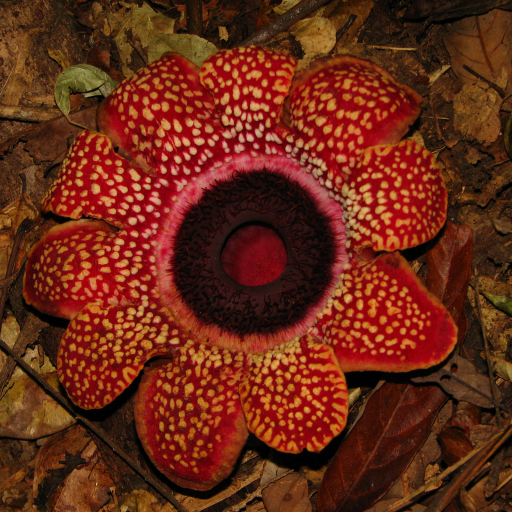
Known as the "Hermit’s Flower," Sapria himalayana is one of nature’s most mysterious botanical phantoms. This rare, parasitic wonder lives its entire life hidden inside the roots of its host vine, only revealing its stunning, blood-red presence for a few short weeks when it bursts through the forest floor to bloom. It is a true "vampire" of the plant world, possessing no leaves, no green color, and no roots of its own.
🔍 How to Identify
- 🌺 The Bloom: A massive, leathery flower typically 10–20 cm in diameter. It looks like a fleshy, five-lobed star emerging directly from the soil.
- 🔴 Coloration: The petals are an intense crimson or brick-red, covered in distinct, raised yellowish-white spots that give it a prehistoric appearance.
- 🛡️ Missing Parts: Unlike almost any other plant, you will see no green foliage or stems. It appears as a dark, cabbage-like bud before expanding into its dramatic floral form.
🌲 Habitat & Ecology
- 🌿 The Ghost Guest: Because it lacks chlorophyll, it cannot produce its own food. It survives entirely by siphoning nutrients from the roots of Tetrastigma vines (wild grapes), remaining invisible until the moment it decides to flower.
- 🏔️ Eastern Himalayan Native: It is incredibly picky about its home, found only in the undisturbed, humid evergreen forests of North-East India, Thailand, and Myanmar. It serves as a "bio-indicator," meaning its presence proves the forest is healthy and old-growth.
⚠️ Safety & Toxicity
- 🚫 Status: Generally considered non-toxic to touch, but it is absolutely inedible.
- 🛑 Endangered Protection: The primary danger regarding this plant is its rarity. It is a "critically endangered" species in many regions; picking or disturbing the flower can prevent it from reproducing, potentially wiping out an entire local colony.
✨ Fun Fact
Sapria himalayana is a close cousin to the world’s largest flower, the Rafflesia (Corpse Flower). To ensure pollination, it emits a faint, musky scent of decaying organic matter to trick carrion flies into crawling inside its deep, cup-like center.

Detailed Care Instructions








