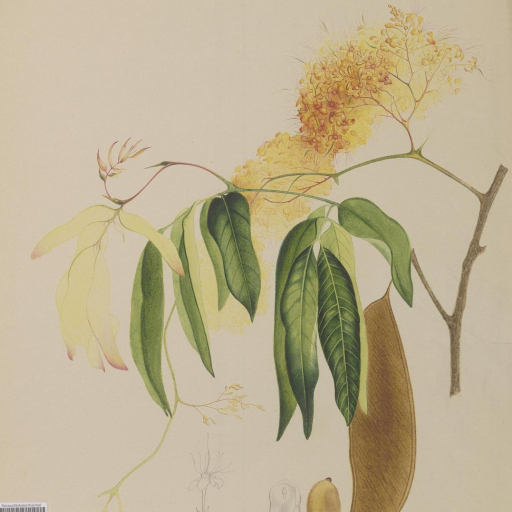
Plant Overview
Known as the "Sorrowless Tree," the Ashoka is one of the most legendary and sacred trees of the Indian subcontinent. Deeply woven into the fabric of Hindu and Buddhist mythology, it is said that Queen Maya gave birth to the Buddha under its branches, and Sita sought refuge in an Ashoka grove in the epic Ramayana. Beyond its spiritual status, it is prized for its magnificent, heavy clusters of fragrant blossoms that shift in color from yellow to fiery orange-red.
🔍 How to Identify
- 🌺 The Flowers: Large, dense bunches of blossoms that emerge directly from the branches and trunk. They start as a bright yellow and deepen into a rich crimson over time.
- 🍃 The Foliage: Long, lance-shaped leaves that grow in pairs. When young, the leaves are limp, thin, and a beautiful copper-red color, eventually turning a deep, glossy green.
- 🌳 The Silhouette: A small to medium-sized evergreen tree with a wide, spreading canopy and smooth, dark brownish-grey bark.
🏡 In Your Garden
- 🌱 Root Sensitivity: The Ashoka develops a deep taproot and is notoriously sensitive to being moved. It is best to choose a permanent "forever home" for it rather than trying to transplant it later.
- 💧 Thirst for Humidity: This tree thrives in tropical and subtropical climates. It loves consistent moisture but demands well-draining soil; it will suffer if left in standing water or exposed to dry, frosty winds.
⚠️ Safety & Toxicity
- 🟢 Status: Generally non-toxic and garden-safe.
- 🐾 Details: While the tree is not considered poisonous to cats, dogs, or humans, its bark and leaves are used in potent traditional Ayurvedic medicines. It is best to ensure curious pets or toddlers do not ingest the foliage to avoid digestive upset.
✨ Fun Fact
The name "Ashoka" literally translates from Sanskrit as "without sorrow." It was historically believed that merely sitting under the shade of this tree would remove grief and bring peace of mind to the weary traveler.

Detailed Care Instructions
To grow a Saraca Indica plant, also known as Ashoka, you can follow these steps:
- Climate and Location: Saraca Indica plants flourish in tropical and subtropical regions. They prefer a warm climate with temperatures ranging between 20°C to 30°C (68°F to 86°F). Ensure you choose a location that receives ample sunlight throughout the day.
- Soil and Pot Selection: Choose well-draining soil that is rich in organic matter. A mix of garden soil and compost works well. Saraca Indica plants can also be grown in large pots or containers. Make sure the pot has drainage holes to avoid waterlogging.
- Planting: If you are starting with seeds, they should be planted in spring. Soak the seeds in water overnight before sowing. Create a small hole in the soil or pot, around 1-2 cm deep, and place a seed in it. Cover it with soil, lightly press it down, and water gently. If you have a young Ashoka plant, transplant it into a larger pot or desired planting location.
- Watering: Saraca Indica requires regular watering, particularly during the summer months. Keep the soil evenly moist but not waterlogged. Reduce watering in winter, allowing the top few inches of soil to dry out before watering again.
- Fertilization: Apply a balanced organic fertilizer every 2-3 months during the growing season (spring and summer). Avoid over-fertilization, as it can negatively impact the plant's health.
- Pruning: Regular pruning helps keep the plant in shape and enhances its overall health. Prune any broken or dead branches, and trim back excessive growth to maintain a desired shape. Pruning should be done during the dormant season or after flowering.
- Pests and Diseases: Saraca Indica plants can be prone to pests like aphids, spider mites, and scale insects. Regularly inspect the leaves for any signs of infestation and treat immediately with organic insecticides if necessary. Protect the plants from fungal diseases by ensuring good air circulation and avoiding overwatering.
- Propagation: Saraca Indica can be propagated through seeds or stem cuttings. Sow the collected seeds in the spring or take stem cuttings during the summer months. Use a rooting hormone while propagating through cuttings to increase the success rate.
Remember that growing plants requires patience and care. Monitor your Saraca Indica regularly, provide appropriate care, and your plant will thrive and eventually bloom with beautiful orange or yellow flowers.

Place in a bright room that is sun drenched almost all day. Or directly in a south-facing window.

Saraca Indica is a tropical flowering plant that requires proper and regular watering to stay healthy and thrive. Here are some guidelines on how to water this plant:
1. Check the soil moisture: Before watering, check the soil moisture level by sticking your finger about an inch into the soil. If it feels dry, it’s time to water.
2. Water frequency: Saraca Indica requires regular watering, especially during the hot and dry months. Water the plant deeply once every 2-3 days, depending on the temperature and humidity.
3. Watering method: Use a watering can or hose with a gentle spray to avoid disturbing the soil and roots. Avoid wetting the leaves and flowers as much as possible.
4. Drainage: Make sure the container or soil has good drainage to prevent water from collecting at the roots. Waterlogged soil can cause root rot and other diseases.
5. Soil type: Saraca Indica prefers well-draining soil that retains moisture but doesn’t become waterlogged. The soil should be a mix of garden soil, sand, and compost.
6. Mulching: Adding a layer of mulch around the base of the plant helps to retain moisture and regulate soil temperature. It also prevents weed growth and improves soil texture.
Overall, watering Saraca Indica requires consistency, proper timing, and care. With the right water management techniques, this plant can thrive and produce beautiful flowers.
To fertilize this plant, apply a balanced fertilizer with equal parts nitrogen, phosphorus, and potassium twice a year. Apply the fertilizer in early spring and late summer, and water thoroughly after application. Avoid over-fertilization as it can damage the roots and reduce plant growth. Additionally, use organic matter such as compost or well-rotted manure to improve soil fertility and soil moisture retention.
The ideal soil for growing this plant should be well-draining, rich in organic matter, and slightly acidic. A soil mix containing a combination of peat moss, perlite, and vermiculite would provide the necessary drainage and aeration for optimal growth. The addition of compost or aged manure would improve soil fertility and provide essential nutrients for the plant. It is important to avoid using heavy soil, as it may lead to waterlogging and root rot. The pH level of the soil should be between 5.5 to 6.5, which can be achieved by adding sphagnum peat or sulfur to the soil.
There are several ways to propagate Saraca Indica plants. One method is to take softwood cuttings from the plant. Softwood cuttings are taken from the tips of the branches, and are typically 3-6 inches long. The cuttings should be taken from healthy, disease-free branches.
Once the cuttings are taken, they should be immediately placed in a rooting hormone. The cuttings can then be planted in soil or a rooting medium. Saraca Indica plants prefer well-drained soil that is rich in nutrients.
Another method for propagating Saraca Indica is through air layering. This method involves making a small cut in the branch of the plant, and then wrapping the wound with moist sphagnum moss. After a few weeks, the roots will start to grow from the moss. Once the roots are well-established, the branch can be cut from the main plant and planted in soil.
Lastly, Saraca Indica can also be propagated through seeds. The seeds should be planted in well-drained soil, and kept moist until they germinate. Once the plants have grown large enough, they can be transplanted to their permanent location. However, seed propagation can be a slow process.








