Plant Overview
Often called the "Sweet Box" or "Christmas Box," Sarcococca confusa is the secret weapon of the winter gardener. While most plants are huddling in dormancy, this glossy evergreen is just getting started, filling the cold air with a perfume so powerful it can stop you in your tracks. Its specific name, confusa, hints at its mysterious botanical history, as experts spent years debating whether it was a wild species or a natural hybrid.
🔍 How to Identify
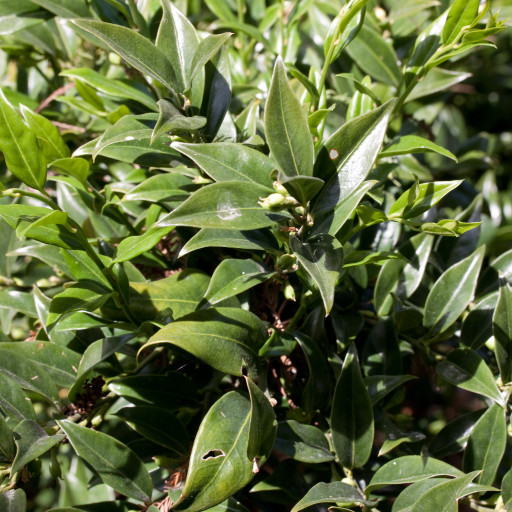
- 🍃 Lustrous Foliage: The leaves are a brilliant, waxy deep green, shaped like elegant waves with a slightly pointed tip that stays vibrant all year round.
- ❄️ Winter Tassels: Unlike showy roses, its flowers are modest, creamy-white tufts that look like tiny shredded ribbons tucked into the leaf joints.
- 🍒 Jewel-Like Berries: Following the winter bloom, the plant produces small, round berries that transition from a dark red to a deep, polished black.
🏡 In Your Garden
- 🌑 The Shade Champion: This plant is famous for its ability to thrive in deep, dry shade where most other plants wither, making it the perfect solution for dark corners or north-facing walls.
- 🌬️ Scent Strategy: Because it blooms in the dead of winter (January to February), gardeners often plant it near a front door or a frequently used walkway to catch the "vanilla-honey" fragrance on the breeze.
- 🌱 Low Maintenance: It is a slow-growing shrub that maintains a tidy, rounded shape naturally, meaning you'll rarely need to reach for the pruning shears.
⚠️ Safety & Toxicity
- 🐾 Mildly Toxic: While not considered highly dangerous, all parts of the plant (especially the berries) can cause stomach upset if ingested.
- 👶 Caution for Curious Eaters: The shiny black berries can be tempting to small children or pets. It is best to supervise them or plant the Sweet Box in a less accessible area of the garden.
✨ Fun Fact
Despite its intense, room-filling fragrance, the individual flowers of the Sweet Box have no petals at all—they consist entirely of tiny, pollen-bearing "tassels" or stamens!

Detailed Care Instructions
To grow Sarcococca Confusa, also known as sweet box, follow these steps:
- Choose the right location: Sarcococca Confusa thrives in partial to full shade. Select a location with well-draining soil that is rich in organic matter.
- Planting: Dig a planting hole twice as wide and deep as the root ball. Place the plant in the hole, ensuring that the top of the root ball is level with or slightly above the soil surface. Backfill the hole with soil, firming it gently around the roots.
- Watering: Keep the soil consistently moist, especially during the plant's first year. Once established, Sarcococca Confusa is relatively drought-tolerant, but regular watering during dry periods is still beneficial.
- Mulching: Apply a layer of organic mulch, such as wood chips or leaf mulch, around the base of the plant. This helps conserve moisture, suppress weeds, and add nutrients to the soil as it breaks down.
- Fertilizing: Sarcococca Confusa doesn't typically require regular fertilization. However, you can apply a slow-release, balanced fertilizer in early spring to promote healthy growth.
- Pruning: Minimal pruning is necessary for Sarcococca Confusa. You can tidy up the plant by removing any dead, damaged, or overcrowded branches. Prune immediately after flowering to prevent fruit formation if you prefer a tidy appearance.
- Pests and diseases: Sarcococca Confusa is generally pest and disease-resistant. However, keep an eye out for common garden pests like aphids or scale insects. Treat infestations accordingly using organic or chemical methods.
- Propagation: You can propagate Sarcococca Confusa through seeds or by taking stem cuttings in late spring or early summer. Seeds may take time to germinate, so cuttings may be a quicker option.
Remember to always check specific care instructions for your region and keep in mind that individual plant care can vary.

Place in a window with dappled sun or a spot in the middle of a room. Or directly in a window facing west or east.

To water this plant, it is important to ensure that the soil is consistently moist, but not waterlogged. This can be achieved by watering deeply and infrequently, allowing the top inch of soil to dry out before watering again. It is also important to avoid getting water on the leaves, as this can lead to fungal growth and damage. Watering should be adjusted based on the climate and season, with more frequent watering needed in hot, dry weather and less during cooler months. A layer of mulch can help to retain moisture and protect the roots.
To fertilize this plant, use a balanced fertilizer in the spring before new growth appears. Follow the instructions on the fertilizer packaging for the proper amount to apply based on the size of the plant. Avoid fertilizing in the late summer or fall as this can encourage late-season growth that may not have time to harden off before winter. Additionally, avoid using high-nitrogen fertilizers, as this can cause excessive foliage growth at the expense of flowers.
Sarcococca Confusa, a flowering evergreen shrub plant, thrives on moist, well-draining soil that is rich in organic matter. It prefers a slightly acidic soil pH level ranging from 5.5 to 7.5. The ideal soil type for this plant is loamy soil, which is a mixture of sand, clay, and silt. The soil should be kept evenly moist, but not waterlogged, as excessive moisture can lead to root rot and other fungal diseases. It is important to avoid using heavy, clay-based soil or soils with poor drainage. It is recommended to mix the soil with aged compost or well-rotted manure to enrich its organic matter content and improve drainage. This plant can also benefit from an annual application of fertilizer, preferably one with low nitrogen content. Overall, providing a suitable soil environment is critical for the healthy growth and development of Sarcococca Confusa.
Sarcococca Confusa can be propagated using semi-hardwood cuttings. The process begins by taking 4-6 inch sections of stem tips that have just started to harden, during the growing season. Remove the lower leaves, leaving only two to three leaves at the top. It is important to use clean, sharp cutting tools to prevent any damage or disease to the plant. Dip the lower end of the cutting into rooting hormone powder, tapping off any excess. Insert the cutting into a pot filled with a mixture of equal parts peat moss and perlite, making sure the cutting is firm and upright. Place the pot in a warm, bright location with indirect sunlight. Keep the soil evenly moist and mist the cutting every day or two to maintain humidity. The cuttings should begin to root within 6-8 weeks and can be transplanted into individual pots or directly into the ground once they have established roots.








