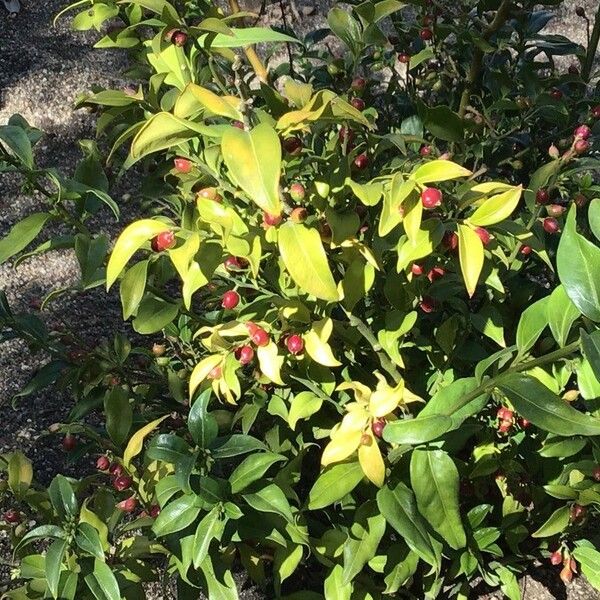
Plant Overview
The Longleaf Sweet Box is nature’s way of rewarding those who brave the winter garden. Often called the "Winter Perfume," this understated evergreen stays quiet all summer only to release an intoxicating, honey-like fragrance during the coldest months of the year. It is a true "hidden gem" for dark, north-facing corners where most other flowering plants refuse to grow.
🔍 How to Identify
- 🍃 The Foliage: Features elegant, narrow, lance-shaped leaves that are significantly longer than its cousins, boasting a deep, waxy green finish that reflects light in dark spaces.
- ❄️ The Blooms: Tiny, spidery white flowers appear in clusters tucked into the leaf axils; they lack traditional petals but feature prominent, creamy-white stamens.
- 🍒 The Berries: Following the winter bloom, the plant produces small, spherical fruits that transition from a dark red to a polished, midnight black.
🏡 In Your Garden
- ☁️ The Shade Specialist: This plant is a champion of "dry shade," a notoriously difficult garden niche. It thrives under the canopy of large trees or against north-facing walls where sunlight is scarce.
- ⏳ Patience is Key: It is a slow-growing shrub that focuses on building a sturdy root system first. Because it possesses a sensitive taproot, it dislikes being moved once established—pick its "forever home" carefully!
- 🌬️ Scent Placement: To get the most out of its gift, plant it near an entryway or a path you use daily. The fragrance is surprisingly powerful and can drift several meters on a light winter breeze, often reaching you before you even see the plant.
⚠️ Safety & Toxicity
- 🐾 Mildly Toxic: The berries and foliage contain alkaloids that can cause stomach upset, drooling, or vomiting if ingested by curious pets or children.
- 🧤 General Handling: While not typically a skin irritant, it is always a good practice to wear gloves when pruning dense evergreen shrubs to avoid minor scratches from the woody stems.
✨ Fun Fact
Despite its delicate, sweet scent, the Longleaf Sweet Box is a close relative of the rugged Boxwood (Buxus). This explains why it is so "tough-as-nails," capable of maintaining its glossy green appearance even in polluted urban environments or heavy shade.

Detailed Care Instructions
To grow Sarcococca Longifolia, also known as Sweetbox or Christmas Box, you can follow these steps:
- Climate: Ensure that you live in the appropriate climate for Sarcococca Longifolia. It is a suitable plant for USDA hardiness zones 6-9.
- Location: Choose a location that provides partial shade or filtered sunlight. Sarcococca Longifolia prefers a shady spot but can tolerate some sun.
- Soil: The plant thrives in well-draining, fertile soil. Prepare the soil by adding organic matter like compost to improve its fertility and drainage.
- Planting: Dig a hole that is slightly wider and deeper than the plant's rootball. Place the plant in the hole and backfill it with soil, ensuring that the rootball is at ground level or slightly above. Gently tamp down the soil around the plant.
- Watering: Keep the soil consistently moist but not waterlogged. Sarcococca Longifolia prefers slightly acidic soil, so water with rainwater or distilled water if your tap water is alkaline.
- Mulching: Apply a layer of organic mulch, such as wood chips or leaf litter, around the base of the plant to help retain moisture and suppress weed growth. Avoid piling mulch against the plant's stem.
- Fertilizer: Use a balanced, slow-release fertilizer in early spring to provide necessary nutrients. Follow the manufacturer's instructions for application rates.
- Pruning: Sweetbox generally requires minimal pruning. However, you can remove dead or damaged branches whenever necessary. Pruning after flowering can help maintain a shapely appearance.
- Pests and Diseases: Sarcococca Longifolia is usually pest and disease resistant. However, be on the lookout for aphids, mealybugs, or scale insects. If necessary, treat with an appropriate insecticidal soap or neem oil according to the product instructions.
- Propagation: You can propagate Sweetbox through stem cuttings or by dividing mature plants. Take stem cuttings in spring or divide the plant in early autumn. Ensure each propagated piece has roots attached and plant them in suitable containers or prepared soil.
Remember, each plant may have specific needs, so it's advisable to research or consult with local gardening experts for more precise guidance.
- Determine the watering needs of the Sarcococca Longifolia plant by considering factors such as soil moisture, environmental conditions, and the plant's growth stage.
- Water the plant slowly and deeply to ensure that the moisture reaches the root system. This can be achieved by using a watering can or a drip irrigation system that allows for a controlled and even distribution of water.
- Before watering, check the soil moisture level by inserting your finger about an inch deep into the soil. If the soil feels dry at this depth, it's time to water the plant.
- Avoid overwatering the Sarcococca Longifolia plant as it can lead to root rot and other diseases. Allow the top few inches of soil to dry out slightly before watering again.
- Consider the surrounding environmental conditions when deciding when and how much to water the plant. Factors like temperature, humidity, and sunlight exposure can impact the plant's water requirements.
- During hot and dry weather conditions, the Sarcococca Longifolia plant may require more frequent watering. Monitor the plant closely during these times and adjust your watering schedule accordingly.
- Water the plant in the early morning or late afternoon to minimize water evaporation and ensure effective absorption by the roots.
- Use room temperature water when watering the Sarcococca Longifolia plant. Avoid using water that is too cold or too hot, as extreme temperatures can shock the plant's roots.
- Consider using rainwater or distilled water if your tap water is high in mineral content or treated with chemicals, as these can negatively affect the plant's health.
- Regularly inspect the plant for signs of underwatering or overwatering. Wilting leaves, yellowing foliage, or excessive moisture on the soil surface are indications that adjustments may be needed in your watering routine.
It's important to note that specific watering instructions may vary depending on the specific conditions and requirements of your Sarcococca Longifolia plant. Always observe the plant closely and make adjustments to your watering routine as needed to ensure optimal health and growth.
To fertilize the Sarcococca Longifolia plant, choose a balanced, slow-release fertilizer specifically formulated for ornamental shrubs. Follow the instructions provided on the fertilizer packaging. Typically, apply the fertilizer in early spring, just before new growth begins. Use a granular fertilizer and scatter it evenly around the base of the plant, taking care not to let it touch the stems or leaves. Water thoroughly after applying the fertilizer to ensure it reaches the roots. Repeat the process once a year in subsequent spring seasons for consistent growth and optimal performance.
Sarcococca longifolia is a versatile and adaptable plant that can thrive in various soil conditions. It prefers soil that is well-draining and rich in organic matter. The ideal soil for this plant is loamy, with a pH that ranges from slightly acidic to slightly alkaline.
Loamy soil provides a good balance between water-holding capacity and drainage, ensuring that the plant's roots receive adequate moisture without becoming waterlogged. Additionally, the presence of organic matter in the soil promotes nutrient retention and encourages beneficial microbial activity.
While Sarcococca longifolia can tolerate a wide range of soil types, it does best in fertile soils that are well-amended with compost or well-rotted manure. These organic materials enhance soil structure, improve nutrient availability, and provide essential micronutrients for the plant's growth and development.
It is worth noting that Sarcococca longifolia can tolerate both full sun and partial shade, making it suitable for a variety of garden locations. Regardless of the sun exposure, providing well-draining and nutrient-rich soil will go a long way in ensuring the health and vigor of this plant.
To propagate Sarcococca longifolia plant, you can follow the steps outlined below:
- Select a healthy parent plant: Choose a mature, established Sarcococca longifolia plant with vibrant foliage and strong growth. This serves as your source for taking cuttings.
- Timing: Propagation is commonly done in late spring or early summer when the plant is actively growing. This is the best time for success, as the plant's energy is concentrated on new growth.
- Gather the necessary tools: Prepare clean and sharp pruning shears, a clean container, rooting hormone (optional), sterile potting mix, and a clear plastic bag or greenhouse cover for maintaining humidity.
- Take cuttings: Locate a non-flowering stem on the parent plant that is approximately 4-6 inches in length. Make a clean diagonal cut just below a leaf node using the pruning shears. Repeat this process to obtain several cuttings for better success.
- Remove lower leaves: Strip off the lower leaves from the stem, leaving only a few leaves at the tip intact. This reduces moisture loss and helps focus the plant's energy on root development.
- Apply rooting hormone (optional): Dip the base of each cutting in a rooting hormone powder or gel. This step is not mandatory but can enhance the chances of successful rooting.
- Prepare the planting container: Fill a clean container with well-draining sterile potting mix, leaving about 2 inches of space at the top. Water the potting mix until evenly moist, but not soggy.
- Plant the cuttings: Make a small hole in the potting mix using a pencil or your finger. Insert the cut end of each cutting into the hole, ensuring that at least one leaf node is buried beneath the surface. Gently firm the soil around the cutting to secure it.
- Maintain humidity: Cover the container with a clear plastic bag or place it inside a mini greenhouse to create a humid environment that promotes rooting. Ensure it is adequately ventilated to prevent excess moisture buildup.
- Provide suitable lighting and temperature: Place the container in a bright, indirect light location, away from direct sunlight. Maintain a temperature of around 70-75°F (21-24°C), as this encourages root development.
- Watering: Keep the potting mix consistently moist but avoid overwatering, as this can cause rot. Mist the cuttings occasionally to maintain humidity within the covering.
- Wait for rooting: Monitor the cuttings regularly for signs of new growth, indicating root development. This typically takes a few weeks to a couple of months, depending on conditions and individual plant vigor.
- Transplanting: Once the cuttings have rooted and established a healthy root system, they can be transplanted into individual pots or directly into a garden bed with well-draining soil.
By following this process, you can successfully propagate Sarcococca longifolia plant and expand your garden's collection.








