Plant Overview
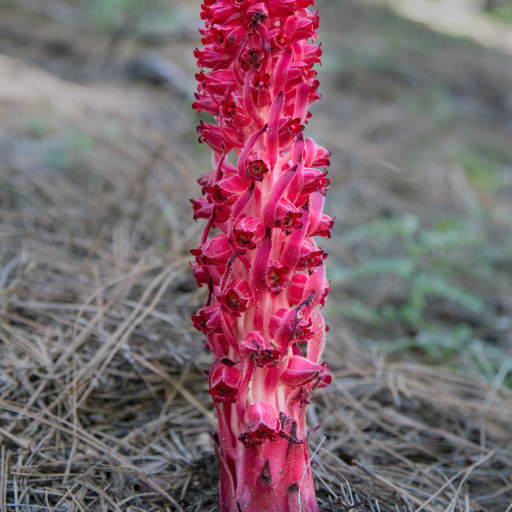
Emerging from the forest floor like a vibrant, fleshy torch, the Snow Plant (Sarcodes sanguinea) is one of nature’s most mysterious inhabitants. Often found poking through the last of the winter snow in mountain forests, it lacks the green chlorophyll found in most plants, relying instead on a "vampiric" relationship with underground fungi. Its brilliant crimson hue makes it look more like a glowing ember or a strange sea creature than a traditional wildflower.
🔍 How to Identify
- 🔴 Electric Crimson Hue: The entire plant—stem, scale-like leaves, and flowers—is a uniform, brilliant red to pinkish-orange, making it impossible to miss against the dark forest floor.
- 🔔 Bell-Shaped Flowers: The upper half of the thick stalk is crowded with small, succulent, bell-shaped flowers that hang in a dense cluster.
- 🌲 Fleshy Texture: Unlike the delicate stems of most wildflowers, the Snow Plant is thick, rigid, and almost "meat-like" in appearance, which is reflected in its scientific name.
🏡 In Your Garden
- 🍄 The Mycorrhizal Thief: This plant is a "mycoheterotroph," meaning it doesn't eat sunlight. It steals its energy from the Rhizopogon fungi that live on the roots of pine and fir trees. Because of this incredibly complex relationship, it is impossible to grow in a home garden or transplant.
- 🏔️ Mountain Dweller: In the wild, it thrives in high-altitude coniferous forests (between 4,000 and 9,000 feet). It prefers deep, acidic "duff"—the thick layer of decomposing pine needles and organic matter that blankets the forest floor.
⚠️ Safety & Toxicity
- 🛑 Status: Not for consumption.
- 🐾 Details: While not famously toxic to the touch, the Snow Plant is considered inedible for humans and pets. More importantly, it is a rare and protected species in many regions; picking it is often illegal and will cause the plant to die, as it cannot survive without its underground fungal network.
✨ Fun Fact
The scientific name Sarcodes sanguinea literally translates to "the bloody flesh-like thing," a nod to its strikingly organic, red appearance that early explorers found both beautiful and slightly eerie.

Detailed Care Instructions
To grow Sarcodes sanguinea (also known as snow plant or snow flower), you can follow these steps:
- Obtain seeds or rhizomes: You can either purchase seeds or rhizomes from a reputable nursery or collect them yourself from the wild if it is legal and sustainable in your area.
- Choose a suitable location: Sarcodes sanguinea is native to mountainous regions of western North America, so it prefers cooler temperatures and acidic, well-draining soil. Find a shady spot under trees or shrubs with the correct environmental conditions.
- Prepare the soil: Ensure the soil is rich in organic matter, such as pine needles or compost, to create the acidic conditions preferred by Sarcodes sanguinea. If the soil in your garden is alkaline, you may need to amend it with sulfur or other acidic materials.
- Planting: If you have seeds, sow them in the prepared soil during the fall or early spring. Lightly cover the seeds with soil and keep them moist. If using rhizomes, plant them horizontally in the soil, with the growing bud pointing upwards.
- Watering: Sarcodes sanguinea prefers moist but well-draining soil. Keep the soil consistently moist, but avoid overwatering, as this can cause rotting.
- Mulching: Apply a layer of organic mulch, such as pine needles or wood chips, around the plant to help retain moisture and regulate soil temperature.
- Fertilizing: Sarcodes sanguinea is adapted to nutrient-poor soils, so it generally does not require much fertilizer. However, if you notice poor growth, you can apply a balanced organic fertilizer in the early spring.
- Pruning: Minimal pruning is required for Sarcodes sanguinea. Remove any dead or diseased parts as necessary.
- Patience: It's important to note that Sarcodes sanguinea is a slow-growing plant, and it can take several years to reach maturity and start flowering.
- Protection: Depending on your location, you may need to protect the plant from extreme weather conditions, such as excessive heat or frost.
Remember to research the specific requirements and recommendations for growing Sarcodes sanguinea in your region, as local conditions may vary.

Place in a dark room with little light, like a dark bedroom or a spot far away from a window or directly in a north-facing window.

1. Observe the soil moisture level: The first step in watering Sarcodes Sanguinea plant is to observe the soil and see if it requires watering. Do not water the plant if the soil is already moist.
2. Water at the root level: When watering the plant, make sure to water at the root level rather than on the leaves. This will prevent the leaves from getting wet, which can lead to rot and disease.
3. Use room temperature water: Always use room temperature water when watering Sarcodes Sanguinea plant. Cold water can shock the plant roots and potentially damage them.
4. Water thoroughly: Water the plant thoroughly so that the water penetrates the soil and reaches the roots. Over-watering should be avoided as it can lead to root rot.
5. Use a well-draining potting mix: Use a well-draining potting mix while planting Sarcodes Sanguinea plant to avoid waterlogging in the soil. This will allow the excess water to drain out and keep the soil moist.
6. Pay attention to seasonal variations: The watering needs of Sarcodes Sanguinea plant may vary depending on the season. During the summer or warm weather, the plant may require more frequent watering as the soil may dry out faster. While in winter or cooler weather, the plant may require less watering.
7. Monitor the plant's growth: Always monitor the plant's growth and observe if there are any signs of wilting or overwatering. Adjust your watering schedule accordingly to ensure that the plant remains healthy and hydrated.
To fertilize this plant, use a fertilizer with a balanced N-P-K ratio, such as a 10-10-10 or 20-20-20 formula. Apply the fertilizer during the growing season, from late winter to early spring, and then again in late summer to early fall. Be sure to follow the manufacturer's instructions for the amount to use, and avoid over-fertilizing, as this can damage the plant. Water the plant thoroughly after fertilizing to help distribute the nutrients evenly.
Sarcodes Sanguinea plant prefers well-draining soil that is rich in organic matter. It is typically grown in soil that is slightly acidic with a pH ranging between 5.5 to 6.5. The ideal soil type for this plant is a loam soil, which is a mixture of sand, silt, and clay. It is important to avoid heavy clay soils, which can retain too much water and cause the roots to rot. Additionally, the soil should be kept moist but not waterlogged, as excessive moisture can also cause root rot. When planting, it is recommended to amend the soil with compost or other organic matter to provide the plant with necessary nutrients.
To propagate this plant, gather fresh seeds from mature plants and sow them in well-draining soil. Ensure that the soil is moist but not waterlogged and place the seeds in a warm, bright location. It may take several weeks for the seeds to germinate.
Alternatively, take stem cuttings from a healthy plant and dip them in rooting hormone before planting them in a pot of well-draining soil. Keep the soil moist and place the pot in a warm, bright location. Within a few weeks, the cuttings should develop roots and be ready for transplanting into their permanent location.








