Plant Overview
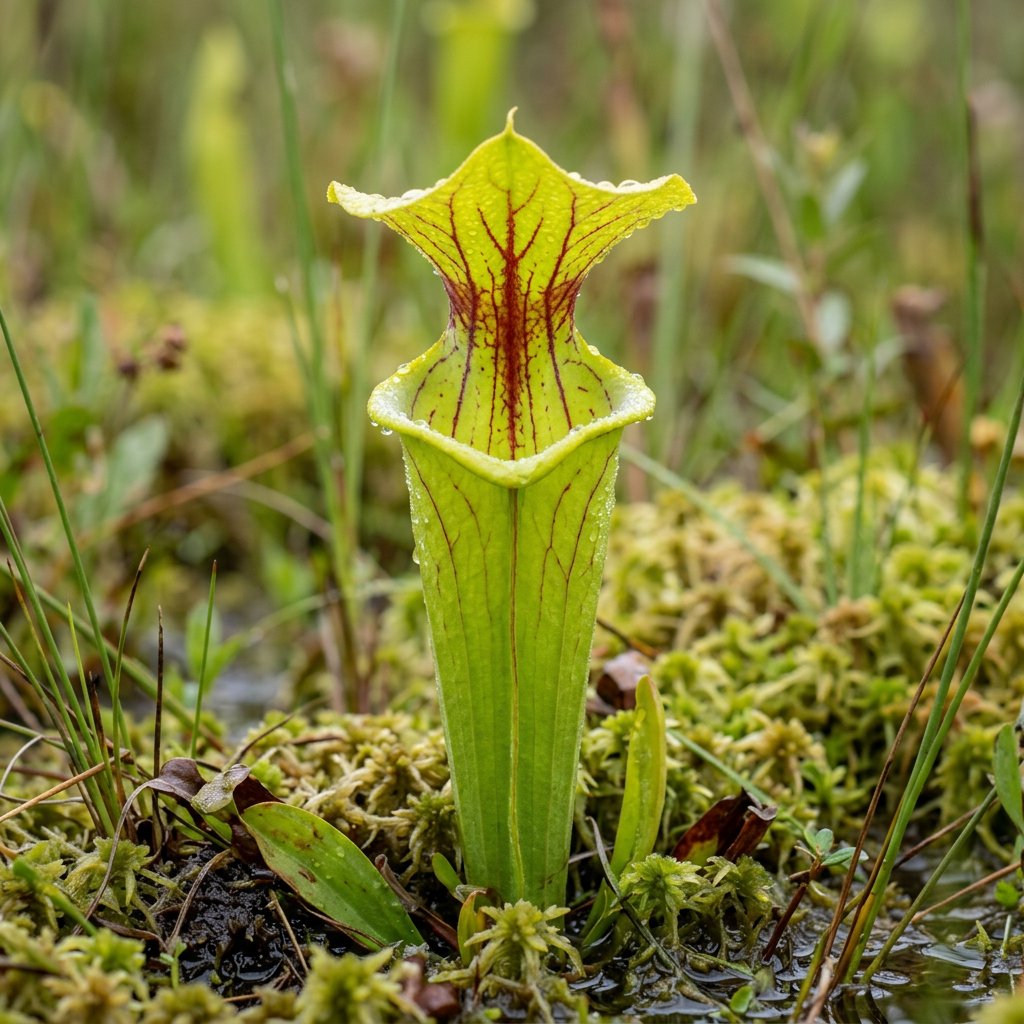
Known as the "Trumpet Pitcher" or "North American Pitcher Plant," these swamp-dwelling carnivores are some of the most dramatic additions to a bog garden. Native to the wetlands of the United States and Canada, they have evolved into master hunters to survive in nutrient-poor soil. They don't just sit there looking pretty; they are active, living traps that use nectar and vivid colors to lure unsuspecting insects to a watery end.
🔍 How to Identify
- 🏺 The Pitchers: These are actually modified leaves that grow into hollow, upright tubes. They can range from short, fat jugs to tall, slender trumpets reaching over three feet high.
- ☂️ The Hood: A stationary lid (operculum) sits atop the pitcher. Contrary to popular belief, it doesn't "snap" shut; it acts as a roof to keep rainwater from diluting the digestive enzymes inside.
- 🎨 Intricate Veining: Many species feature stunning "venation"—deep red or purple veins that look like a roadmap to a nectar feast, designed specifically to guide insects into the trap.
🏡 In Your Garden
- 💧 The "Pure Water" Rule: Sarracenia have a specialized root system that is extremely sensitive to minerals. You must never use tap water; they require distilled, reverse osmosis, or rainwater to prevent "mineral burn" which can kill the plant.
- ☀️ Sun Obsession: These plants are sun-lovers. To achieve their most vibrant reds and purples, they need at least 6 hours of direct, unfiltered sunlight. If kept in the shade, they will turn a weak, floppy green.
- ❄️ Winter Dormancy: Don't throw your plant away when it looks "dead" in November! Sarracenia require a cold winter rest period of 3-4 months to survive long-term. They will naturally brown and die back to the soil line until spring.
⚠️ Safety & Toxicity
- 🟢 Safe for Humans: Sarracenia are considered non-toxic to humans and do not pose a threat if touched or accidentally handled.
- 🐱 Pet Considerations: While generally non-toxic to cats and dogs, the pitchers are fragile. A curious cat chewing on a pitcher won't be poisoned, but the plant will likely lose that leaf and its ability to feed itself for the season.
✨ Fun Fact
Some species, such as the Yellow Pitcher Plant (Sarracenia flava), produce a chemical in their nectar called coniine. This is the same alkaloid found in deadly hemlock; it acts as a narcotic that "drunks" the insects, causing them to lose their footing and tumble into the digestive pool below!

Detailed Care Instructions
| Humidity | Normal |
| Lighting | Part Sun |
| Difficulty | Medium |
| Hibernation | Cold Period |
| Temperature | 18°C - 24°C |
| Hardiness Zones | Min 8A |
Growing Sarracenia, also known as the pitcher plant, is relatively easy if you follow these guidelines:
- Choose a suitable location: Most Sarracenia species thrive in full sun, so select a spot in your garden that receives at least 6-8 hours of direct sunlight per day. They also prefer growing in acidic, nutrient-poor soil.
- Plant in containers: Sarracenia plants are best grown in containers or pots. Use a well-draining planting mix that is acidic in nature, such as sphagnum moss or a mixture of peat and perlite.
- Watering: Sarracenia plants require high levels of humidity but don't like to sit in wet soil. Keep the soil consistently moist but not waterlogged. Avoid using tap water as it contains minerals that may harm the plants. Instead, use rainwater, distilled water, or reverse osmosis water.
- Feeding: Sarracenia plants are carnivorous and obtain nutrients by trapping and digesting insects. They can catch their own prey, but if you wish, you can feed them small insects like fruit flies or ants to promote growth.
- Winter dormancy: Sarracenia plants require a period of winter dormancy to rest and prepare for new growth. Reduce watering and expose them to cooler temperatures (around 5-10°C or 41-50°F) during winter. You can either keep them outdoors, protected from frost, or move them to a cool location indoors. Resume regular watering and move them back to a sunny spot in spring.
- Pests and diseases: Sarracenia plants are generally resistant to pests and diseases. However, watch out for aphids, slugs, or snails. Handpick any pests you see or use organic insecticidal soap if necessary.
- Division: Over time, clumps of Sarracenia plants may become crowded. To propagate and rejuvenate the plants, divide them during their dormant period. Carefully separate the clumps and repot them in fresh planting mix.
Remember that Sarracenia are native to boggy, swampy areas, so providing enough water and maintaining high humidity is crucial. Enjoy growing your Sarracenia plants and watch their beautiful pitcher-shaped leaves develop!

Place in a window with dappled sun or a spot in the middle of a room. Or directly in a window facing west or east.

To water this plant, use a container with pH-neutral or slightly acidic water, such as distilled or rainwater. Avoid using tap water or water with high mineral content as it may harm the plant. Water the plant by gently pouring water into the container until it reaches the top of the soil. Make sure the soil is always damp but not waterlogged as this can cause root rot. Additionally, be careful not to let the leaves trap excess water, as this can also lead to rot. Finally, during the winter months, reduce watering to ensure the plant enters dormancy as it requires a period of rest to thrive.
To provide adequate nutrition for your Sarracenia plant, apply a diluted fertilizer solution once a month during the growing season. Use a balanced fertilizer with equal parts nitrogen, phosphorus, and potassium. Dilute the solution to half the recommended strength and apply it directly to the soil. Be careful not to get any of the fertilizer on the leaves or traps of the plant, as this can damage them. During the winter months, reduce fertilization and water sparingly to mimic the plant's natural dormancy period.
Sarracenia plants prefer a specific type of soil that is low in nutrients and acidic in pH. The soil should have good drainage and be able to retain moisture without becoming waterlogged. The use of bark or sphagnum moss as a component in the soil mix is recommended to aid in moisture retention. The soil mix should be free of any fertilizers or additives that may harm the plant. It is important to note that the soil mix should be changed every few years to avoid buildup of minerals and other elements that may harm the plant.
Sarracenia is a carnivorous plant that can be propagated through division or by seed. To propagate through division, carefully separate the new plant from the parent plant, making sure to keep some roots intact. Transplant the new plant into a pot filled with a mix of peat moss and sand, and keep it well-watered. To propagate by seed, collect ripe seeds from the plant and sow them in a mix of peat moss, sand, and perlite. Keep the soil consistently moist and the temperature around 70°F (21°C) until the seeds germinate. Once the seedlings have developed several leaves, transplant them into individual pots or in a container filled with the appropriate soil mix.







