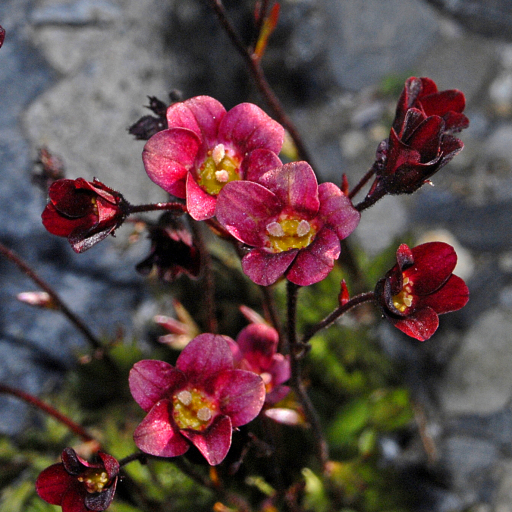
Plant Overview
Often called "Mossy Saxifrage," this plant is a garden favorite for those looking to create a lush, emerald carpet. Developed by the legendary German nurseryman Georg Arends, it forms a soft, cushiony texture that feels like stepping into a fairytale woodland. While it mimics the look of delicate moss, it surprises everyone in early spring by transforming into a vibrant sea of upright, cup-shaped blooms.
🔍 How to Identify
- 🌿 The Foliage: It forms dense, low-growing mats of evergreen leaves that are deeply lobed and bright green, resembling a thick cushion of moss.
- 🌸 The Blooms: Small, five-petaled flowers emerge on slender, wiry stems. They range in color from snowy white to deep crimson and soft pink.
- 🌱 Growth Habit: It spreads outward via short runners, creating a "hummock" or mound shape that eventually joins other plants to cover the ground.
🏡 In Your Garden
- 💧 Cool Feet: Unlike many rock plants, Mossy Saxifrage hates being parched. It craves "cool feet"—soil that stays consistently moist but never soggy—and can struggle in intense, direct afternoon sun which "scorches" the center of the mat.
- 🪨 The "Stone-Breaker" Role: It is at its best when tucked into the crevices of a stone wall or used as a living grout between paving stones. If the center of your plant starts to look brown and dead, it’s a signal that the plant is too dry or needs to be divided and replanted.
⚠️ Safety & Toxicity
- ✅ Status: Non-toxic and safe.
- 🐾 Details: This plant is generally considered safe for households with curious pets or children. It does not possess any stinging hairs or irritating sap, making it a "worry-free" addition to accessible garden paths.
✨ Fun Fact
The name Saxifraga literally translates from Latin as "stone-breaker." While it doesn't actually crack boulders, its ability to root into tiny crevices in rocky alpine cliffs led ancient people to believe the plant had the power to dissolve stones—even leading to its use in historical folk medicine for kidney stones!

Detailed Care Instructions
To grow Saxifraga Arendsii plants, follow these steps:
- Select a suitable growing location: Saxifraga Arendsii prefers partial shade to full sun. It can tolerate a range of soil types, but well-draining soil is essential.
- Prepare the soil: Amend the soil with organic matter, such as compost or peat moss, to improve drainage and fertility. Remove any weeds or debris from the planting area.
- Sow seeds or plant seedlings: You can start Saxifraga Arendsii from seeds or purchase young plants from a nursery. If using seeds, sow them in early spring, barely covering them with soil. Keep the soil moist until germination occurs. If using seedlings, dig a hole slightly larger than the root ball and gently place the plant in the hole.
- Watering: Saxifraga Arendsii requires regular watering to keep the soil consistently moist but not waterlogged. Water the plants deeply once or twice a week, depending on the weather conditions. Avoid overhead watering, which can lead to leaf diseases.
- Mulching: Apply a layer of organic mulch, such as wood chips or straw, around the base of the plants to help conserve moisture, suppress weeds, and regulate soil temperature.
- Fertilizing: Saxifraga Arendsii typically doesn't require high levels of fertilization. However, a light application of balanced fertilizer in early spring and late summer can help promote healthy growth.
- Pruning: Deadhead faded flowers to encourage continuous blooming. Trim back any dead or damaged foliage to maintain a tidy appearance.
- Division: Over time, Saxifraga Arendsii can become crowded. Divide the plants every 2-3 years in early spring or fall to maintain vigor and increase the number of plants. Gently dig up the clump, separate the rosettes, and replant them in suitable locations.
- Pests and diseases: Monitor for pests like aphids or slugs and apply appropriate methods to control their presence. Ensure good air circulation around the plants to prevent fungal diseases.
Remember to check the specific care requirements of the Saxifraga Arendsii plant you have, as different varieties may have slightly different needs.

Place in a window with dappled sun or a spot in the middle of a room. Or directly in a window facing west or east.

To water this plant, gently pour room temperature water over the soil until it is evenly moist but not waterlogged. Avoid getting water on the foliage as this can cause damage. Check the soil moisture regularly and water as necessary, making sure to allow the soil to partially dry out before watering again. During periods of active growth, it may require more frequent watering, while during dormant periods it may require less frequent watering. Amend the soil with organic matter to improve water retention.
- Choose a well-draining pot or garden area to plant your Saxifraga Arendsii plant.
- Prepare the planting area by loosening the soil with a garden fork or trowel.
- Mix a slow-release balanced fertilizer into the soil following the package instructions for the recommended amount.
- Place the Saxifraga Arendsii plant in the prepared soil, ensuring the crown of the plant is level with the soil surface.
- Gently firm the soil around the plant to remove any air pockets.
- Water the plant thoroughly after planting to settle the soil and ensure proper hydration.
- Apply a thin layer of organic mulch around the base of the plant to help retain moisture and suppress weed growth.
- After the initial planting, fertilize the Saxifraga Arendsii plant every four to six weeks during the growing season.
- Use a water-soluble balanced fertilizer, diluting it according to the package instructions.
- Apply the fertilizer around the plant's base, being careful not to get it on the leaves or crown.
- Water the plant immediately after fertilizing to ensure the nutrients penetrate the soil and reach the plant's roots.
- Avoid over-fertilizing as it can lead to excessive foliage growth and reduced flowering.
- Monitor the plant's growth and adjust the fertilization schedule accordingly based on its vigor and health.
- During the winter months, when the plant is in its dormant phase, suspend fertilization until the following spring.
- Always read and follow the instructions on the fertilizer packaging for specific application rates and guidelines.
Saxifraga Arendsii plant prefers a well-draining, slightly acidic soil that is rich in organic matter. The ideal soil pH range for this plant is between 5.5 and 6.5. A mix of sandy loam, peat moss, and perlite is a good choice for planting. The soil should be kept slightly moist, but not waterlogged, as the plant is susceptible to root rot. It is important to avoid using heavy or clay soil, as this can lead to poor drainage and issues with root health. Adding small amounts of compost or fertilizer to the soil can help promote healthy growth and flowering.
To propagate Saxifraga Arendsii plant, you can use various methods like division, leaf or stem cuttings, or from seed. Here's a detailed description of each technique:
- Division: This method involves separating the mature plant into smaller sections, each with their own roots and shoots. Follow these steps:
a. Choose a healthy parent plant with multiple shoots and well-developed root system.
b. Gently remove the plant from its pot or ground, being careful not to damage the roots.
c. Use a sharp, sterilized knife or garden shears to divide the plant into smaller sections. Ensure that each section has at least one healthy shoot and a sufficient root system.
d. Plant the divided sections in well-prepared soil in separate containers or desired locations.
e. Water them thoroughly and provide appropriate care until they establish themselves.
- Leaf or Stem Cuttings: This method involves taking a cutting from a healthy and mature Saxifraga Arendsii plant and allowing it to develop roots. Here's how to do it:
a. Select a healthy stem or leaf from the parent plant. For stems, choose young, non-flowering shoots.
b. Using a sharp, sterilized knife or garden shears, cut a 3-4 inch section just below a leaf node (for stem cuttings) or carefully detach a healthy leaf.
c. Remove any lower leaves, leaving only a few at the top.
d. Dip the cut end of the stem or base of the leaf into a rooting hormone to promote root growth (optional).
e. Plant the cutting into a moist, well-draining potting mix or a mixture of sand and peat moss. Insert the stem 1-2 inches into the soil or bury the base of the leaf slightly.
f. Place the cutting in a warm and bright location, avoiding direct sunlight.
g. Mist the cutting regularly to maintain humidity and prevent drying out. Ensure the soil remains evenly moist but not waterlogged.
h. After a few weeks, the cutting will develop roots and can be transplanted into a suitable container or garden bed.
- Seeds: Saxifraga Arendsii plants can also be started from seeds, although this method requires patience and time to grow into mature plants. Follow these steps:
a. Collect mature seeds from a healthy plant or purchase them from a reliable source.
b. Fill a seed tray or pots with a well-draining seed-raising mix.
c. Spread the seeds evenly over the soil surface or sprinkle them lightly and cover them with a thin layer of soil.
d. Mist the soil surface to moisten it gently.
e. Place the tray or pots in a bright area, but avoid placing them under direct sunlight.
f. Regularly water the seeds to keep the soil consistently moist but not saturated.
g. Germination usually takes a few weeks to a couple of months. Once the seedlings have grown a few inches tall, they can be transplanted into individual pots or garden beds.
Remember to provide proper care like adequate sunlight, well-draining soil, regular watering, and appropriate fertilization to ensure healthy growth and development of the propagated Saxifraga Arendsii plants.
Common pests of the garden mossy-saxifrage include Mealybugs, spider mites, aphids. Make a habit of checking your garden mossy-saxifrage frequently for pests so that any infestations can be caught and managed early.








