Plant Overview
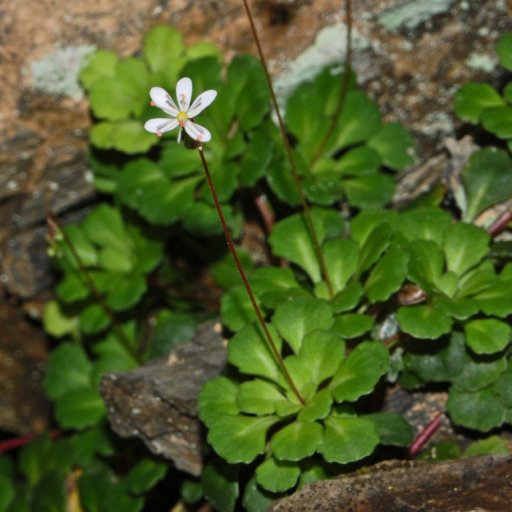
Often called "Lesser London Pride," Saxifraga cuneifolia is a delicate mountain dweller that brings a touch of the European Alps to shaded garden corners. This low-growing evergreen creates lush, scalloped carpets of foliage that remain vibrant even when other plants retreat for the winter. It is the quieter, more refined cousin of the common garden London Pride, prized for its ability to soften the edges of stone paths.
🔍 How to Identify
- 🍃 Wedge-Shaped Leaves: The plant forms tight, ground-hugging rosettes of leathery, spoon-shaped (cuneate) leaves with distinctive rounded "teeth" along the edges.
- 🌸 Starry Blooms: In late spring, airy, wiry stems rise well above the foliage, carrying delicate clusters of tiny white flowers decorated with minute yellow and red dots.
- 🌱 Mat-Forming Habit: It spreads slowly through reddish runners (stolons), similar to a strawberry plant, which allows it to tuck itself neatly into rocky crevices or over walls.
🏡 In Your Garden
- 🏔️ The Alpine Vibe: Because it originates from mountain forests, this plant detests sweltering midday heat. It thrives in north-facing spots or under the dappled shade of taller shrubs where its roots can stay consistently cool and moist.
- 🪨 Drainage is Key: While it loves humidity, sitting in stagnant water will cause the rosettes to rot. It performs best in gritty, organic-rich soil that mimics the rocky forest floor of its native European habitat.
⚠️ Safety & Toxicity
- ✅ Low Risk: This species is generally considered non-toxic and is a safe, worry-free choice for gardens shared with curious dogs, cats, or young children.
- 👐 General Care: While it doesn't contain dangerous toxins, the sap of many alpine plants can occasionally cause very mild skin irritation for those with sensitive skin. It is always a good idea to wear gloves when dividing large mats.
✨ Fun Fact
The name Saxifraga literally translates from Latin as "stone-breaker." Ancient observers gave it this name because they often found the plant growing in the narrowest cracks of solid rock, leading to the folk belief that the plant's roots were strong enough to shatter the stones themselves.

Detailed Care Instructions
To grow Saxifraga cuneifolia, also known as wedgeleaf Saxifrage, follow these steps:
- Choose a suitable location: Saxifraga cuneifolia prefers a partially shaded area with well-drained soil. It is a high-altitude alpine plant, so it prefers cool temperatures.
- Prepare the soil: Ensure that the soil is loose, well-drained, and rich in organic matter. You can improve drainage by adding perlite or sand to the soil.
- Sow the seeds: If starting from seeds, sow them in a seed tray or small pots filled with moist soil. Lightly press the seeds into the soil surface, but do not cover them, as they need light to germinate.
- Maintain moisture: Keep the soil consistently moist but not waterlogged. It is essential to provide adequate moisture during the germination period, which usually takes around 2-3 weeks.
- Transplanting: Once the seedlings have developed a few true leaves, they can be transplanted into individual pots or directly into the ground. Be careful not to damage the delicate roots during transplantation.
- Provide proper care: Saxifraga cuneifolia prefers cool temperatures and shade, so protect them from direct sunlight during the hottest parts of the day. Keep the soil slightly moist, especially during dry periods. Mulching around the base of the plant can help retain moisture.
- Pruning: If any dead or damaged leaves appear, remove them to promote better growth. Avoid cutting into the crown of the plant, as this may inhibit its growth or cause it to die.
- Propagation: Saxifraga cuneifolia can also be propagated through division. In early spring or fall, carefully lift the plant out of the ground, and using a sharp knife, divide the clumps into smaller sections with healthy roots. Replant each division in suitable soil.
- Winter care: Provide protection in the winter by covering the plant with a layer of mulch or a frost cloth to prevent frost damage.
- Regular feeding: Feed the plant with a balanced fertilizer during the growing season to encourage healthy growth. Follow the instructions on the fertilizer packaging for application rates.
By following these steps, you can successfully grow Saxifraga cuneifolia and enjoy its delicate, white flowers and attractive foliage.

Place in a window with dappled sun or a spot in the middle of a room. Or directly in a window facing west or east.

Saxifraga Cuneifolia is a species of perennial plant that requires regular watering in order to thrive. When watering this plant, it is important to ensure that the soil remains consistently moist but not waterlogged, as this can lead to root rot and other issues.
To water Saxifraga Cuneifolia, start by checking the soil moisture level with your finger or a soil moisture meter. If the soil feels dry to the touch, it is time to water the plant.
Use a watering can or hose to apply water slowly and evenly to the soil around the base of the plant, taking care not to splash water onto the leaves or flowers. Water until the soil is moist but not saturated.
During hot and dry weather, you may need to water Saxifraga Cuneifolia more frequently to prevent the soil from drying out completely. However, be cautious not to overwater the plant as this can be just as harmful as underwatering.
Overall, providing the plant with consistent and adequate moisture will help it stay healthy and produce vibrant foliage and blooms.
To fertilize this plant, you should mix a balanced, slow-release fertilizer into the soil before planting it. During the growing season, you can apply a liquid, all-purpose fertilizer every two weeks. Be sure to water the plant well after fertilizing to prevent any fertilizer burn on the leaves. Avoid over-fertilizing, as this can cause the plant to become leggy and weak.
Saxifraga Cuneifolia requires a well-draining soil mixture that is slightly acidic with a pH range of 5.5-6.5. The soil should be rich in organic matter and contain a good amount of perlite or coarse sand to ensure proper drainage. A mixture of peat moss, perlite, and coarse sand or grit in equal parts is a suitable soil for this plant. It is important to avoid using heavy clay soils or soils that are overly compacted. Additionally, this plant prefers a cool and moist environment, which can be achieved by providing adequate watering and ensuring proper humidity levels.
To propagate this plant, take a stem cutting from a healthy and mature plant using a clean sharp pair of scissors or shears. Make sure the cutting is around 3-4 inches in length and has at least two to three nodes on it. Remove any leaves from the bottom half of the stem and dip the cut end into rooting hormone powder.
Prepare a pot with well-draining soil and make a small hole in the center. Insert the cutting into the hole and gently pat the soil around it. Water the cutting thoroughly and place it in a brightly lit area but away from direct sunlight.
Keep the soil moist but avoid overwatering as this can cause the cutting to rot. After a few weeks, new growth should start to appear. Once the roots have grown enough, which can take several months, the cutting can be transplanted into a larger pot.
It's important to note that propagation can be difficult with some species of Saxifraga, so it's important to research and follow proper techniques for each specific plant.
Common pests of the lesser londonpride include Mealybugs, spider mites, aphids. Make a habit of checking your lesser londonpride frequently for pests so that any infestations can be caught and managed early.








