Plant Overview
Known as the "Diapensia-like Saxifrage," this high-altitude beauty is a masterpiece of the European Alps. It looks less like a typical garden plant and more like a dense, silver cushion tucked into limestone crevices. It is a prized "alpine gem," sought after by rock garden enthusiasts who enjoy the challenge of mimicking its rugged, snowy mountain home.
🔍 How to Identify
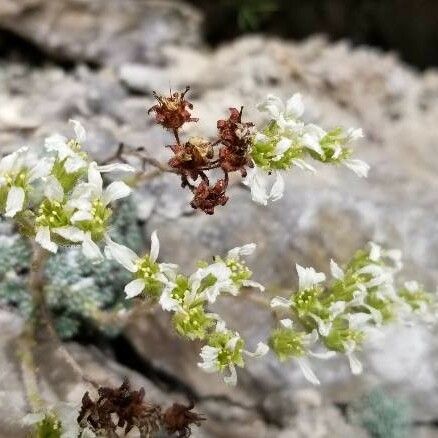
- 🌿 Dense Cushions: It forms incredibly tight, hard mounds of tiny rosettes. From a distance, an old specimen can look like a moss-covered stone.
- ❄️ Silvery Foliage: The tiny, stiff leaves are a pale, blue-grey or silvery-green. This color comes from specialized pores that excrete lime, creating a frosted appearance.
- 🌸 Pearly Blooms: In late spring, it produces clusters of 3 to 5 pure white flowers with delicate yellow centers, standing on short, sturdy stems just above the silver cushion.
🏡 In Your Garden
- ⛰️ The Rock Specialist: This plant is an "obligate calcicole," meaning it absolutely craves limestone. It is best grown in "tufa" rock or a dedicated crevice garden where its roots can stay cool while its crown remains dry.
- 💧 Winter Protection: While it is extremely cold-hardy, it hates "winter wet." In garden settings, it is often grown in an alpine house or under a glass lean-to to protect its silver rosettes from rotting during rainy months.
⚠️ Safety & Toxicity
- ✅ Non-Toxic: Saxifraga diapensioides is generally considered safe and non-toxic for humans, cats, and dogs.
- 🤏 Handle with Care: While it isn't poisonous, the plant is physically fragile. Because it grows only a few millimeters a year, a curious pet or a heavy-handed gardener can cause damage that takes several seasons to repair.
✨ Fun Fact
Its specific name, diapensioides, literally means "looking like Diapensia" (a different genus of arctic plants). This is a classic example of convergent evolution: both plants developed the exact same "cushion" shape to survive extreme winds and freezing temperatures that would snap or dehydrate taller species.

Detailed Care Instructions

Place in a window with dappled sun or a spot in the middle of a room. Or directly in a window facing west or east.

Some plants require more regular watering than others, which should be done every few days. It's critical to maintain the soil moist all of the time. The water requirements of the same plant placed in pots with varying sizes will differ. Because the water in the smaller pot evaporates faster than the water in the larger pot, it will require more watering. Regardless of pot size, the surface should constantly be maintained moist.








