Plant Overview
Known affectionately as the Kidney Saxifrage, this resilient alpine beauty is a master of damp, rocky crevices. Its name "Saxifraga" literally translates to "stone-breaker," a nod to the ancient belief that these plants could crack rocks as they grew. Native to the Atlantic fringes of Europe, from the Pyrenees to the misty hills of Ireland, it brings a touch of wild, woodland magic to any shaded corner.
🔍 How to Identify
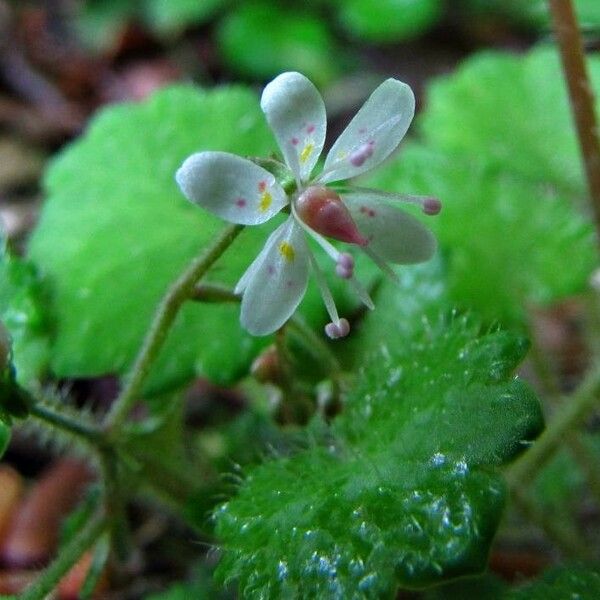
- 🍃 The Leaves: True to its name, the leaves are distinctly kidney-shaped (reniform) with rounded, scalloped edges. They form a lush, low-growing rosette.
- 🪶 Hirsute Texture: Both the leaf surfaces and the long stems are covered in fine, soft hairs, which help the plant trap moisture in its humid native habitats.
- 🌸 The Flowers: In late spring, airy sprays of tiny white flowers rise on delicate reddish stalks. Look closely, and you’ll see miniature yellow and pink spots decorating the base of each petal.
🏡 In Your Garden
- 💧 Moisture Logic: Unlike many succulents, Saxifraga hirsuta craves humidity and consistent moisture. It is the perfect candidate for a "north-facing" rockery or a damp crevice near a water feature where other plants might struggle with the lack of sun.
- 🌑 Shade Seeker: This plant has a biological "sunscreen" in its preference for deep to partial shade. In the wild, it hides under forest canopies or behind boulders; in your garden, direct afternoon sun will quickly scorch its delicate, hairy foliage.
⚠️ Safety & Toxicity
- 🟢 Status: Generally considered non-toxic and safe for home gardens.
- 🐾 Pets & Kids: There are no known reports of significant toxicity to cats, dogs, or humans. However, as with any ornamental plant, it is best kept out of reach of curious nibblers to avoid mild stomach upset or choking hazards.
✨ Fun Fact
- 🧬 A Famous Parent: Saxifraga hirsuta is one of the two proud parents of the incredibly popular garden hybrid "London Pride" (Saxifraga × urbium). While London Pride is more famous in urban landscaping, the Kidney Saxifrage is the ancestor that gave it its legendary toughness and ability to thrive in the shadows.

Detailed Care Instructions
To grow Saxifraga Hirsuta plant, also known as the hairy saxifrage, follow these steps:
- Location: Select a suitable location for your Saxifraga Hirsuta plant. It prefers partial shade to full sun, so place it in an area with indirect sunlight or morning sun.
- Soil: The plant thrives in well-draining soil. Prepare a mixture of equal parts potting soil, perlite, and sand to provide good drainage.
- Planting: Fill a pot or container with the prepared soil mixture. Dig a hole that is slightly larger than the root ball of the saxifrage. Place the plant in the hole and backfill with soil, making sure the crown of the plant (where the stem meets the base) is level with the soil surface.
- Watering: Keep the soil moist but not waterlogged. Water the plant when the top inch of soil feels dry. Avoid overwatering, as it can lead to root rot.
- Fertilization: Saxifraga Hirsuta plant does not require heavy fertilization. A light application of balanced, slow-release fertilizer in spring can be beneficial. Follow the instructions on the fertilizer packaging for proper dosage.
- Pruning: Regularly trim any dead or damaged leaves to maintain the plant's appearance and overall health.
- Propagation: You can propagate Saxifraga Hirsuta through division or by taking stem cuttings. Dividing the plant involves separating offsets or "pups" from the main plant and replanting them in suitable soil. To propagate from stem cuttings, take a 2-3 inch cutting from a healthy plant, remove the lower leaves, and place it in a pot with moist soil. Keep the cutting in a warm and humid environment until it develops roots.
- Overwintering: Saxifraga Hirsuta is a perennial plant that can tolerate cold temperatures. However, if you live in an extremely cold region, you may need to protect it from frost by covering it with a frost cloth or moving it indoors for the winter.
By following these guidelines, you can successfully grow and maintain Saxifraga Hirsuta plants. Remember to observe and respond to the specific needs of your plant to ensure its optimal growth.

Place in a window with dappled sun or a spot in the middle of a room. Or directly in a window facing west or east.

To water this plant, first ensure that the soil is dry to the touch. Then, slowly pour water directly onto the soil around the base of the plant, making sure not to let the water touch the leaves or flowers. Allow the excess water to drain out from the bottom of the pot. Water the plant only when the soil is completely dry to avoid overwatering and root rot. Ensure that the plant is receiving adequate sunlight and is not placed in a drafty or excessively hot location.
To properly fertilize this plant, apply a balanced fertilizer that contains nitrogen, phosphorus, and potassium. It is important to apply the fertilizer sparingly and in small doses. Too much fertilizer can damage the plant and cause nutrient burn. Fertilize once every two weeks during the growing season, and reduce or stop fertilizing during the dormant season. Water the plant well before and after applying the fertilizer to ensure that the nutrients are absorbed properly.
Saxifraga Hirsuta requires soil that is well-draining and rich in organic matter. The pH level of the soil should be slightly acidic to neutral. A mixture of sand, perlite, and peat moss is recommended for the potting soil. The soil should be kept moist but not waterlogged. Fertilizer should be applied sparingly, as the plant is sensitive to over-fertilization. Adding mulch to the soil can help retain moisture and prevent the growth of weeds. The plant prefers a partially shaded to full sun location.
To propagate this plant, you will need to take stem cuttings from a healthy parent plant. Select a stem that is at least 5 cm long and has several leaves attached to it. Using a sharp and sterile pair of scissors or knife, make a clean cut just below a node, where the leaves emerge from the stem.
Remove any lower leaves from the stem cutting, leaving only a few at the top. This will reduce water loss and focus the plant's energy on rooting.
Dip the end of the cutting in rooting hormone powder, which can be obtained from a garden center or online. This will encourage root growth and increase the chances of success.
Prepare a pot or container with fresh potting soil and make a hole in the center. Plant the cutting in the soil, about 1-2 cm deep, and gently press the soil around it to ensure good contact.
Water the cutting thoroughly and place it in a bright and warm spot, but out of direct sunlight. Keep the soil moist, but not waterlogged, and mist the leaves regularly to increase humidity.
After a few weeks, check the cutting for signs of new growth and root development. Once roots are established, it can be transplanted to a larger container or outdoors in a suitable location.
Propagation takes time and patience, but with the right care, it is possible to successfully propagate this plant and enjoy its beauty in multiple locations.








