Plant Overview
The Irish Saxifrage, often affectionately called the "Mossy Saxifrage," is a resilient mountain dweller native to the rocky coasts of Ireland and Western Europe. It grows in lush, emerald-green cushions that look soft enough to sleep on, but don't be fooled—this plant is a survivor that thrives where others fail. Historically, its genus name translates to "Stonebreaker," a nod to the ancient belief that these plants could crack open solid rock.
🔍 How to Identify
- 🍃 Foliage Texture: It forms dense, moss-like mats of evergreen leaves. Each leaf is typically wedge-shaped and deeply divided into three to five narrow lobes.
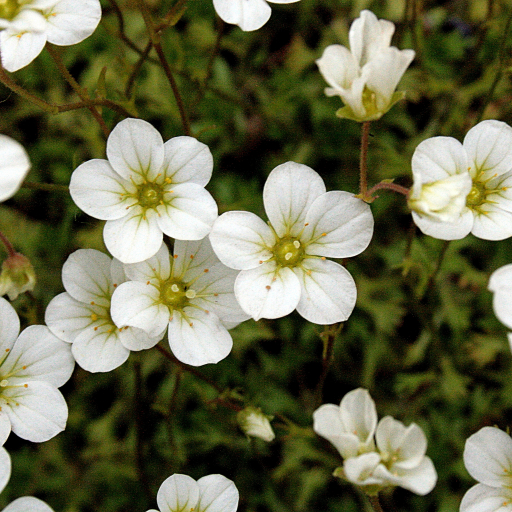
- 🌸 The Blooms: In late spring, slender, upright stems rise above the foliage, carrying delicate, five-petaled white flowers (sometimes with a hint of cream or pale pink) that look like tiny bowls.
- 🏔️ Growth Habit: It spreads via short runners to create a low-growing "carpet" effect, rarely exceeding a few inches in height except when in flower.
🏡 In Your Garden
- 💧 Cool Feet, Dry Shoulders: While it loves moisture, it cannot stand "wet feet." In your garden, it performs best in gritty, well-drained soil. It mimics its natural cliffside home by tucking into crevices where its roots stay cool but the crown stays dry.
- ☀️ Beat the Heat: Unlike many rock-garden plants, Saxifraga rosacea is sensitive to extreme summer heat. In warmer climates, it requires a spot with afternoon shade to prevent the delicate "moss" from browning or scorching.
- 🪨 The Crevice Specialist: It is the perfect candidate for a "trough garden" or the gaps in a dry stone wall, where it can spill over the edges like a slow-moving green waterfall.
⚠️ Safety & Toxicity
- ✅ Safe Status: Saxifraga rosacea is generally considered non-toxic and safe for homes with curious pets and children.
- 🧤 Mild Sensitivity: While not poisonous, the sap can occasionally cause very mild skin irritation in individuals with highly sensitive skin if handled extensively during pruning.
✨ Fun Fact
The name "Saxifrage" comes from the Latin words saxum (rock) and frangere (to break). While it doesn't actually shatter boulders, it earned this reputation because it grows in the narrowest cracks of mountain cliffs, making it appear as though it has forced the very earth apart to find a home.

Detailed Care Instructions
| Humidity | Normal |
| Lighting | Full Sun |
| Difficulty | Medium |
| Hibernation | Cold Period |
| Hardiness Zones | 5 - 7 |
To grow Saxifraga rosacea, also known as rosy saxifrage, you can follow these steps:
- Choose a suitable location: Saxifraga rosacea prefers a cool, partially shaded spot. It is often found growing in rock crevices or alpine meadows. Make sure the area drains well and does not get waterlogged.
- Prepare the soil: Saxifraga rosacea thrives in well-draining soil. Amend the soil with organic matter such as compost or well-rotted manure to improve fertility and drainage.
- Start from seeds or plants: You can start Saxifraga rosacea from seeds or purchase established plants from a nursery. If starting from seeds, scatter them lightly over the prepared soil in early spring. Press the seeds gently into the soil, but avoid burying them too deeply. If using established plants, dig a hole large enough to accommodate the roots and place the plant in it, backfilling with soil.
- Watering: Saxifraga rosacea prefers moist soil but can't tolerate waterlogged conditions. Water regularly, especially during dry periods, but ensure the soil is well-drained to prevent root rot.
- Mulching: Apply a layer of organic mulch, such as bark chips or straw, around the plants to help retain moisture, suppress weeds, and regulate soil temperature.
- Fertilization: Saxifraga rosacea typically does not require heavy fertilization. However, you can apply a balanced slow-release fertilizer in early spring or use a diluted liquid fertilizer during the growing season.
- Pruning: Prune away any dead or damaged leaves or stems to promote new growth and maintain the plant's overall health and appearance.
- Divide as needed: Saxifraga rosacea tends to form dense clumps over time. To keep the plant vigorous, divide it every 2-3 years in early spring. Carefully dig up the clump, separate the individual plants, and replant them at the same depth in new or prepared soil.
- Protect from extreme weather: Saxifraga rosacea is generally hardy but may need protection during severe winters, especially in colder regions. Consider using a layer of mulch, straw, or burlap to insulate the plants.
With proper care and suitable growing conditions, Saxifraga rosacea should thrive and provide beautiful rosy-pink flowers atop its foliage.

Place in a bright room that is sun drenched almost all day. Or directly in a south-facing window.

To water this plant, you should wait until the top inch of soil is dry before watering. When you do water, be sure to pour the water slowly and evenly over the soil until it begins to drain out from the bottom of the container. Avoid getting the leaves wet, as this can lead to disease and damage. It is also important to make sure the pot has good drainage to prevent the plant from sitting in standing water.
To fertilize the Saxifraga Rosacea plant, mix a balanced fertilizer designed for flowering plants in water as per instructions on the label. Apply the fertilizer solution to the soil around the base of the plant, taking care not to get it on the leaves or stem. Repeat this process every two weeks during the growing season. Cut back on fertilizing during winter months when the plant is dormant.
The soil that is ideal for growing Saxifraga Rosacea plant is a well-draining soil that is slightly acidic in nature. The soil should be rich in organic matter and have a pH level between 6.0 and 6.5. It is important to avoid using heavy clay soil, as the plant prefers a loamy soil that retains moisture but does not become waterlogged. Garden soil can be mixed with peat moss, sand, or perlite to improve drainage and aeration. Additionally, it is recommended to add a complete fertilizer to the soil before planting to provide essential nutrients for growth.
To propagate this particular plant, you will need to take stem cuttings from the parent plant. The cuttings should be taken from healthy, mature stems that have at least a few leaves. Remove any flowers or buds from the stem cuttings.
Once you have the stem cuttings, you will need to dip the bottom of the stem in rooting hormone. This helps encourage the cutting to grow roots. Then, plant the cutting in a well-draining potting soil mixture.
Keep the soil moist but not soaking wet, and place the pot in a bright, indirect light location. You should start to see roots developing within a few weeks. Once the cutting has established roots, you can transplant it into a larger pot or outdoors in a suitable location.
It's important to note that propagating plants can sometimes be challenging, and not all cuttings will successfully take root. Be patient and keep trying until you find the right method and conditions for success.
Common pests of the irish saxifrage include Mealybugs, spider mites, aphids. Make a habit of checking your irish saxifrage frequently for pests so that any infestations can be caught and managed early.








