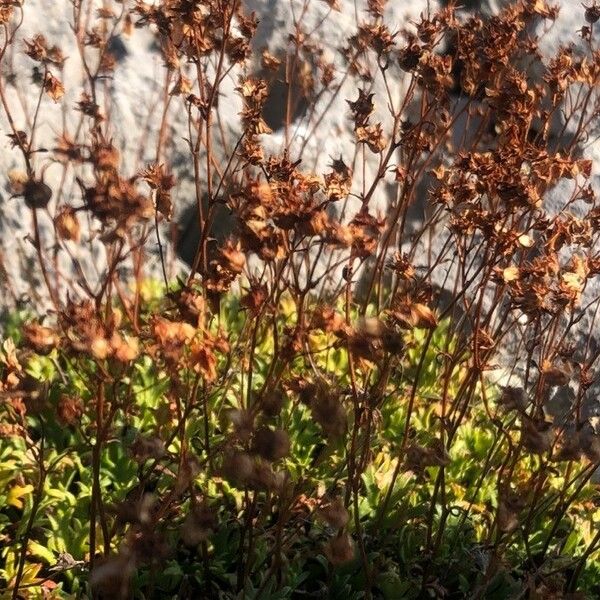
Plant Overview
Often called the Three-forked Saxifrage, this hardy alpine gem hails from the craggy mountain ranges of Northern Spain. Its genus name, Saxifraga, literally translates to "stone-breaker," a nod to the ancient belief that these plants could crack solid rock as they grew into tiny crevices. It forms lush, architectural cushions of green that erupt into a snowy blanket of blossoms when the weather warms.
🔍 How to Identify
- 🌿 The Foliage: The leaves are stiff, evergreen, and famously split into three distinct, pointed lobes (hence the name trifurcata), giving the plant a jagged, "forked" appearance.
- 🌸 The Bloom: During late spring, slender, wiry stems rise above the foliage to carry loose clusters of star-shaped white flowers, each featuring five delicate petals.
- 🧤 The Texture: Unlike some soft, mossy saxifrages, this variety creates firm, tactile mounds that feel surprisingly structural and "leathery" to the touch.
🏡 In Your Garden
- ⛰️ Alpine Aspirations: Because it naturally clings to cliffsides, this plant demands exceptional drainage. It is happiest when tucked into a rock garden, a dry-stone wall, or a gravel bed where water can never pool around its crown.
- ❄️ The "Cool Root" Rule: While it enjoys the sun, it hates "hot feet." It thrives best when its roots are tucked behind a cool stone or in a spot that receives morning sun but stays shaded during the harshest afternoon heat.
⚠️ Safety & Toxicity
- ✅ Safe for All: Saxifraga trifurcata is generally considered non-toxic to humans, cats, and dogs. It is an excellent choice for a sensory garden or a pet-friendly backyard.
- ✋ Physical Fragility: While not chemically dangerous, the plant is physically delicate. Its dense mounds can be easily crushed by footsteps or heavy-handed weeding, so it is best kept in areas where it won't be stepped on.
✨ Fun Fact
In medieval times, the "Doctrine of Signatures" suggested that because Saxifrage appeared to "break" rocks, it could be used to treat kidney stones. While modern medicine has debunked this, the plant’s reputation as a powerful "stone-breaker" has persisted in folklore for centuries!

Detailed Care Instructions
To grow Saxifraga Trifurcata (also known as strawberry geranium or strawberry begonia), you can follow these steps:
- Choose a suitable location: Saxifraga Trifurcata prefers bright, indirect light, but it can also tolerate some shade. Avoid direct sunlight as it may scorch the leaves.
- Prepare the soil: Use well-draining, slightly acidic soil for this plant. You can mix equal parts of potting soil, peat moss, and perlite to create a suitable growing medium.
- Propagation: Saxifraga Trifurcata is commonly propagated through stem cuttings. Take a 3-4 inch long stem cutting with 2-3 leaves attached. Remove the lower leaves and dip the cut end in rooting hormone powder. Plant the cutting in a small pot filled with moist soil, burying it about an inch deep.
- Watering: Keep the soil evenly moist, but not waterlogged. Saxifraga Trifurcata prefers slightly moist conditions, so water it whenever the top inch of soil feels dry. Avoid overwatering, as it can cause root rot.
- Humidity: This plant prefers moderate to high humidity levels. You can increase humidity around the plant by placing it on a tray filled with water and pebbles, or by using a humidifier.
- Fertilizing: Feed your Saxifraga Trifurcata plant once a month during the growing season (spring to fall) with a balanced, water-soluble fertilizer. Follow the instructions on the fertilizer package for dosage and application method.
- Pruning: To maintain a bushy and compact growth habit, prune back any leggy or overgrown stems. You can pinch off the tips of the stems to encourage branching.
- Transplanting: If your Saxifraga Trifurcata outgrows its current pot, you can repot it into a slightly larger container using fresh potting soil. Spring is the best time for repotting.
- Pests and diseases: Keep an eye out for common pests like aphids, spider mites, and mealybugs. If any pests are detected, treat them with appropriate insecticidal soap or neem oil. Proper air circulation and avoiding overwatering can help prevent fungal diseases.
Remember to regularly inspect your plants for any signs of stress, disease, or pests, and take timely action. With proper care and attention, Saxifraga Trifurcata can grow into a lovely and vibrant houseplant.

Place in a window with dappled sun or a spot in the middle of a room. Or directly in a window facing west or east.

Saxifraga Trifurcata is a delicate plant that requires careful attention when it comes to watering. Here are some tips on how to water this specific plant:
1. Evaluate the soil moisture: Before watering the Saxifraga Trifurcata, check the moisture level of the soil. It is important to ensure that the soil is neither too dry nor too wet. One way to assess this is by inserting your finger about an inch into the soil. If it feels dry, it is time to water the plant.
2. Watering frequency: Saxifraga Trifurcata prefers a slightly moist soil environment, so it is important not to overwater it. On average, watering the plant once a week should be sufficient. However, factors like temperature, humidity, and the type of potting mix used can also impact the watering needs. Adapt your watering schedule accordingly.
3. Watering technique: When watering, it is best to use a gentle and slow watering technique. Avoid pouring water directly onto the leaves or crown of the plant as this can lead to rot or fungal diseases. Instead, water the soil around the base of the plant until the water starts to seep through the drainage holes.
4. Drainage: One crucial aspect of watering Saxifraga Trifurcata is ensuring proper drainage. The plant should be potted in a well-draining soil mix, preferably one specifically designed for succulents or cacti. Additionally, make sure the pot has drainage holes to prevent water from stagnating at the bottom.
5. Monitor for signs: Pay attention to the plant's overall appearance to judge if it is receiving adequate water. Signs of underwatering may include wilting, dry and droopy leaves, while overwatering can result in yellowing leaves or root rot. Adjust the watering frequency accordingly based on visual cues from the plant.
6. Seasonal adjustments: Saxifraga Trifurcata may have different watering needs during different seasons. During the plant's active growth phase, which typically occurs in spring and summer, it may require more frequent watering. In contrast, the plant may require less water during its dormancy period in winter.
Remember that the specific requirements of Saxifraga Trifurcata may vary depending on various factors, so closely monitoring the plant's response to watering is essential to ensure its health and well-being.
- Choose a well-draining soil mix: Saxifraga Trifurcata prefers a slightly acidic to neutral soil with good drainage. Use a mixture of one part standard potting soil and one part perlite or sand to improve drainage.
- Pot selection: Select a pot with drainage holes at the bottom to ensure excess water can escape. A shallow pot is preferable since this plant has a shallow root system. Make sure the container is sized appropriately for the plant.
- Fertilizer selection: Use a balanced, water-soluble fertilizer formulated for houseplants or foliage plants. Look for a fertilizer with an equal NPK ratio or a slightly higher ratio of nitrogen (N) for improved leaf growth.
- Dilution ratio: Follow the manufacturer's instructions on the fertilizer packaging for the correct dilution ratio. Generally, a dilution of half the recommended strength is suitable for Saxifraga Trifurcata.
- Frequency: Fertilize the plant every four to six weeks during the growing season, which typically spans spring through summer. Reduce or stop fertilizing during the fall and winter months when the plant enters a dormant phase.
- Application method: Apply the diluted fertilizer to moistened soil around the base of the plant to avoid direct contact with the leaves. Slowly pour the fertilizer solution over the soil, ensuring it is evenly distributed.
- Avoid over-fertilization: More is not always better when it comes to fertilizing. Over-fertilization can lead to nutrient burn and cause damage to the plant. If in doubt, it is better to under-fertilize rather than over-fertilize.
- Watering after fertilizing: After applying the fertilizer, water the plant thoroughly to help distribute the nutrients throughout the soil. Allow excess water to drain away, ensuring the pot does not sit in standing water.
- Observations and adjustments: Monitor the plant's overall health and growth. If you notice signs of nutrient deficiency or excess, such as yellowing leaves or stunted growth, adjust the fertilization schedule or dilution strength accordingly.
Remember, it's always a good practice to research specific plant care requirements, including fertilizing instructions, to ensure you are providing the best care for your Saxifraga Trifurcata plant.
The ideal soil for Saxifraga Trifurcata should be well-draining and fertile. It should have a slightly acidic to neutral pH level, preferably between 6.0 and 7.0. The soil should contain a good amount of organic matter, such as compost or peat moss, to enhance its fertility and water-retaining capacity.
To ensure proper drainage, it is recommended to mix the soil with perlite, sand, or small gravel particles. This will prevent water from pooling around the roots and causing rot. The texture of the soil should be light and loose, allowing for air circulation and root growth.
It is essential to avoid compact, heavy clay soils as they tend to retain water and restrict oxygen availability to the roots. This can lead to root rot and other fungal diseases.
Regularly replenishing the soil with organic matter and providing proper drainage will promote healthy growth and overall vigor in Saxifraga Trifurcata.
To propagate Saxifraga Trifurcata, follow these steps:
- Choose a healthy plant: Select a mature Saxifraga Trifurcata plant with strong and vibrant foliage. Ensure that it is free from any pests or diseases.
- Prepare the propagation medium: Saxifraga Trifurcata can be propagated through stem cuttings. Prepare a well-draining propagation medium by mixing equal parts perlite and peat moss or a commercial seed-starting mix.
- Take stem cuttings: Use a clean and sharp pair of sterilized pruning shears to take 3-4 inch long stem cuttings from the Saxifraga Trifurcata plant. Make a clean cut just below a leaf node.
- Remove lower leaves: Strip off the lower leaves from the stem cuttings, leaving only a few pairs of leaves at the top. This prevents excessive moisture loss and encourages root development.
- Apply rooting hormone (optional): Although not necessary, you can dip the base of the stem cuttings in rooting hormone powder or gel to enhance the chances of successful rooting.
- Plant the cuttings: Create holes in the propagation medium using a pencil or any similar tool. Gently insert the stem cuttings into the holes, ensuring that at least one leaf node is buried in the medium. Firmly press the medium around the cuttings to promote good contact.
- Provide optimal conditions: Place the planted stem cuttings in a bright location with indirect sunlight. Maintain a temperature of around 65-75°F (18-24°C) and humidity levels around 50-60%. Avoid direct sun exposure, which can scorch the delicate cuttings.
- Mist and water regularly: Mist the cuttings with water daily or cover them with a clear plastic bag to maintain humidity. Ensure the propagation medium remains evenly moist, but not waterlogged. Water as needed to prevent drying out.
- Monitor and wait for roots: It may take several weeks for roots to develop. Monitor the cuttings regularly by gently tugging them. Once you feel some resistance, it indicates the development of roots.
- Gradually acclimate to new conditions: Once roots have formed, gradually acclimate the rooted cuttings to the normal growing conditions of Saxifraga Trifurcata over a period of two weeks. Increase their exposure to sunlight and reduce humidity gradually.
- Transplant to individual pots: Once the rooted cuttings have acclimated, carefully transplant them into individual pots using a well-draining potting mix. Water thoroughly and continue to provide proper care.
Remember that while Saxifraga Trifurcata is relatively easy to propagate, it may take some time and patience to achieve successful results.








